Illinois calls this document a salvage certificate. To get one, the title holder must determine whether state law applies, then promptly send or deliver the existing title, proper application, and fee to the Illinois Secretary of State within 20 days. The current form number and fee couldn’t be confirmed, so verify both with the Secretary of State before filing.
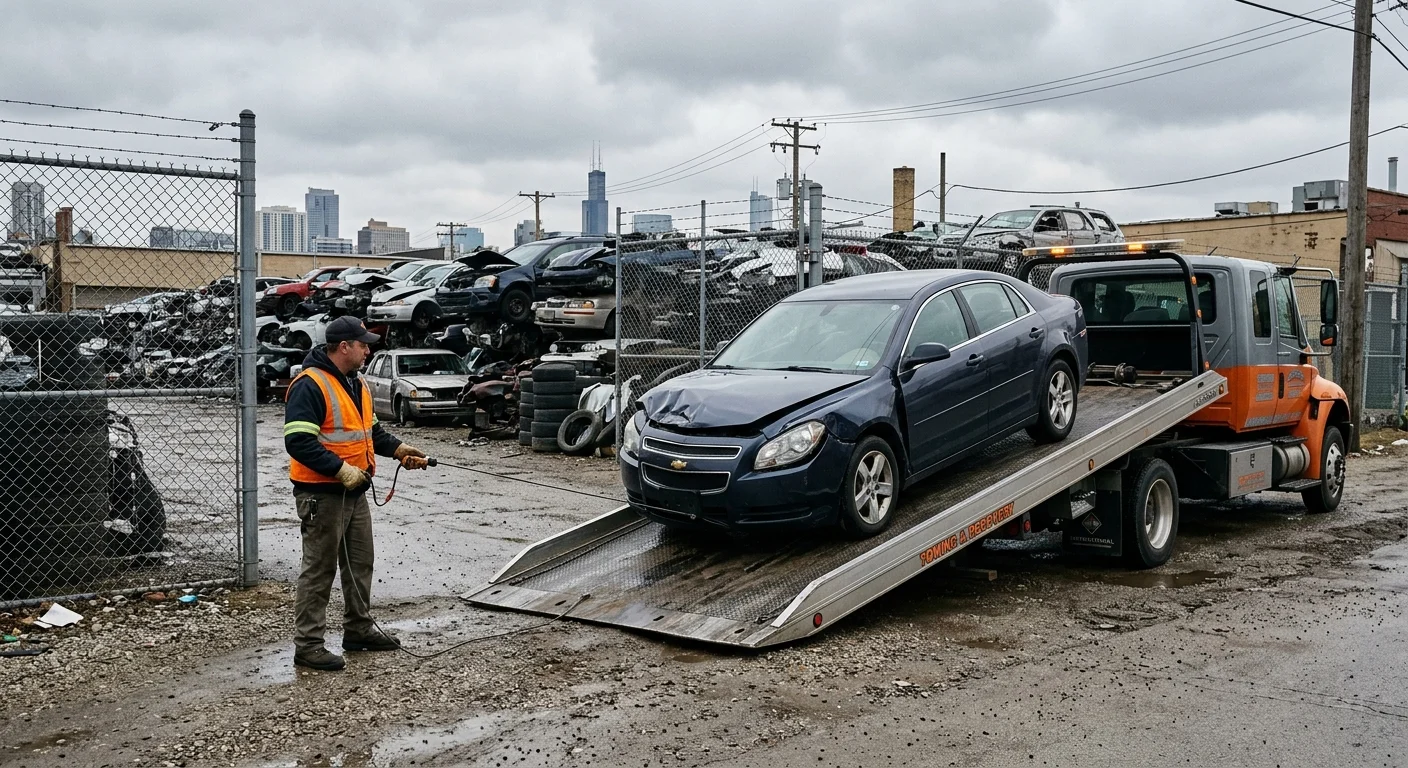
Start with the Illinois classification
A damaged car doesn’t automatically belong in the salvage process. Illinois law identifies six situations that require a salvage certificate. Your first step is matching the vehicle’s history to the right category.
Under 625 ILCS 5/3-117.1, the situations include:
- An insurance company makes a total-loss payment, subject to hail and older-vehicle exceptions.
- A self-insured vehicle becomes a total loss.
- A vehicle is acquired through an auction or certificate of purchase.
- A repossessed vehicle has damage beyond 50 percent of fair market value.
- A fleet vehicle has damage beyond that same threshold.
- A flood-damaged vehicle has damage beyond that same threshold.
The 50 percent test doesn’t apply to every category. The statute connects it to repossessed, fleet, and flood-damaged vehicles. Don’t turn it into a general rule for every wrecked car.
The hail and older-vehicle exceptions also need careful handling. Our verified record confirms that exceptions exist, but it doesn’t provide enough detail to decide whether a particular car qualifies. Check the current statutory text and ask the Illinois Secretary of State before treating either exception as settled.
A repair estimate, auction document, or insurer’s decision may affect the answer. Keep every document tied to the loss or acquisition. If the car’s status remains unclear, don’t guess. Our guide to Illinois salvage title laws explains the legal categories in more detail.
Follow the 20-day filing direction
Once the salvage requirement applies, Illinois law gives a short filing instruction. The holder must “promptly deliver or mail within 20 days” the certificate of title, proper application, and fee to the Secretary of State.
That wording establishes three confirmed filing items:
- The existing certificate of title.
- The proper application.
- The required fee.
The exact application form number couldn’t be confirmed from the approved sources. The current fee amount also couldn’t be verified because the Illinois Secretary of State website was unavailable during the research check. Don’t copy either detail from an old article, forum post, or another state’s instructions.
Before mailing anything, get the current application directly from the Illinois Secretary of State. Confirm where it must go, how the fee must be paid, and whether your specific situation requires added documents. Those added requirements weren’t confirmed in our source record, so the current application must serve as your checklist.
Keep a copy of the title, application, payment record, and supporting papers. If you deliver the packet, keep whatever receipt the office provides. If you mail it, use a method that lets you document delivery.
Quick Tow Chicago isn’t a title agency and can’t approve the filing. We connect drivers with independent local operators when a damaged vehicle needs transport. The title decision and paperwork remain with the Illinois Secretary of State.
Don’t confuse salvage with junking
A salvage certificate and a junking certificate don’t lead to the same result. That distinction matters before you sign documents or release the vehicle to a recycler.
Under 625 ILCS 5/3-117.2, a junking certificate authorizes its holder to possess, transport, or transfer the junked vehicle. The statute also says a certificate of title won’t be issued for that vehicle again.
Illinois law creates another final bar through the Junk Vehicle Notification process. A scrap processor or automotive parts recycler that acquires the ownership documents doesn’t have to obtain a junking certificate. It must submit those documents with a Junk Vehicle Notification within 15 days. The Secretary of State won’t later issue a title or salvage certificate for a vehicle listed on that notification.
That makes junking a permanent title decision under the approved statutory language. Don’t treat it as a faster version of a salvage filing. If you hope to repair, retain, or transfer the car later, ask the Secretary of State what title path applies before authorizing junking.
Our verified sources don’t establish the later rebuilt-title steps, inspection rules, form numbers, or fees. Those points couldn’t be confirmed and shouldn’t be filled with assumptions. Ask the Secretary of State for the current requirements before buying parts or paying for repairs.
If the ownership document is already missing, start with whether an Illinois car can be junked without a title. That’s a separate problem from deciding whether the car requires a salvage certificate.
Separate the title process from the tow
Chicago-area owners often face two problems at once. The vehicle needs a title decision, but it may also be sitting in a city pound, suburban impound, private relocation lot, repair shop, or driveway.
Those locations don’t follow one shared towing system. A City of Chicago tow, a suburban municipal impound, and a private-property relocation are three separate regimes. Our guide to impound versus relocation in Chicago explains why the difference matters.
If the car is at a City of Chicago pound, the city requires valid photo identification and proof of ownership. Accepted ownership proof can be a valid title, current registration card, or bill of sale no more than 30 days old. A lessee needs the lease agreement. A representative needs an original notarized letter from the owner.
The city also says a vehicle won’t be released without current state plates and a Chicago Vehicle Sticker where required. A police investigation hold can also prevent release. Check the city’s Common Towing Questions before visiting a pound.
A suburban impound follows the municipality’s process, not Chicago’s pound rules. A private-property relocation in Cook, DuPage, Kane, or Will County falls under the Illinois Commerce Commission system. Neither process should be treated as the salvage filing itself.
Resolve any release restriction before arranging transport. Then confirm which ownership document the Secretary of State expects. A pound receipt, relocation invoice, or tow record shouldn’t be assumed to replace the title materials named in the salvage statute.
Plan the vehicle’s next move
Once you understand the title status, decide where the vehicle must go. It may need transport from a pound to a repair facility, from a driveway to a recycler, or between facilities while paperwork remains pending.
Give the operator accurate details before dispatch. Share the vehicle’s location, destination, condition, and whether it rolls or steers. Mention damaged wheels, loose body panels, missing keys, or restricted access. If it’s still at a pound, confirm that the hold is cleared and the release documents are ready.
A badly damaged or non-running vehicle may need equipment selected for its condition. You can review flatbed towing options before calling. If you’ve already chosen permanent disposal, our junk car and abandoned vehicle removal service explains how we connect owners with local operators.
The transport decision doesn’t settle the title decision. Don’t tell an operator or recycler that the vehicle is salvage or junk unless the paperwork supports that description. Likewise, don’t assume removing the car from a Chicago driveway, Joliet repair lot, or DuPage County storage facility changes its legal title status.
Quick Tow Chicago serves communities across Cook, DuPage, Kane, and Will counties. We’re a referral service, not the carrier, recycler, title office, or storage yard. An independent operator sets the transport price, and that price is quoted before dispatch.
When to call us
Call when the vehicle can’t be driven safely to its confirmed destination or needs removal after its release paperwork is complete. The line takes calls 24/7, and we can dispatch an independent local operator after the transport details and price are confirmed. Call us at (773) 830-6930.