A classic car towing service should start with accurate details, not a generic request. Before dispatch, describe the vehicle, its condition, and both locations. Then confirm the operator’s transport plan before the vehicle moves.
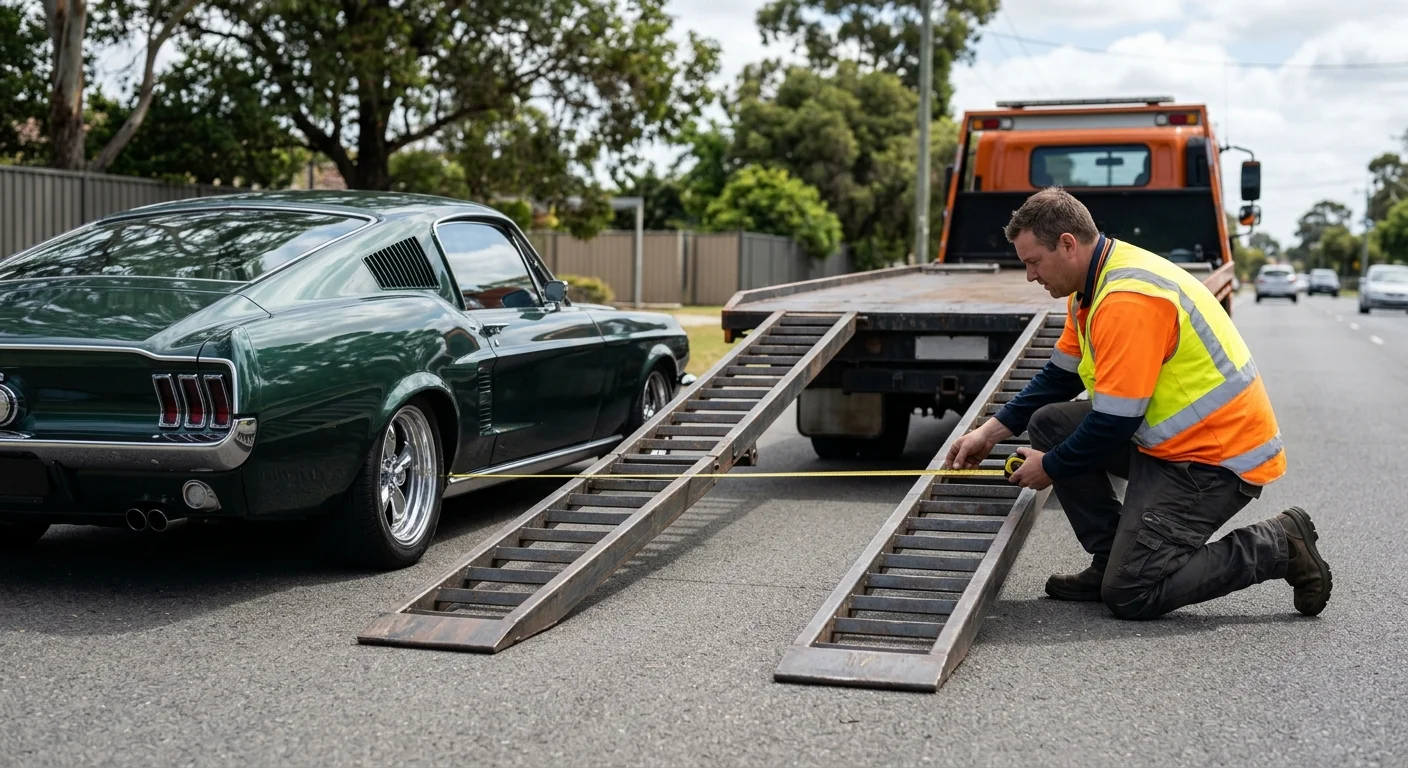
Describe the car and its current condition
Start with the year, make, model, and body style. Give the operator the exact vehicle, not just “an old Chevy” or “a restored Porsche.” Modified cars may no longer match their original factory dimensions.
Explain why the car needs transport. Tell the operator whether it starts, runs, and stays running. Say whether it can move under its own power. If it was involved in a collision, identify every visibly damaged area.
Mention changes that affect the pickup plan. These might include a lowered suspension, air suspension, a front splitter, side pipes, wide wheels, or a long front overhang. Don’t assume the operator will recognize every modification from the model name.
Also describe anything loose or unfinished. A project car may have an unsecured hood, missing glass, disconnected drivetrain parts, or interior pieces awaiting installation. Tell the operator before dispatch, even if the car still rolls.
Use direct language during intake:
- The engine starts, but the transmission won’t engage.
- The rear wheels are locked.
- The suspension is lowered.
- The front bumper is loose.
- The car has no working brakes.
- The vehicle is inside a residential garage.
Photos can help explain details that are hard to describe. Send full side views, front and rear views, and close photos of visible problems if the referred operator accepts them.
Our exotic and classic vehicle towing service connects owners with independent local operators. Quick Tow Chicago doesn’t own the transport equipment. The operator must review the vehicle details and confirm the job requirements.
Report clearance, steering, and wheel problems
Ground clearance deserves its own conversation. Don’t simply describe the vehicle as “low.” Identify the lowest visible point and explain whether the car clears its current driveway, garage entrance, or parking surface.
Tell the operator about front splitters, rocker panels, side exhaust pipes, rear diffusers, and low-mounted components. If you know a measured clearance, share the measurement. Don’t guess. A clear photo taken at ground level may be more helpful than an uncertain number.
Steering condition matters too. Confirm whether the wheel turns, whether the steering is locked, and whether the key is available. If the front wheels are stuck at an angle, say which way they point. Mention a broken steering component or damaged suspension as soon as you notice it.
Report the condition of all four wheels and tires. The operator should know about a flat tire, missing wheel, seized brake, broken axle, or wheel that won’t rotate. If a tire loses air after sitting, say that instead of calling it usable.
A few precise details can prevent confusion during pickup:
- Can the car roll forward and backward?
- Do all four wheels turn freely?
- Does the steering respond?
- Does the parking brake release?
- Is the car resting unusually low on one corner?
- Are loose body panels near any wheel?
Don’t try to diagnose an unfamiliar mechanical problem for the operator. Describe what you can see and what the vehicle does. Let the operator decide whether the planned setup still fits the job.
Repeat these details before dispatch. A low-clearance car towing request is different from a standard roadside description because small modifications can change the loading conversation.
Ask which transport setup the operator will bring
Tell the referred operator what you require, then ask what equipment they plan to bring. Don’t treat “classic car tow” as the name of one fixed setup. The operator needs to match the plan to the car’s condition and the pickup location.
If you want a flatbed, state that directly. Ask the operator to confirm it rather than assuming one will arrive. Our flatbed towing service page explains how to request that option through Quick Tow Chicago, but the independent operator confirms the equipment used for the job.
Owners sometimes want enclosed transport for weather protection or a longer move. Quick Tow Chicago doesn’t promise enclosed transport. Ask whether the referred operator offers it, whether it’s available for this pickup, and whether the vehicle fits their stated requirements.
Ask direct questions about the proposed process:
- What transport equipment are you bringing?
- Have you reviewed the vehicle’s clearance and wheel condition?
- What information do you still need before pickup?
- Can you work with the available loading space?
- Where does the operator expect contact with the vehicle?
- Does the operator need the key or owner’s manual instructions?
- What should be removed or secured before pickup?
If the car has manufacturer transport instructions, have them ready. Show the operator the relevant information before loading begins. Don’t substitute advice from a forum or another vehicle owner for instructions that apply to your car.
Price also needs confirmation before dispatch. Quick Tow Chicago doesn’t set operator prices. You get the quoted price before anyone is dispatched. Make sure the quote reflects the condition, access, destination, and transport setup you described.
When the operator arrives, compare the proposed setup with the plan discussed by phone. If something has changed, pause and address it before the vehicle moves.
Check loading access at both locations
The car may be ready while the property isn’t. Describe the pickup point and destination with the same care you use for the vehicle.
A classic stored in a Pilsen alley presents a different access problem than one parked in a Naperville driveway. A downtown garage near Lower Wacker isn’t the same as an open lot beside I-88. Give the operator enough detail to evaluate both ends of the trip.
At the pickup location, report:
- Whether the car is indoors or outside
- The garage level and posted clearance
- Ramps, slopes, curbs, gates, or tight turns
- The width and condition of the approach
- Whether other vehicles block a straight path
- Access codes, loading rules, or property contacts
- The direction the car currently faces
Do the same for the destination. A restoration shop may have a preferred entrance or delivery area. A residential garage may require the car to approach from one direction. Confirm where the operator can stop and where the vehicle needs to be placed.
Tell the operator if the car is on the Kennedy, Dan Ryan, Stevenson, Edens, or another expressway. Include the direction of travel, nearest exit, and the vehicle’s position. IDOT’s Emergency Traffic Patrol manages Chicago-area traffic disruptions and hazards, but IDOT says those patrols don’t repair or tow vehicles.
If you’re searching for a tow truck near you in Chicago, location details matter more than a neighborhood name alone. Share the actual pickup point and any access limits.
Don’t move other people’s property or block shared access without permission. Arrange building, garage, shop, or lot access before the operator reaches the site.
Document the vehicle before it moves
Create a clear record before pickup. Photograph the vehicle while it remains in its original position. Use steady, well-lit images that show the complete car and its visible condition.
Take photos from each corner, then capture both sides, the front, and the rear. Include the roof, wheels, glass, lower body, and interior if accessible. Photograph existing scratches, cracks, dents, loose trim, and damaged wheels more closely.
Don’t hide existing damage from the operator. Point it out before loading. If the vehicle has fresh paint, a custom finish, or delicate exterior pieces, identify those areas directly. Ask the operator to acknowledge the information and explain the plan they’re offering.
Record practical details too. Note the odometer reading if it’s visible. Photograph loose parts that remain inside the car. Remove personal items, important papers, and detached valuables before pickup when possible. Confirm what keys and instructions will travel with the vehicle.
At the destination, inspect the car before it’s moved into storage or repair space. Take another set of photos from similar angles. Keep the quote, invoice, operator information, and written messages with both photo sets.
Documentation doesn’t replace a careful conversation. It gives everyone a shared reference for the vehicle’s starting condition and the service requested.
Before movement begins, complete one final check:
- The operator has the correct destination.
- The equipment matches what was discussed.
- Existing damage has been identified.
- Access is open at both locations.
- Keys and vehicle instructions are accounted for.
- The quoted price was provided before dispatch.
If any answer has changed, address it before pickup continues.
When to call us
Call when the vehicle can’t be moved normally or needs an operator to evaluate its clearance, condition, and access. The line takes calls 24 hours a day, and calls are recorded after a notice. Once the requirements and quote are confirmed, an independent local operator gets dispatched to you. Call us at (773) 830-6930.