A damaged travel trailer tire creates two problems: where to stop and what help to request. Roadside help may fit when an operator confirms the issue can be handled where the trailer sits. Transport may be needed when the wheel, axle, access, or destination makes on-site service unsuitable.
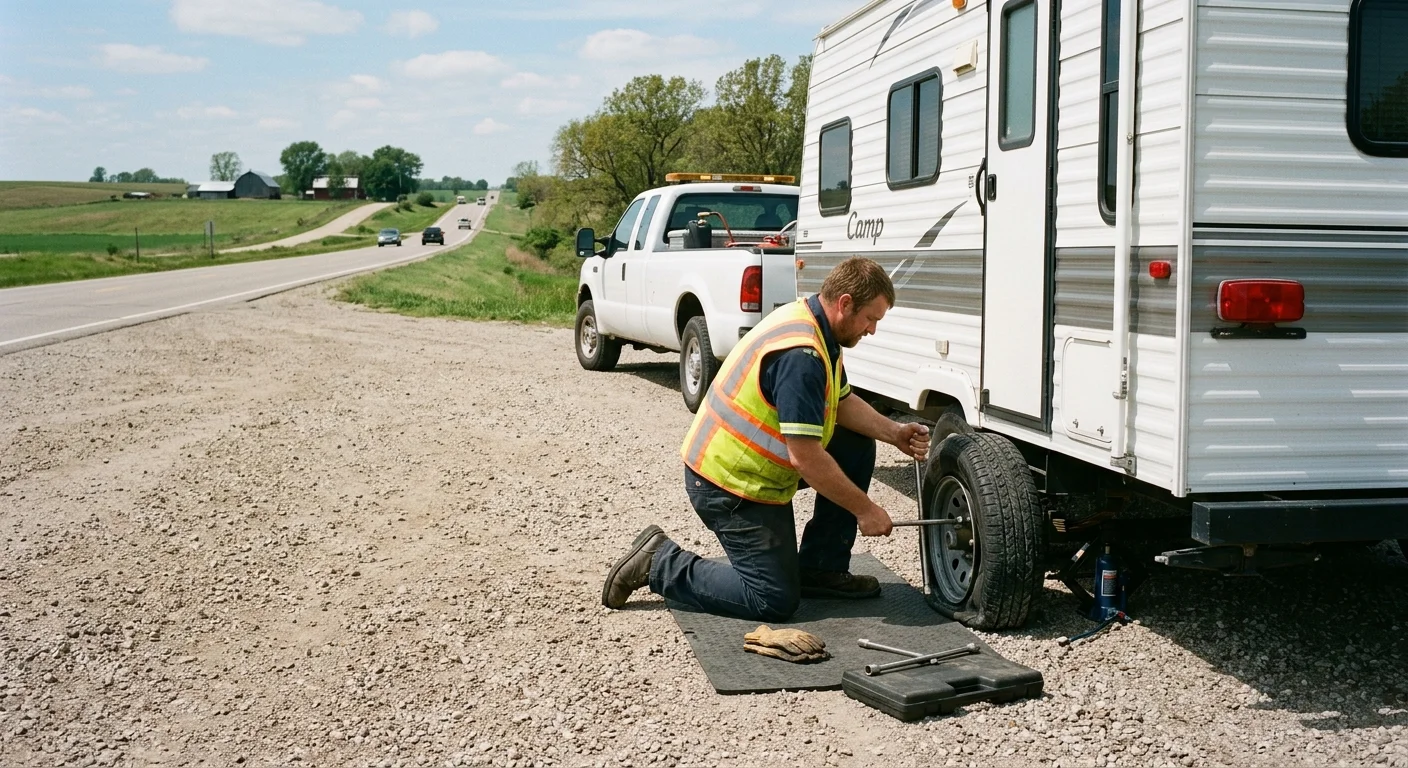
Get the trailer and tow vehicle into a safe position
Your first decision isn’t about the tire. It’s about getting away from moving traffic without making the situation worse.
Stop where you can maintain control of the tow vehicle and trailer. Don’t continue toward a preferred parking lot if the combination no longer feels stable. If there’s a collision, fire, injury, or immediate traffic danger, call 911. Follow instructions from police, fire crews, or roadway personnel already at the scene.
Once stopped, stay out of active lanes. Don’t crawl beneath the trailer or stand beside the damaged wheel when traffic passes close by. Observe the tire from a protected position if that’s possible. Your location may limit what an operator can safely assess or handle.
Chicago-area expressways add another layer. A breakdown on the Kennedy, Dan Ryan, Eisenhower, Stevenson, Edens, Bishop Ford, or Tri-State isn’t the same as a tire failure in a large parking lot. Share your travel direction, nearest exit, and visible landmarks. A dropped location pin also helps distinguish nearby ramps and frontage roads.
The IDOT Emergency Traffic Patrol, often called the Minutemen, patrols Chicago-area expressways. Its workers establish emergency lane closures, warn traffic, and protect responders. They don’t repair vehicles or tow them away. Seeing an IDOT patrol vehicle doesn’t mean trailer service has been arranged.
Tell the referral line if the trailer blocks a lane or sits near a curve. Also report soft ground, a narrow shoulder, or limited overhead space. Those details help an independent operator decide whether roadside help can be considered at that location.
Describe the damaged tire, wheel, and axle
A clear description helps the operator separate a possible tire service call from a trailer transport request. You don’t need to diagnose the failure. Report only what you can see without entering traffic or getting beneath the trailer.
Start with the damaged tire’s position. Identify the driver’s side or passenger side. If the trailer has more than one axle, explain whether the tire is toward the front or rear. Say whether the tire looks deflated, separated, or visibly torn. Mention loose pieces around the wheel without handling them.
Describe the wheel next. Report whether it appears upright or tilted. Note visible contact between the rim and pavement. Mention any obvious damage around the wheel opening, fender, or nearby trailer body. Smoke, an unusual smell, or scattered parts should also be reported immediately.
Don’t tell dispatch that the axle is bent unless that has been confirmed. Instead, describe what looks different. A wheel sitting at an unusual angle gives an operator more useful information than an uncertain diagnosis. Photos can help when they can be taken from a protected position.
The operator also needs to know about the tow vehicle. Say whether it remains connected, starts normally, and can be controlled. Explain whether the trailer appears level or has shifted. If both units need assistance, make that clear before anyone is dispatched.
This information helps an operator assess the reported problem and proposed location. It doesn’t replace an on-scene inspection. Travel trailer tire failure towing can require different equipment from a passenger vehicle call, so confirm that the operator has reviewed the trailer details before dispatch.
When roadside help may fit the situation
Travel trailer roadside assistance may fit when the trailer is in a workable location and the reported issue appears limited to the tire or wheel. The operator must make that call after reviewing the trailer, access, and available replacement.
Tell the operator whether you carry a spare. Don’t describe it as usable unless you’ve confirmed its condition and fit. Share any tire markings, trailer information, and photos the operator requests. If there’s no spare, ask what the proposed roadside service actually covers. The answer may change the plan or destination.
Location matters as much as the tire. An operator may view a wide paved lot differently from a narrow expressway shoulder. A private lot can also have gates, posted access rules, or an owner who controls entry. Share those conditions before dispatch instead of assuming a service vehicle can reach the trailer.
Roadside help is an assessment category, not a promise that every tire failure can be handled where it happened. Confirm that the operator works with travel trailers and has reviewed the reported wheel position. Ask what should happen if the on-scene assessment finds damage beyond the tire.
Quick Tow Chicago connects callers with independent local operators across Chicago and communities in Cook, DuPage, Kane, and Will counties. We don’t perform the work or set the operator’s price. The price is quoted before dispatch.
That distinction matters when searching for trailer flat tire help. A general roadside request may omit the trailer entirely. Lead with the fact that you’re towing a travel trailer, then provide its details. That gives the operator a better basis for accepting or declining the call.
When trailer transport may be needed
Trailer transport may be the better request when the reported problem doesn’t appear confined to a replaceable tire. A tilted wheel, damaged wheel opening, loose parts, or a trailer that has shifted should be described before anyone proposes moving it.
Those signs don’t prove a specific mechanical failure. They do tell the operator that a simple tire-service assumption may be wrong. Ask whether the trailer should remain where it is until the wheel, axle, suspension, or nearby structure can be assessed.
A travel trailer also isn’t an ordinary passenger car. Length, width, height, axle arrangement, hitch setup, wheel condition, and road access can affect the operator’s plan. Our guide to whether a regular tow truck can move an RV or trailer explains why the trailer must be discussed before equipment is sent.
Don’t request a specific truck configuration based only on a photo or internet advice. Give the operator verified trailer information and ask what setup is proposed. Confirm how the damaged wheel will be addressed during movement. The operator should also know whether the tow vehicle needs separate help.
Choose a destination before dispatch when possible. Contact the destination and confirm that it accepts your trailer and the reported problem. Share its full address, entrance instructions, and closing conditions with the operator. Don’t assume every tire store, repair shop, campground, or storage property can receive a disabled trailer.
A longer move needs the same preparation. Our guide to a long-distance tow from Chicago covers the details that shape a quote. Quick Tow Chicago doesn’t publish a trailer transport rate because the independent operator sets it. You’ll receive the quoted price before dispatch.
Share dimensions, access, and destination details
Good dispatch information starts with verified measurements. Read them from the trailer’s labels, manufacturer material, or paperwork when available. Don’t guess a weight, height, or length to complete the call.
Share the trailer’s make and model if known. Provide its overall length, width, and height only when those figures are confirmed. State the number of axles and identify the affected wheel. Describe the hitch type and whether the tow vehicle remains connected.
Next, explain the physical access. Tell the operator whether the trailer sits on pavement, gravel, grass, or another surface. Mention gates, tight turns, low structures, steep approaches, parked vehicles, or other visible limits. If you’re inside a campground, storage property, or private lot, confirm where an operator may enter.
Road location needs equal care. On I-80 near Joliet, I-88 in DuPage County, or the Kennedy near the Jane Byrne Interchange, a nearby street name may point to the wrong side of the road. Provide your direction of travel, nearest exit, mile marker if visible, and a location pin. Describe whether the trailer is on a shoulder, ramp, frontage road, or nearby property.
Share the destination’s exact address and contact instructions. Confirm that the property expects the trailer and can receive it. If the destination changes, tell the operator before movement begins. A repair shop, tire provider, campground, and storage facility may each expect a different entrance.
Before dispatch, repeat the main facts: damaged wheel position, visible condition, trailer dimensions, tow vehicle status, access limits, and destination. Then confirm the operator’s proposed service and quoted price. For broader help with this type of move, see our RV and trailer towing service.
When to call us
Call when the wheel looks displaced, the trailer can’t be controlled safely, or an operator needs to determine whether roadside service or transport fits. Our line takes calls 24/7, and calls are recorded after a notice while we work to match you with an independent local operator. Call us at (773) 830-6930.