Sometimes a regular tow truck can move an RV or trailer. The answer depends on the unit, its condition, the available space, and the equipment an operator brings. A qualified RV towing service needs those details before anyone is dispatched.
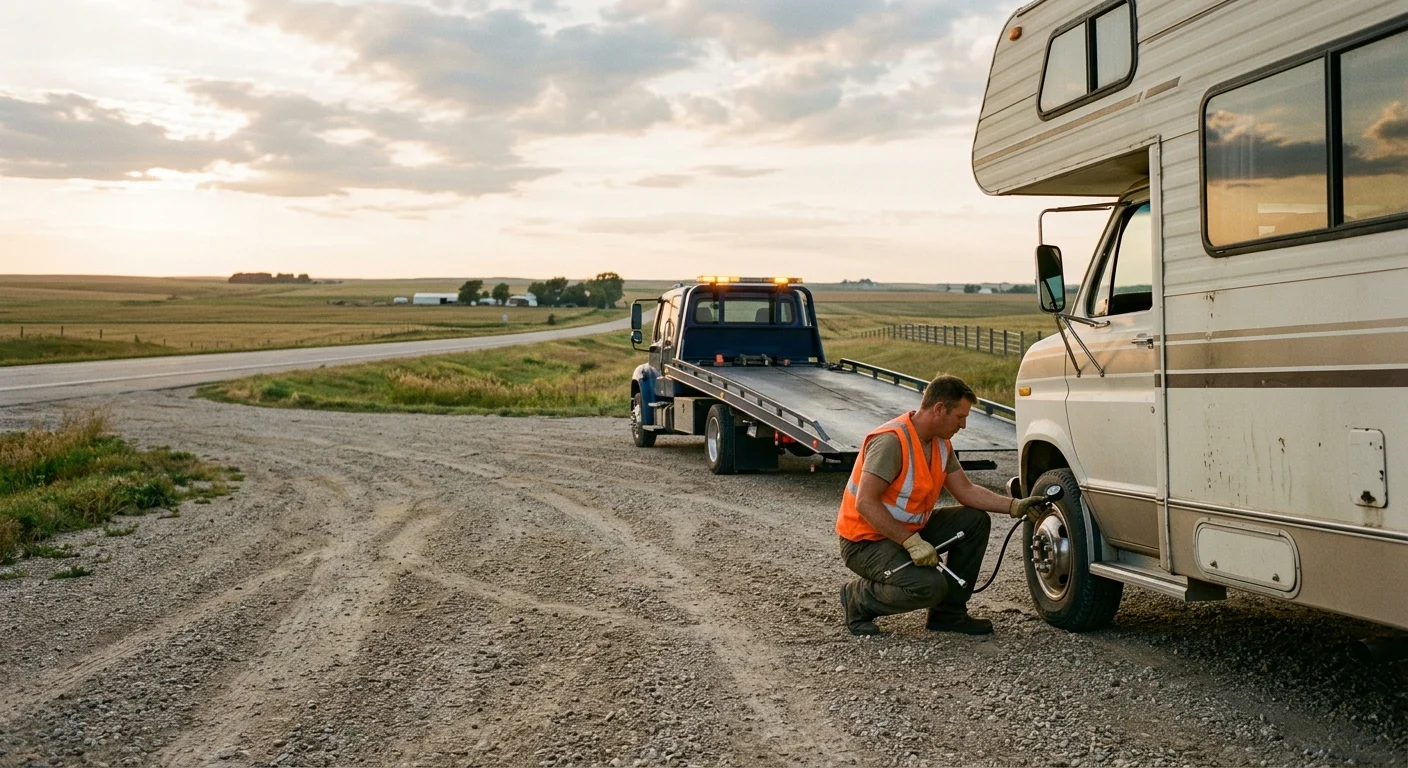
Identify what kind of RV needs help
Start with the exact type of vehicle or trailer. “RV” can describe several very different setups. A self-propelled motorhome presents a different towing problem than a travel trailer sitting behind a pickup.
Tell the dispatcher whether you have a motorhome, travel trailer, fifth wheel, pop-up camper, toy hauler, or another towable unit. If it’s a motorhome, share its class when known. A photo of the entire roadside setup can help an operator understand what you mean.
Provide the year, make, model, and identifying information shown on the unit. Read the dimensions and weight information from its manufacturer label or owner’s manual. Don’t guess. An operator may need those figures to decide whether the available truck and towing arrangement fit the job.
Explain where the RV has stopped. A motorhome in a wide Tinley Park parking lot offers different access than one beside the Kennedy. A trailer near an I-80 interchange may have more loading room than one inside a tight Chicago alley.
The direction of travel also matters on divided highways. Include the roadway, nearby exit, cross street, and travel direction. If you’re near a campground, storage facility, or service plaza, give its exact entrance.
Our RV and trailer towing service connects drivers with independent local operators. We don’t own tow trucks or decide which equipment gets used. We collect the job details, then match the request with an operator prepared to evaluate it.
Separate motorhomes from towable trailers
A motorhome combines the living space and drivetrain in one vehicle. When it breaks down, the operator must assess the motorhome itself. Its size, wheel condition, steering condition, and accessible towing points all affect the proposed setup.
A towable trailer has no driving power of its own. Its relationship with the tow vehicle becomes part of the call. The trailer may be intact while the pickup or SUV is disabled. In other cases, the trailer itself has a damaged wheel, axle area, hitch, or body.
A travel trailer towing service needs to know whether the trailer remains connected. Say whether the tow vehicle can roll, steer, and brake normally. Also report whether the trailer stands level or leans toward one side. Don’t attempt to change the hitch arrangement just to make the request sound simpler.
Fifth wheels need their own description. Tell the dispatcher that the coupling sits in the truck bed. Mention whether the tow vehicle remains beneath the trailer and whether the landing gear appears stable. The operator can then assess the complete configuration.
Don’t request a “tow truck for RV” without explaining which part needs help. The tow vehicle, the trailer, and the combined setup may require different planning. That distinction can prevent a mismatched dispatch.
If the motorhome stopped on an expressway, include any directions already given by police or roadway personnel. IDOT’s Chicago-area Emergency Traffic Patrol manages traffic disruptions and protects responders. IDOT states that its patrol does not repair vehicles or tow them away. A separate towing operator still needs to be arranged.
Measure access, height, and overall condition
Equipment fit isn’t only about the RV. The operator also needs enough room to reach it, position a truck, and move the complete setup toward the exit.
Share the RV’s published height, length, and weight information when available. Include anything mounted above or behind it. Roof air conditioners, storage boxes, ladders, bike racks, and rear cargo carriers can change the unit’s overall profile. Don’t remove or reposition anything unless the responding operator directs you.
Look at the route immediately around the vehicle. Mention low garage ceilings, gates, sharp turns, narrow alleys, soft shoulders, and parked vehicles. A motorhome inside a Chicago parking structure isn’t the same job as one in an open lot near Joliet.
Overhead clearance can remain important after the unit starts moving. Tell the dispatcher if the only exit passes beneath a canopy, building connection, tree branch, or low entrance. The operator can consider that information when choosing an approach and destination.
Describe the RV’s current position without crawling underneath it. Report whether all wheels appear present and upright. Note visible body contact with the pavement, loose exterior panels, or cargo that has shifted. If fluids are visible, say where you see them without identifying the substance unless you’re certain.
Access becomes especially important around the Jane Byrne Interchange and dense city neighborhoods. A shoulder, ramp, or service drive may offer limited working space. Our guide for drivers broken down on I-55 or I-90 explains what location details help during an expressway request.
Clear information lets the operator judge whether the job fits the available equipment. The final equipment decision belongs to that operator after reviewing the vehicle and site.
Explain the breakdown and hitch status
The reason the RV stopped helps define the request. “It won’t move” leaves too many possibilities. Describe what happened immediately before the unit became disabled.
For a motorhome, say whether the engine starts and whether the transmission can be shifted. Report any steering problem, brake concern, damaged tire, or wheel that won’t turn. If the unit left the pavement, explain which wheels are on the shoulder, grass, mud, or another surface.
For a trailer, describe both the trailer and its tow vehicle. Say whether they remain connected. Mention a separated hitch, damaged coupler, bent jack, loose safety chain, or visible wiring damage. Only report what you can observe. Don’t diagnose the cause or claim that a connection remains usable.
Wheel condition deserves specific detail. Count the visibly affected wheels and state their location. “The rear wheel on the driver’s side is angled” gives an operator more information than “the tire is bad.” Photos taken from a safe position can add useful context.
Also describe the hitch type shown on the setup. If you don’t know its name, send a clear photo instead of guessing. Tell the dispatcher whether any hitch component is touching the ground.
A roadside problem may involve recovery before transportation. A unit that has settled into mud, crossed a curb, or contacted a barrier isn’t simply parked. Mention that position during the first request so the operator can evaluate the entire job.
Leave the configuration as found unless emergency personnel direct otherwise. Accurate hitch and wheel details help the operator plan before reaching the vehicle.
Confirm equipment and destination before dispatch
The operator should review the RV details before the truck rolls. Confirm the unit type, dimensions, wheel condition, hitch status, access limits, and exact location. Ask what information the operator used to assess the equipment match.
Don’t treat “regular tow truck” as a specific equipment category. Different trucks and towing arrangements serve different jobs. A setup that works for one travel trailer may not fit a large motorhome or a damaged fifth wheel.
Destination details belong in the same conversation. Provide the facility’s name, complete address, entrance instructions, and any access limits you’ve confirmed directly. Ask the destination whether it can receive your specific RV and whether it will be open when the unit is expected. We can’t confirm another facility’s availability for you.
Long trips need more planning than a short move across town. Our long-distance towing service page explains how we connect those requests with local operators. The guide to long-distance tow costs from Chicago also explains why vehicle details and destination affect the quote.
Quick Tow Chicago doesn’t set towing prices. The independent operator provides the price before dispatch. No current universal RV rate could be confirmed because each operator evaluates the unit, equipment, pickup conditions, and destination.
Before agreeing, repeat the origin and destination. Confirm whether the request covers the motorhome, trailer, tow vehicle, or a combination. Also confirm any personal items or exterior attachments that remain with the unit.
Those few checks reduce confusion. They also give the operator a clearer picture of the Chicago-area route, from a neighborhood street to the Stevenson, Tri-State, I-57, or I-80.
When to call us
Call when the RV can’t move normally or its hitch, wheels, clearance, or roadside position requires an operator’s assessment. The line takes calls 24/7, and calls are recorded after a notice so we can use your details to line up an independent local operator. Call us at (773) 830-6930.