A Chicago city sticker is the vehicle sticker tied to Chicago’s Wheel Tax. Chicago residents responsible for a vehicle generally need one when driving, parking, leasing, or owning that vehicle in the city. Missing the deadline can start a ticket, boot, and tow chain.
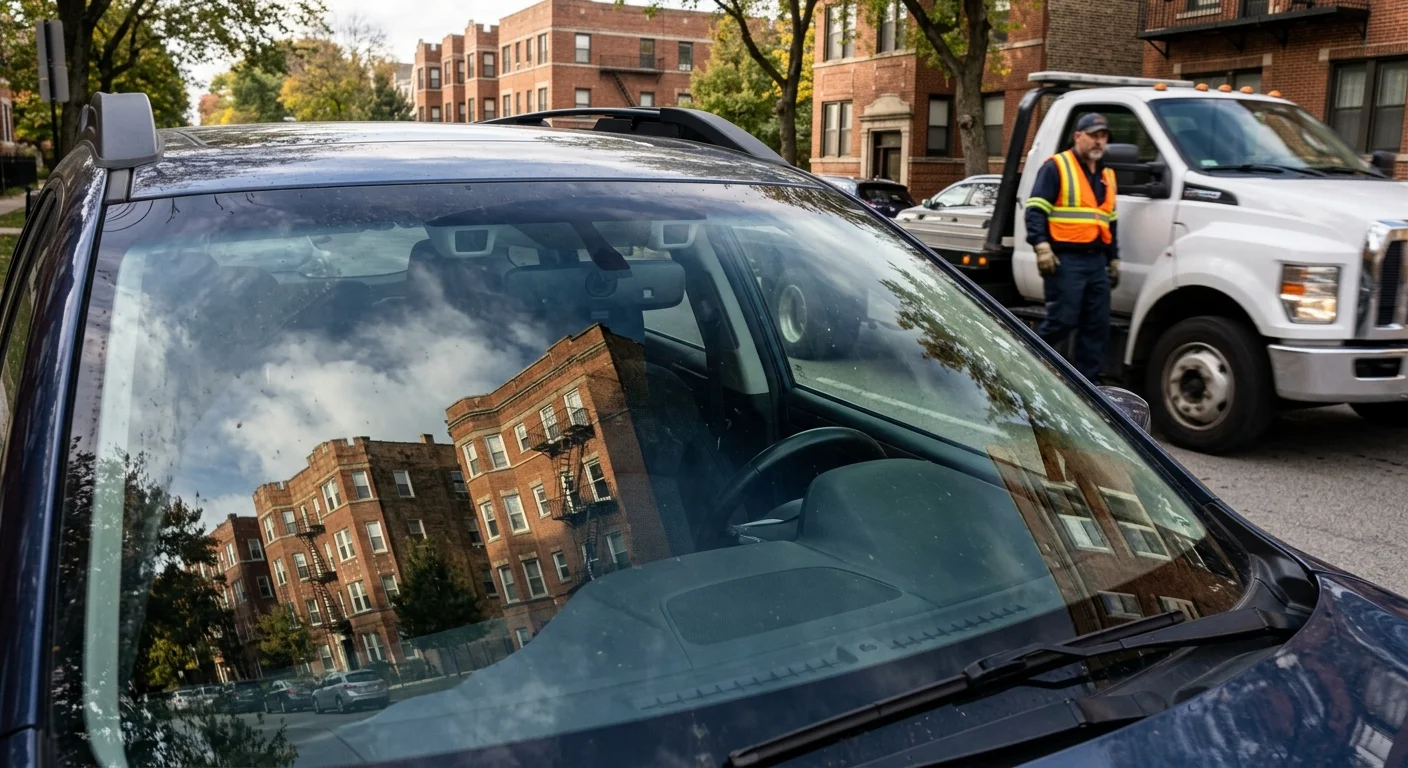
What the Chicago city sticker covers
The city sticker is how Chicago applies its Wheel Tax to vehicles. The Office of the City Clerk says the requirement covers Chicago residents driving, parking, leasing, or owning a vehicle for which they’re responsible within the city.
That wording matters. The requirement isn’t limited to people who own a house or park on a public street. Leasing a vehicle doesn’t automatically remove the obligation. Neither does keeping the car in a private parking space.
The sticker also isn’t your Illinois registration. State plates and the Chicago vehicle sticker are separate requirements. That distinction becomes especially important at a city auto pound. Chicago says a vehicle won’t be released without current state plates and a Chicago Vehicle Sticker where required.
Chicago stickers expire on the last day of their assigned month. Check the expiration information on your sticker and the City Clerk’s records. Don’t use the calendar year alone to guess when renewal is due.
The City Clerk FAQ also states that pricing may be prorated at the point of sale. It doesn’t publish a six-month or other prorated figure on the pages reviewed for this article. Ask the City Clerk or an authorized sales location for the amount that applies to your transaction.
Drivers outside Chicago should check their own municipality’s rules. A Chicago city sticker isn’t a general Cook County or suburban vehicle sticker. Cicero, Berwyn, Oak Lawn, Schaumburg, Naperville, and other municipalities may use different local requirements.
Published sticker prices and late fees
The Office of the City Clerk’s published price table is effective February 1, 2024. These amounts shouldn’t be described as 2026 prices. Confirm the amount at the point of sale before paying, since the published table has an earlier effective date.
| Sticker type | Published annual price | Published vehicle definition |
|---|---|---|
| Motorbike (MB) | $53.04 | Motorbike |
| Passenger (P) | $100.17 | Curb weight of 4,500 pounds or less and payload capacity of 2,499 pounds or less |
| Large Passenger (LP) | $159.12 | Curb weight of 4,501 pounds or more and payload capacity of 2,499 pounds or less |
| Small Truck (ST) | $235.71 | Small truck |
| Large Truck (LT) | $530.40 | Large truck |
The published senior rate is $37 per year for a Passenger, Large Passenger, or Motorbike sticker. The senior rate for a Small Truck is $156 per year.
The City Clerk lists a $60 late fee. A senior-discounted sticker has a $30 late fee. It also describes a 30-day grace period to buy without a late fee or back charge.
That 30-day purchase grace period isn’t the same as the city’s 15-day protection from ticketing after a sticker expires. They come from different city guidance and address different consequences. Don’t combine them into one deadline.
If you’re near either deadline, confirm your status directly with the Office of the City Clerk. The pages reviewed don’t publish a fixed prorated amount, so calculating one yourself could produce the wrong total.
How a sticker problem can become a tow
An expired sticker doesn’t mean a tow operator immediately takes the car. The usual connection is indirect. An expired sticker can bring a compliance ticket. Unpaid compliance tickets can add to the balance that leads to a boot. A booted vehicle can then be towed.
The city says a city sticker ticket is $250 with late fees. Its ticketing, booting, and towing reform page also says a 15-day grace period follows sticker expiration before ticketing begins. A ticket issued by mistake during that period may be dismissed through the city’s stated process.
Chicago doesn’t allow same-day or consecutive-day ticketing for the same compliance violation. The resident gets a full day to correct it. A repeated ticket issued the same day or the next day is dismissible under the city’s published reforms.
Once a vehicle is booted, the owner has 24 hours to pay the amount due or enter a payment plan before towing. The city also allows one additional 24-hour period when requested through the Department of Finance. Follow the contact instructions on the city page because agency numbers can change.
This is why ignoring a sticker ticket can become much more expensive than addressing it. The sticker starts the compliance issue. The unpaid balance leads toward the boot. The boot creates the tow risk.
What happens after a booted car is towed
First, verify where the car went. A missing Chicago vehicle might have been impounded or relocated for street work. The city advises drivers to check its Find Your Towed Vehicle tool and contact 311 before reporting the vehicle stolen.
Chicago operates four city auto pounds. All four are open 24 hours a day, every day. Our guide explains how to find your towed car in Chicago without confusing a city impound with a private-property relocation.
The city’s Common Towing Questions page publishes the standard pound charges under Municipal Code 9-92-080. The tow fee is $250 for a vehicle under 8,000 pounds and $350 for one weighing 8,000 pounds or more. Storage is $50 per day below 8,000 pounds and $100 per day at or above that weight.
Those are City of Chicago pound charges. They aren’t Quick Tow Chicago prices, private-property relocation rates, or suburban village fees. Our Chicago impound fee guide breaks down that boundary.
To redeem a vehicle, Chicago requires valid photo identification and proof of ownership. Accepted proof may include a valid title, current registration card, or a bill of sale no more than 30 days old. Lessees need their lease agreement. A representative needs an original notarized letter from the owner.
A valid driver’s license is required if you’ll drive the vehicle away. Current state plates and a city sticker are also required where applicable. Police investigative holds and certain offense-based holds can’t be cleared at the pound.
What to do when your sticker is expired
Check the expiration date first. Then confirm the vehicle type and account status with the Office of the City Clerk. Don’t guess the sticker category from the car’s appearance. Passenger and Large Passenger classifications depend on the published weight and payload definitions.
If you received a ticket within 15 days after expiration, review the city’s dismissal instructions. If the ticket repeats a compliance violation on the same or following day, review that process too. Keep the sticker receipt, ticket, and any confirmation issued by the city.
A boot changes the priority. The city’s published clock gives the owner 24 hours to pay or enter a payment plan before towing. A single additional 24-hour period may be requested through the Department of Finance. Don’t assume moving the car, covering the boot, or waiting will stop the process.
Once the vehicle reaches a pound, gather the release documents before traveling across Chicago. A missing title, registration card, lease, notarized owner letter, or valid license can prevent release. The city also requires the sticker where applicable.
If the released vehicle won’t start or can’t be driven safely, that becomes a separate roadside problem. Quick Tow Chicago can match you with an independent local operator through the emergency towing. The operator sets the price, and it’s quoted before dispatch.
When to call us
Call when the vehicle has been released but can’t leave under its own power, or when a breakdown requires an independent local operator. The line takes calls 24/7, and calls are recorded after a notice. Call us at (773) 830-6930.