An empty Chicago parking space doesn’t always mean your car was impounded. Check the city’s vehicle lookup first, then contact Chicago’s non-emergency city-service line before filing a theft report. The city may have relocated the car for street work or an emergency.
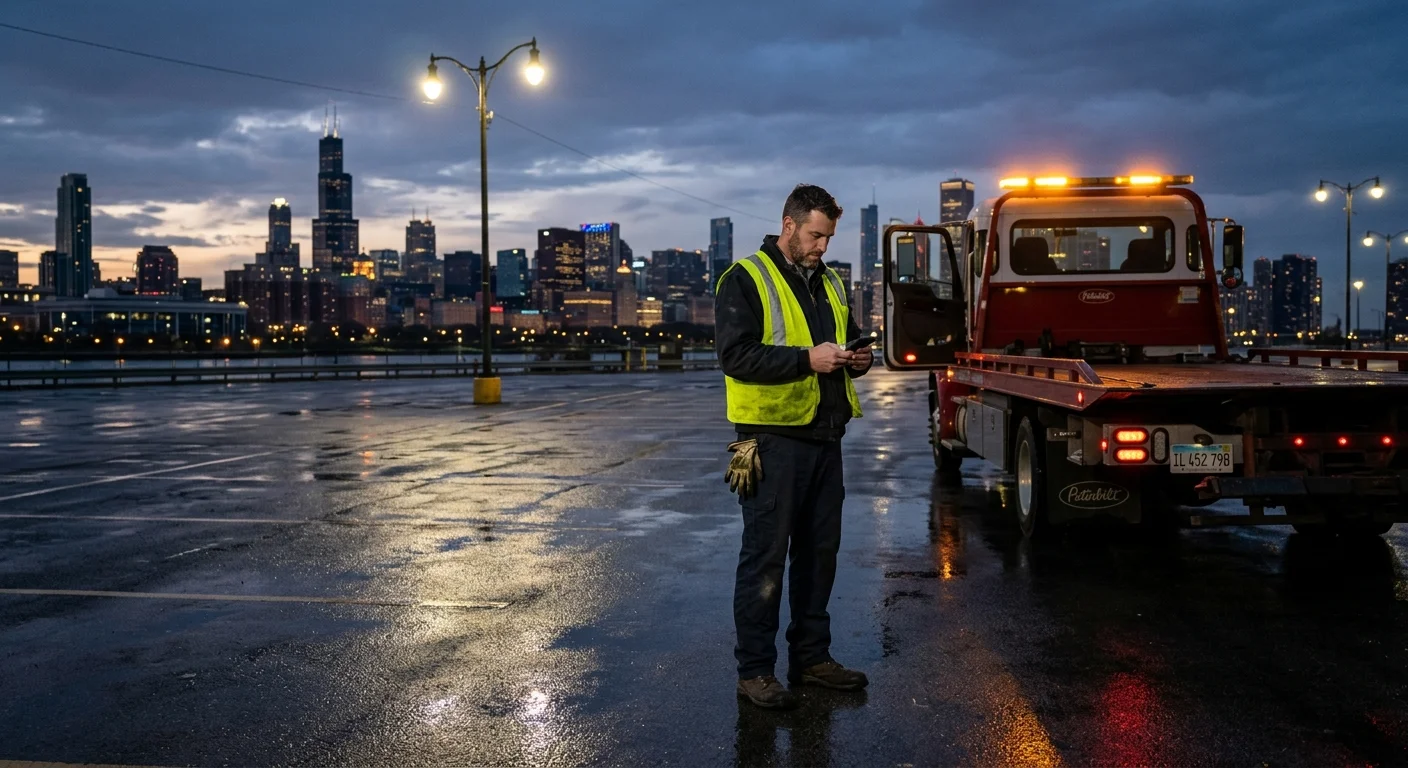
Check for a city relocation first
Start with Chicago’s official Find Your Towed Vehicle tool. Enter the requested vehicle information carefully. A wrong plate character can send you in the wrong direction.
Chicago makes an important distinction between an impound and a relocation. An impounded vehicle goes to a city auto pound. A relocated vehicle was moved from its parking spot to clear the street.
Relocations can happen during street work or an emergency. The city says an emergency relocation may occur without time to post signs. That matters when you return to a legal parking space and find nothing there.
Don’t report the car stolen before completing the city check. Chicago’s own instruction is to use the lookup and contact its non-emergency city-service line first. Have your plate number, vehicle description and last known location ready.
Write down where and when you parked. Note the street side, nearest intersection and any temporary signs. Details matter around Lower Wacker Drive, busy downtown loading zones and streets affected by construction.
Snow restrictions can also change where a vehicle ends up. Chicago has an overnight winter ban and a separate two-inch snow ban. One can result in an impound, while the other may lead to relocation. Treat “towed” and “relocated” as two different search results.
Identify which towing system applies
Chicago-area drivers deal with three separate towing systems. Choosing the right one saves time and prevents fee confusion.
A City of Chicago tow applies inside city limits. The city operates its own pound system and publishes its own release rules. This is the system covered by the city vehicle lookup.
A suburban municipal impound is different. A car taken in Cicero, Berwyn, Oak Lawn, Schaumburg, Naperville or Joliet isn’t under Chicago’s pound schedule. Contact the police department or municipal impound office for the place where the vehicle was taken.
Illinois law allows municipalities to impose reasonable administrative fees related to their processing costs. It doesn’t set one statewide dollar cap. Vehicle owners have a right to an administrative hearing, with notice required within 10 days of impoundment. The initial hearing must be held no later than 45 days after that notice is mailed. Our guide to Illinois impound laws explains that process further.
The third system is private-property relocation. This can apply in an apartment lot, retail parking area or private garage. In Cook, DuPage, Kane and Will counties, private-property removals are performed by commercial vehicle relocators licensed by the Illinois Commerce Commission.
Look for the towing sign at the property entrance or affected parking area. It should identify the relocator and provide contact information. You can review the distinctions in our guide to Chicago private towing laws or visit the Illinois Commerce Commission’s relocation towing page.
Find the correct Chicago auto pound
Once the city lookup confirms an impound, record the pound name and address. Chicago has four auto pounds, and all are open around the clock throughout the year.
The Central Auto Pound is at 500 E Wacker Drive on the lower level. The O’Hare International Airport Auto Pound is on Bessie Coleman Drive. Auto Pound 2 is at 103rd Street and Doty Avenue. Auto Pound 6 is at 701 N Sacramento Avenue.
The location matters. Driving to Sacramento Avenue won’t help if the vehicle is at O’Hare. Confirm the pound before leaving, especially if someone else is giving you a ride.
Abandoned vehicles create another wrinkle. Chicago’s published pages use different naming conventions for the locations receiving them. Contact the city’s non-emergency service line when the lookup result isn’t clear. Ask which lot physically holds the vehicle before traveling there.
A police hold can also stop release. Certain impounds require action through the Vehicle Impoundment Office at 400 W Superior Street. These include cases connected with DUI, firearms, narcotics, reckless driving, suspended or revoked licenses and other listed violations. Pound staff can’t release a vehicle while that hold remains.
For location details, see our guide to the four Chicago auto pounds. Keep the lookup result or confirmation information available when you arrive.
Bring the right release documents
Every person claiming a vehicle from a Chicago pound needs valid photo identification. The city also requires proof of ownership. Accepted ownership records include a valid title, current registration card or bill of sale no more than 30 days old.
A lessee needs the lease agreement. Someone acting for the owner needs an original notarized letter from that owner. The person driving the vehicle out must have a current valid driver’s license.
The vehicle also needs current state plates and a Chicago Vehicle Sticker where required. Release won’t occur while the vehicle remains under a police hold. Check these requirements before arranging transportation to the pound.
Chicago’s Common Towing Questions page lists the accepted payment methods. The pounds accept cash, Visa, Mastercard, Discover, American Express and Diners Club. They don’t accept checks or money orders.
The same city page publishes a $250 tow fee for vehicles under 8,000 pounds. The published fee is $350 at 8,000 pounds or more. Storage is listed at $50 per day below that weight and $100 per day at or above it. These are City of Chicago charges under Municipal Code 9-92-080, not Quick Tow Chicago prices or suburban impound rates.
Chicago’s winter parking-ban page publishes a different fee set for ban tows. Don’t merge the two schedules. Our city impound fee guide explains why the source of the tow matters.
Act when the lookup shows nothing
A blank lookup result isn’t proof that the car was stolen. Confirm the plate entry, then contact Chicago’s non-emergency city-service line. Ask whether the vehicle was relocated but hasn’t appeared where you expected.
If the car disappeared from private property, inspect the posted towing signs. Contact the named relocator and ask where the vehicle is stored. Illinois law requires a commercial relocator to notify law enforcement in that jurisdiction within one hour of removal.
No current maximum private-relocation rate could be confirmed from the approved public sources used for this page. Don’t rely on an unsourced number from a forum or old social post. Ask the Illinois Commerce Commission to confirm the current rate and complaint process.
Private relocators must follow separate storage and payment rules. No storage fee applies when a vehicle is claimed within 24 hours with proper identification and payment. Storage also can’t be charged for days or hours when the relocator is closed to the public.
If the vehicle disappeared in a suburb, use that municipality’s process. Don’t search only Chicago’s system. The city’s fees and pound rules don’t control an impound in Aurora, Elgin, Joliet or another suburban municipality.
Once the city, property relocator and local law enforcement have no record, report the vehicle missing to the police department with jurisdiction over its last location. Keep your plate, VIN, registration and parking details available. Don’t delay if there are signs of forced entry, broken glass or another immediate safety concern.
Chicago normally stores an impounded vehicle for no less than 21 days from the date it mails notice to the registered owner. The owner may request one 15-day extension before disposal. That isn’t a 30-day punitive hold. It’s a disposal timeline, so start the recovery process promptly.
When to call us
Call when you’ve located the vehicle, secured its release and learned it can’t be driven safely. Quick Tow Chicago can line up an independent local operator through the emergency towing, with the price quoted before dispatch. The line takes calls 24/7, and calls are recorded after a notice. Call us at (773) 830-6930.