What to do if you slide on ice or hit a flooded viaduct
Chicago winters glaze bridges and ramps before flat streets, and a heavy rain fills a viaduct underpass faster than it looks. First step: stop making it worse.
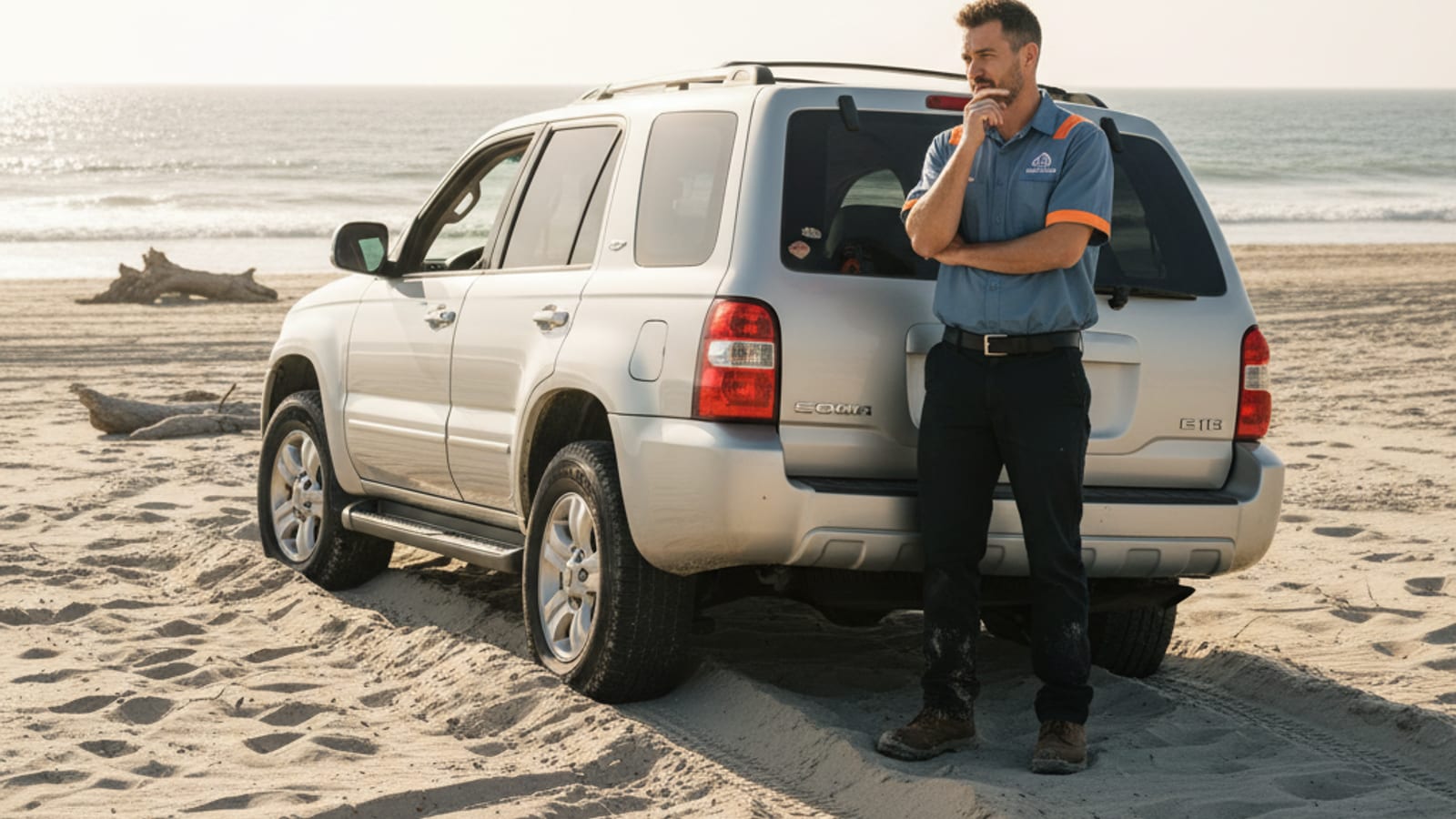
What you'll learn
- Why spinning the wheels on ice or in water digs you in deeper, fast
- Why you should never try to restart a car that stalled in standing water
- Why bridges, ramps and overpasses ice over before flat residential streets do
- Why a Chicago viaduct underpass floods faster and deeper than it looks
- When to stop trying and call a winch-out
Step by step
- Stop spinning the wheels immediately, on ice or in standing water. Every few seconds of spin sinks or slides you further.
- Check that no one is hurt and the vehicle is not unstable before doing anything else.
- If the car stalled in standing water, do not try to restart it. Cranking a flooded engine can cause catastrophic damage.
- On ice, straighten the wheel and ease off the gas. Do not fight a slide with hard steering or braking.
- If it is safe to do so, clear snow, ice or debris away from the front and back of each drive wheel.
- Slide traction mats, cardboard, cat litter or floor mats under the drive wheels on ice or a soft shoulder.
- If it does not move after two careful tries, stop. Call for a winch-out.
The numbers behind a Chicago winter are the reason this comes up so often. The National Weather Service records a 38.4 inch annual snowfall normal at O'Hare, 121.3 nights a year with a low at or below freezing, and 6.5 nights at or below zero. The snowiest winters on record are 1978-79 at 80.6 inches and 1977-78 at 71.2 inches, and the 1967 and 1979 storms are the reason the city bans parking on 107 miles of arterial street from 3am to 7am between December 1 and April 1 whether or not snow is present. A winch-out is far cheaper than a hydrolocked engine or a slide into a guardrail. Ask whether the assigned operator has recovery mats or a winch for that job.
Why Chicago gets both problems
This metro has a long, genuinely cold winter and a summer that produces intense, fast rain. The winter numbers are published: 38.4 inches of snow in an average year at O'Hare, 121.3 nights at or below freezing, and 6.5 nights at or below zero. That freeze-thaw cycle is also what breaks the pavement, which is why pothole season runs from the first thaw straight through spring. In summer the risk changes shape entirely and becomes water, moving fast, in places that are lower than the street around them.
Where ice hits first
Ice does not arrive evenly. Bridges, ramps and overpasses lose heat from above and below, so the elevated segments of the Kennedy, the Dan Ryan, the Eisenhower and the Tri-State, and every ramp at the Jane Byrne Interchange, glaze over while the ground-level road a block away still looks clear. Untreated side streets in the bungalow belt freeze next and stay frozen longest where they get little winter sun. On the tollways, open ground west and south of the metro adds blowing and drifting snow on top of the ice, which is a different hazard again.
Viaducts and underpasses
Chicago's flood risk on the road is rarely a river. It is a viaduct underpass that sits lower than the street on either side and fills during a heavy rain while the approach looks completely normal. Water in an underpass is deeper than it appears from a driver's seat, because you cannot see the dip until you are in it, and a stalled car in a filling underpass is a genuinely dangerous place to sit. If the water is still rising, get yourself clear first and tell us that when you call.
Never restart a car that stalled in standing water
If your engine died while you were driving through water, do not turn the key again. An engine draws air in through the intake, and if the intake is sitting below the waterline, cranking the starter pulls water into a cylinder instead of air. Water does not compress the way an air-fuel mixture does, so when the piston comes up to compress it, something has to give, usually a bent connecting rod or a cracked engine block. That single extra crank is often the difference between a car that needs a tow and a car that needs a new engine.
Salvage assessment or a normal tow? What decides it
How high the water got is what matters, not how deep it looked from the driver's seat. If water reached the door sills, the floorboards or higher, treat this as a flood-damage assessment rather than a routine breakdown: get the vehicle to a shop or your insurer's preferred facility for inspection before anyone tries to start it, and let them check the engine, transmission fluid and electrical system before you spend a dollar on repairs. Illinois salvage rules turn on damage exceeding 50 percent of fair market value in several situations, so this decision has paperwork attached to it. If the water only came up around the tires and the engine never took a breath of it, this is usually a normal stuck-vehicle recovery and tow. A vehicle that slid into a curb or guardrail on ice should get the same suspension and alignment check before it goes back on the road.
The parking bans are part of the winter picture
Two of them run every winter and they catch people out for different reasons. The Winter Overnight Parking Ban covers 107 miles of arterial street from 3am to 7am, December 1 through April 1, regardless of snow, with signage posted permanently and violators towed to Pound 2 at 103rd and Doty Avenue or Pound 6 at 701 N Sacramento. The separate Two-Inch Parking Ban covers another 500 miles of main street and activates once at least two inches of snow are on the street, at any hour and on any date, and the city says vehicles parked there may be ticketed or relocated. Both exist because of the 1967 and 1979 storms that brought the city to a standstill.
Why an ice- or flood-affected vehicle goes on a flatbed
A vehicle that slid on ice or sat in standing water, even briefly, may have compromised brakes, a soaked electrical harness, bent suspension or damage in places you cannot see from outside. Ask the assigned operator to quote a flatbed for ice or flood recovery rather than a wheel lift, so nothing drags, nothing spins, and nothing is asked of a drivetrain that might already be damaged.
Rather have a pro handle it?
Towing and roadside service across the Chicago metro. One local line, taking calls 24/7.
Keep learning.
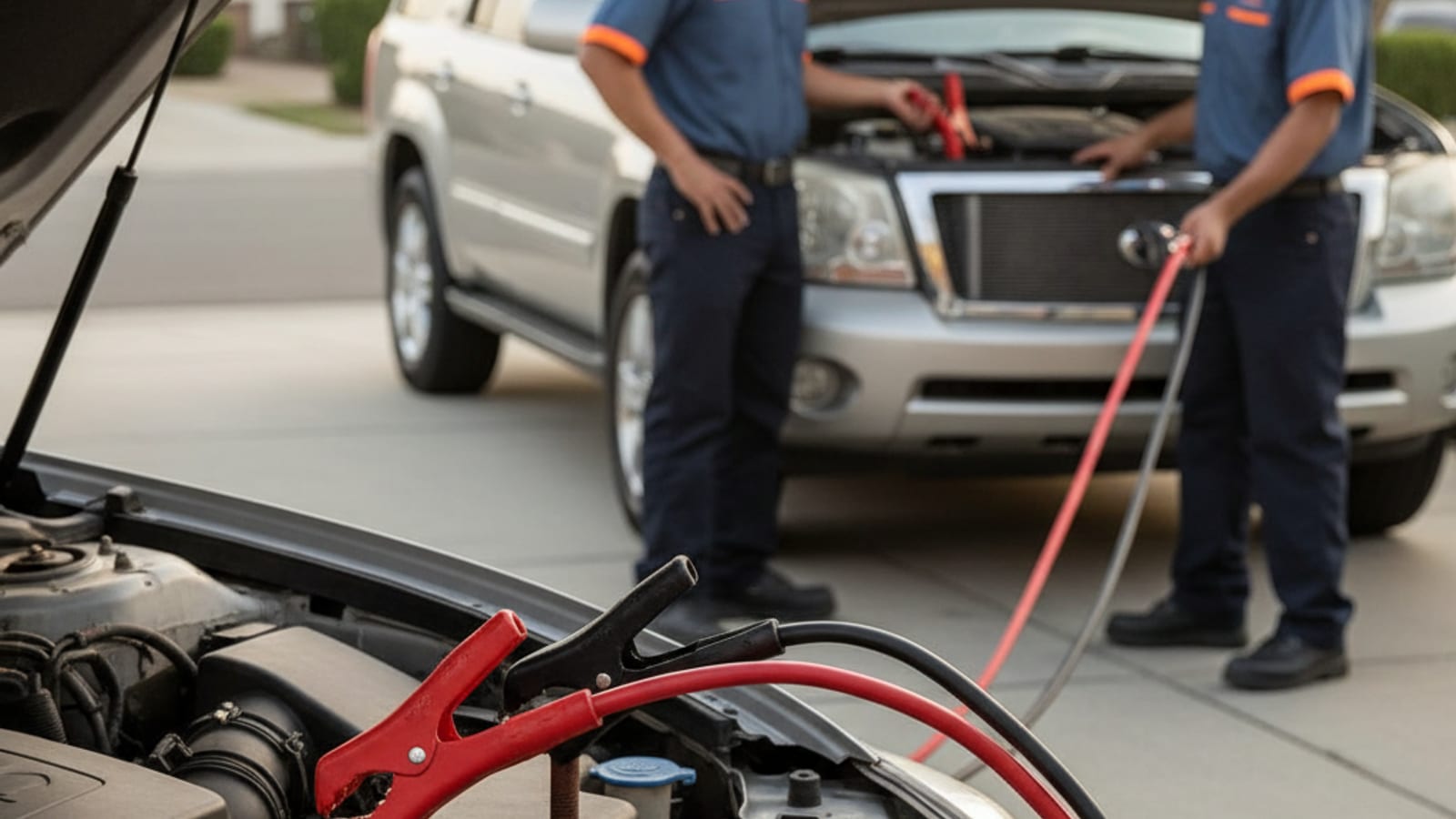
Jump-start a dead battery safely
Jumper cables are simple until you hook them wrong. Do it right and you'll avoid sparks, ruined electronics, and a tow you didn't need.
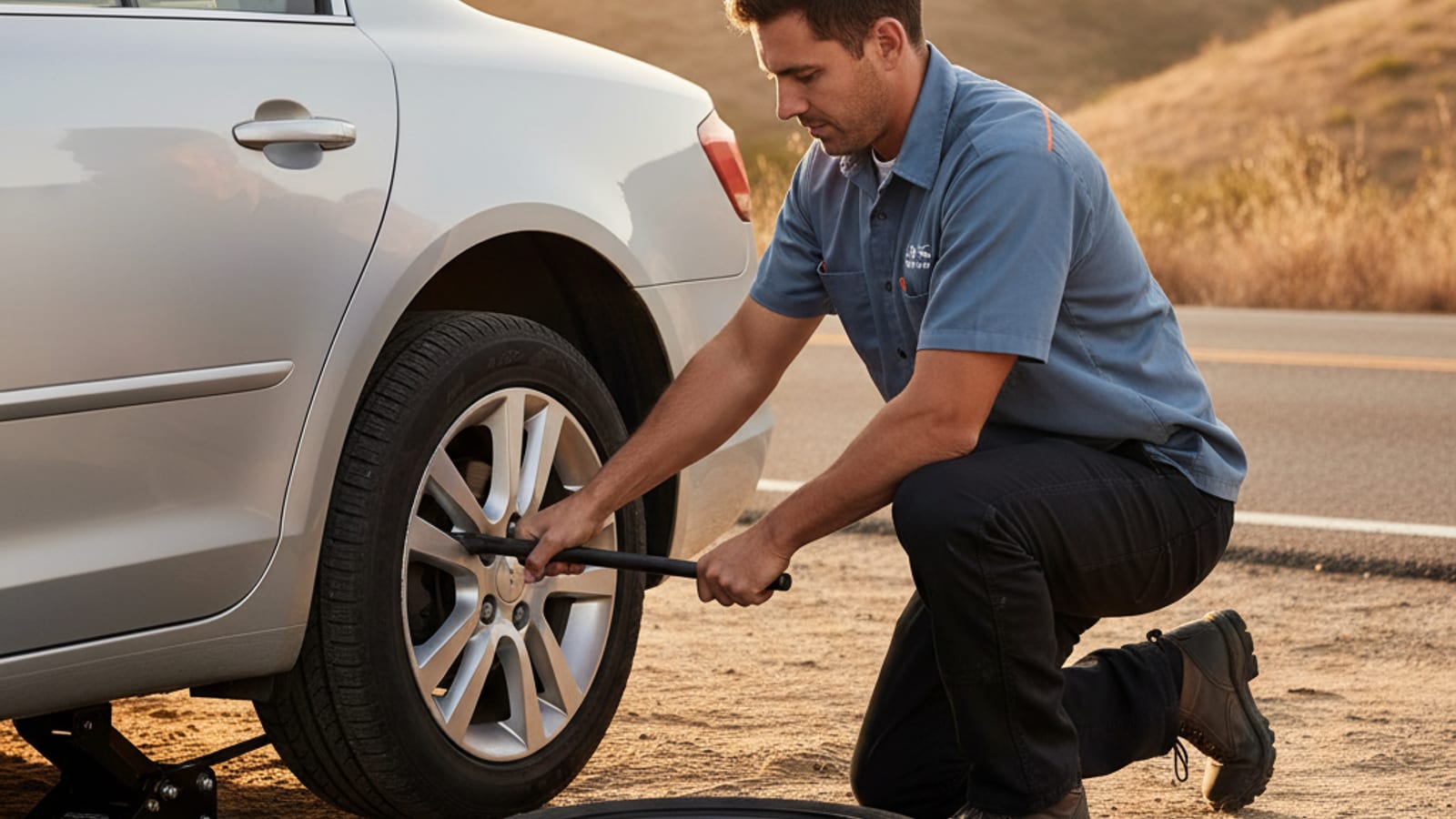
Change a flat tire on the side of the road
The difference between a 20-minute shoulder stop and an hour on the phone with a tow company is knowing where the spare and jack live before you need them.
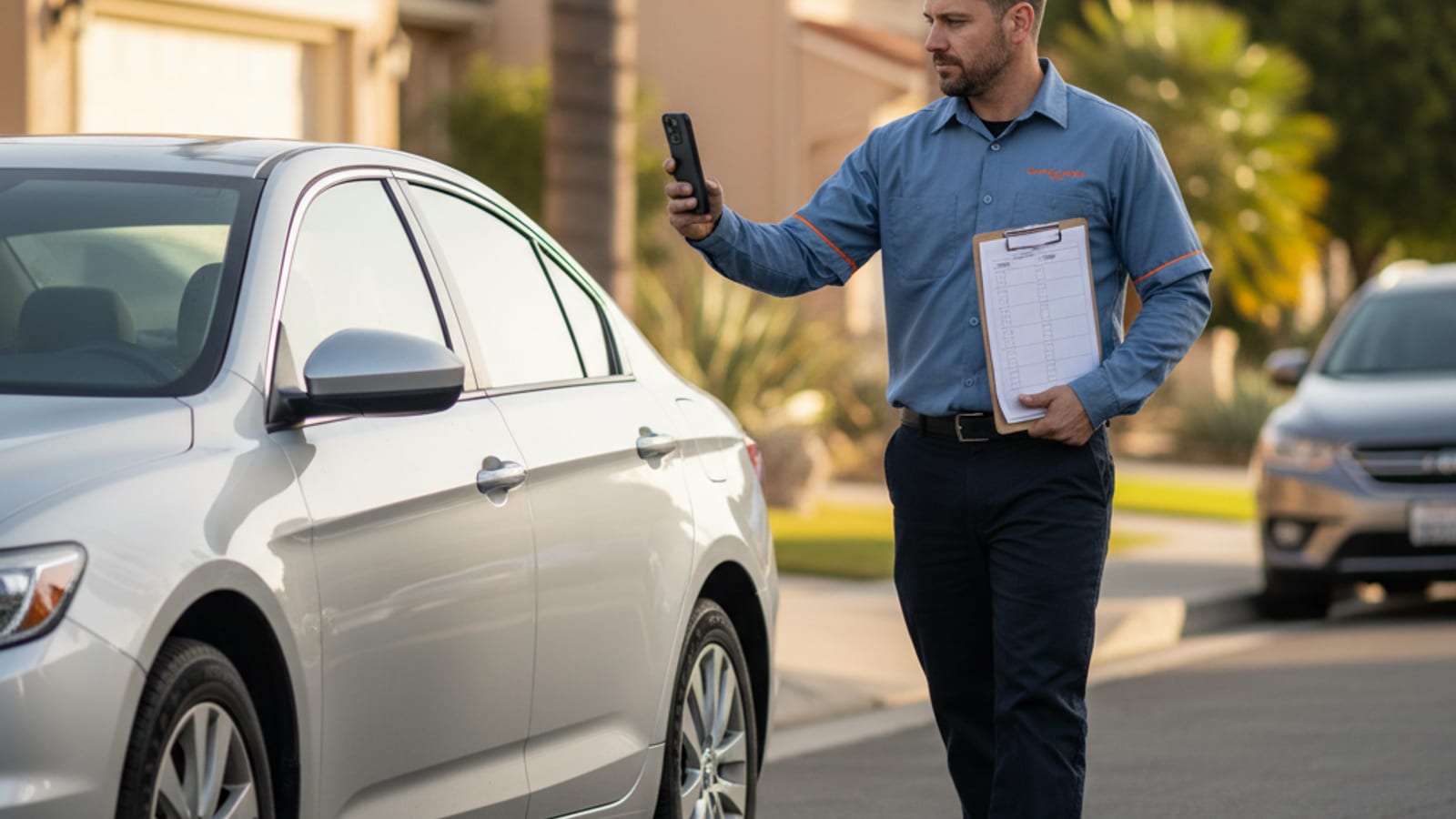
Prepare your vehicle for a tow
A few minutes of prep before the tow truck arrives saves time, avoids damage, and makes the whole call go faster.