If your car is missing near 400 Lower Wacker, verify where you parked first. Then check Chicago’s vehicle lookup and contact 311 before assuming it went to a city pound.
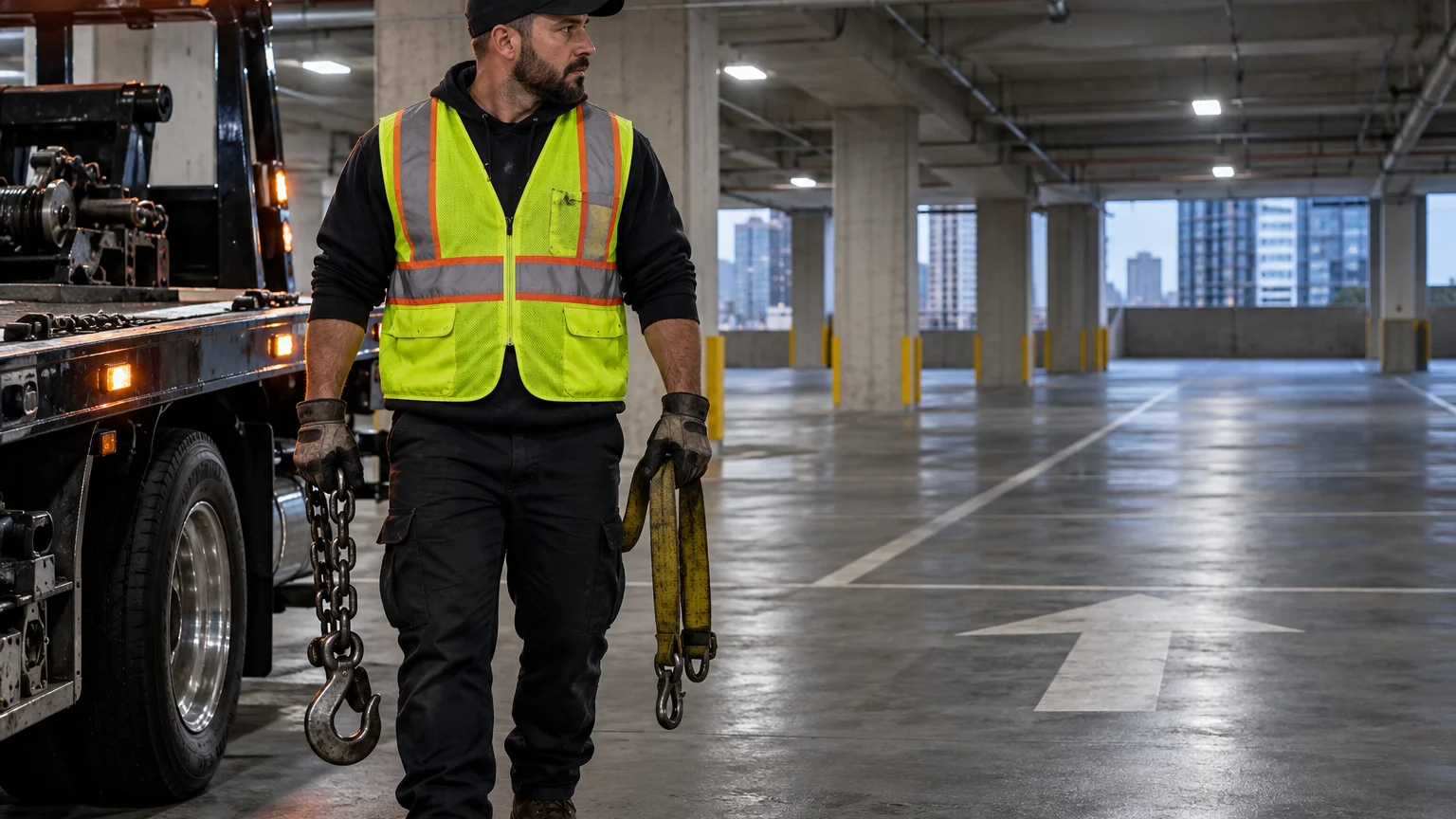
A Lower Wacker tow can follow several paths. The city may relocate a car, a city agency may impound it, or a private relocator may remove it from a garage or restricted lot. The right search depends on who controlled the parking space.
Start with the garage, ramp, or Lower Wacker block you used
Begin with the last place where you physically saw the car. Don’t rely only on a map pin labeled 400 Lower Wacker. Downtown parking entrances, lower-level roads, garages, and pedestrian exits can leave you on a different block from the vehicle.
Open any parking receipt, reservation, or garage confirmation you received. Look for the operator’s name, the facility address, and the entrance you used. A card charge may also identify the garage company. Compare that information with signs near the entrance or payment area.
If you parked at a curb, note the nearest ramp, building entrance, bridge, or numbered address. Take pictures of posted restrictions and temporary notices. Street work, emergency access, and other agency activity can lead to a relocation rather than an impound.
Walk the immediate block only when you can use a normal pedestrian route. Lower-level roadways can make a nearby car hard to see from the sidewalk or upper street grid. Don’t enter vehicle-only ramps or restricted garage areas while searching.
Ask the garage office or building desk whether it controls the space. Request the name of any towing operator listed for that property. Don’t accept an unsupported guess about the destination. You need the actual operator, city record, or posted notice.
Write down four details before making calls: the plate, vehicle identification number if available, make and model, and exact parking location. These details separate your car from similar vehicles and make every later search easier.
City relocations and private-lot tows follow different paths
A missing car near Lower Wacker isn’t automatically at a Chicago auto pound. Chicago says vehicles may be relocated to clear streets for agency work. During an emergency, that can happen without an opportunity to post signs.
A relocation means the car may be parked on another nearby street. An impound means it was taken into the city pound system. A private tow from a garage or controlled lot follows another process.
Start with our guide to finding a towed car in Chicago if you don’t know which path applies. It explains how to separate a relocation, city impound, and private-property removal.
For a private-property removal in Cook County, the towing company must be a commercial vehicle relocator licensed by the Illinois Commerce Commission. Illinois law also requires the relocator to notify law enforcement in the jurisdiction within one hour of removal. The Illinois Commerce Commission’s relocation towing page provides its consumer guide and complaint process.
A garage tow may therefore require information from the property manager, posted tow notice, relocator, and local law enforcement record. Our private property towing service page explains the role of the independent relocators we connect with.
Don’t treat 400 Lower Wacker and the Central Auto Pound as the same address. Chicago publishes the Central Auto Pound at 500 E Wacker Drive, Lower Level. Read the separate 500 E Lower Wacker vehicle guide only after a city source identifies that pound.
Use 311 and published city sources before you pay or drive
Search the plate through Chicago’s official Find Your Towed Vehicle tool. Enter the information carefully, then check for the pound or relocated position shown in the result.
Chicago’s own instructions say to call 311 before reporting a missing vehicle stolen. Give 311 the plate, make, model, color, and last known parking location. Mention that the car was near 400 Lower Wacker and specify whether it was on a public roadway or inside a garage.
A blank lookup result doesn’t prove the car was stolen. The record may require more identifying information, or the removal may have been handled by a private relocator. Recheck the plate for common errors and confirm the state shown on the registration.
If a city result names a pound, use that result as your destination. Chicago operates four auto pounds, so proximity isn’t enough to determine where the car went. A Lower Wacker parking location doesn’t establish that the vehicle is at the Central Auto Pound.
Review Chicago’s Common Towing Questions before leaving. That page lists the city pounds, accepted payment methods, redemption documents, and conditions that can prevent release.
Don’t pay from an unsolicited text or an unverified payment link. Match the company, pound, or destination against the city result, garage notice, or information supplied by the responsible property. If the source can’t identify who removed the car, keep checking through 311 and the property manager.
Confirm the operator or pound on the notice, not a guess
Once you get a name, confirm it against a primary record. For a city tow, use the city lookup result and official towing page. For a garage tow, compare the property’s posted notice with the relocator’s business name and contact details.
Illinois private-property towing signs generally must identify the appropriate commercial vehicle relocator and the towing charge. The signs must meet other placement and visibility requirements under state law. Residential property clearly reserved for residents has a limited exception to the express-notice requirement.
Save pictures of the parking signs, stall markings, garage entrance, receipt, and any notice left at the scene. Also save screenshots of the city lookup result. These records help if the property, relocator, or city agency gives conflicting information.
Ask the confirmed holder what identification and ownership documents it requires. For a Chicago pound, the city lists valid photo identification and proof of ownership. Acceptable ownership documents include a valid title, current registration card, or a bill of sale no more than 30 days old. Lessees need their lease agreement.
A representative needs an original notarized letter from the owner. Anyone driving the vehicle out needs a current valid driver’s license. The city also requires current state plates and a Chicago Vehicle Sticker where applicable. A police investigative hold can prevent release.
Check those requirements before traveling downtown or across the city. Don’t assume a photo of one document will be accepted. If the vehicle is subject to a listed impoundment hold, the pound can’t clear that hold itself. Follow the city’s instructions for the Vehicle Impoundment Office instead.
What a referral line can do after a Lower Wacker tow
Quick Tow Chicago can’t search city records, release an impounded car, cancel a private-property tow, or decide a fee dispute. We’re a referral service. We match drivers with independent local tow operators when another tow is actually needed.
That point often comes after you locate the vehicle. A car may be released from a pound but remain unsafe or unable to move under its own power. It may have a dead battery, damaged tire, lost key, collision damage, or a mechanical problem.
Get the release authorized before arranging pickup from a city pound or private storage location. Confirm that the facility permits an outside operator to enter. Ask where the operator should meet you and whether the vehicle can roll, steer, and brake.
Tell our line the exact pickup address shown by the official source. Also share the destination, vehicle type, drive condition, clearance limits, and whether you have the keys. Garage height and access matter because Lower Wacker and connected parking structures aren’t ordinary curbside pickup points.
For a disabled car that has already been released, our emergency towing referral page explains what dispatch needs. The independent operator sets the price. You’ll receive that price before anyone is dispatched.
If the problem is a disputed private tow, document it before arranging another move. The Illinois Commerce Commission regulates private-property relocators in Cook, DuPage, Kane, Will, and Winnebago counties. A referral operator can move a released vehicle, but can’t decide whether the earlier removal complied with state law.
When to call us
Call after you’ve located the car, confirmed its release, and learned it can’t be driven away. The line takes calls 24/7, and calls are recorded after a notice. We can line up an independent local operator, with the price quoted before dispatch. Call us at (773) 830-6930.