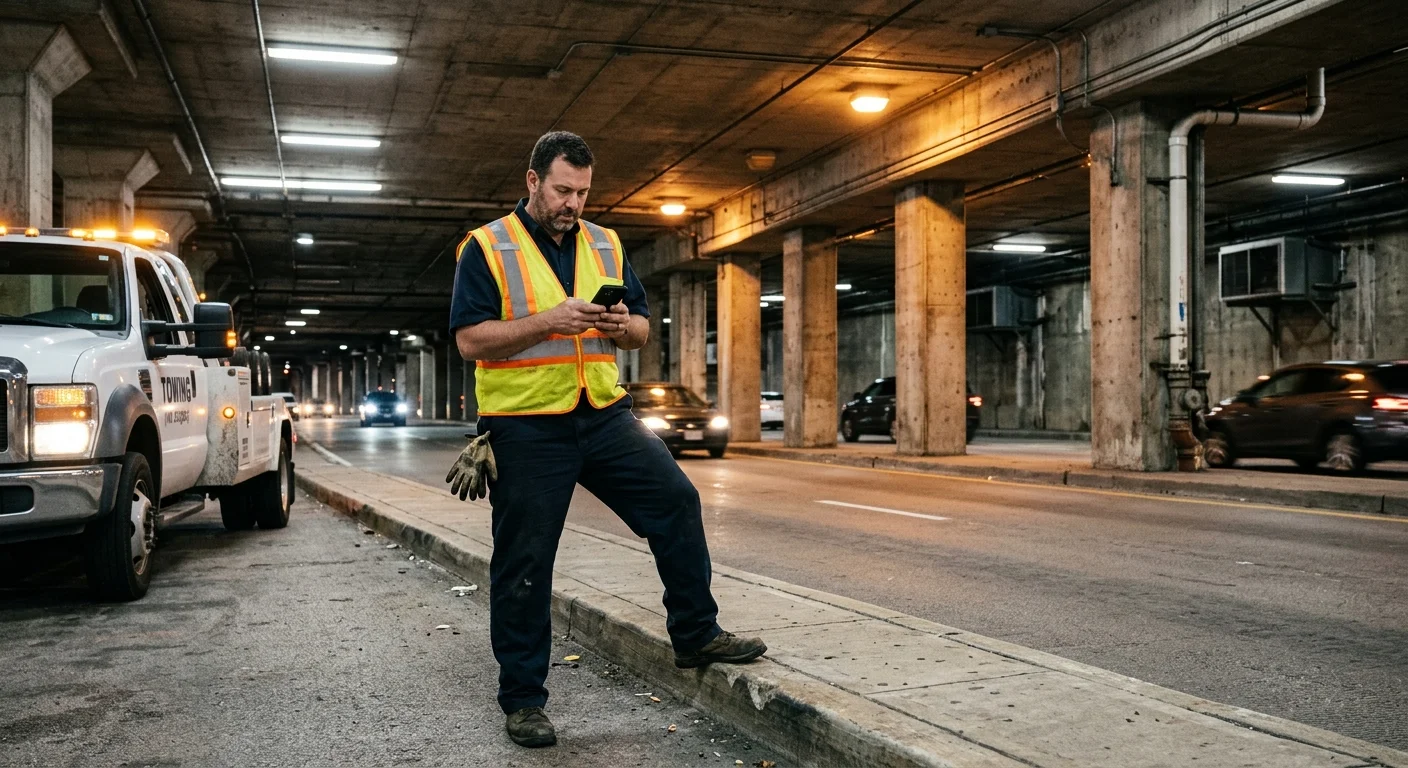
Chicago lists Central Auto Pound at 500 E Wacker Drive, Lower Level. If a search result mentions 500 E Lower Wacker, check the city’s vehicle lookup before heading there. Your car may be at that pound, another city pound, or a relocation site.
Check Chicago’s vehicle lookup before traveling
Start with Chicago’s official Find Your Towed Vehicle tool. Follow the fields shown there and compare the result with your vehicle information. The location displayed by the city matters more than an old search result, map listing, or secondhand message.
The city’s towing page identifies the Lower Level address as Central Auto Pound. Still, the address alone doesn’t confirm that your car is currently there. Chicago operates four auto pounds, and vehicles can also be relocated instead of impounded. That’s why traveling directly to 500 E Lower Wacker can waste a trip.
Read the complete lookup result before leaving. Confirm the listed destination and any instructions shown with the record. Save a screenshot or write down the information. Check it again if there’s a delay before you travel.
A search for “500 E Lower Wacker tow” often reflects one urgent question: where is the car right now? The official lookup is the shortest path to that answer. Our broader guide explains how to find your towed car in Chicago when the search result is unclear or no record appears.
Don’t treat an empty result as proof that the car was stolen. A recent tow or street relocation may require another check through the city. Chicago specifically directs drivers to contact its city-services line before filing a stolen-vehicle report.
Use 311 to separate a relocation from an impound
A Chicago impound and a Chicago relocation aren’t the same event. An impounded car goes into the city pound system. A relocated car was moved to clear a street for work by a city agency or another public operation.
The city says an emergency relocation can occur without time to post signs. That detail matters on Lower Wacker, where a missing car may lead someone to assume it went directly to the Central Auto Pound. The official record may instead point to a different location.
Chicago’s instructions say to use 311 before reporting the vehicle stolen. Give the city-services representative the identifying details they request. Ask whether the car was impounded or relocated, and request the current location recorded by the city. Don’t rely only on where the car was originally parked.
If the city confirms a relocation, follow the location information it provides. A relocation doesn’t automatically mean the car is waiting at 500 E Lower Wacker. If the city confirms an impound, ask which pound holds it and whether the record shows a hold.
The distinction also affects your next step. A relocated car may simply need to be collected from its new location. An impounded car must go through the city’s release process. Our guide to impound versus relocation in Chicago explains that split in more detail.
Quick Tow Chicago doesn’t operate the city lookup, Central Auto Pound, or any relocation site. We also can’t change a vehicle’s status. The city controls those records and decides whether a vehicle can be released.
Confirm the location and release details
The City of Chicago’s Common Towing Questions page lists Central Auto Pound at 500 E Wacker Drive, Lower Level. It also lists three other city pounds. All four are open around the clock, every day of the year.
That schedule doesn’t mean every vehicle can be released immediately. A car held for a police investigation can’t be released while the hold remains. Certain offense-related holds must be handled through the Vehicle Impoundment Office at 400 W Superior, not at the pound counter.
Before traveling, confirm three things with the city: the exact pound, the current release status, and the amount due. Quick Tow Chicago can’t see the city’s account or remove a hold. We also don’t operate a payment counter or storage yard.
For an ordinary City of Chicago tow under Municipal Code 9-92-080, the published tow fee is $250 for a vehicle under 8,000 pounds. It’s $350 for a vehicle weighing 8,000 pounds or more. Published storage is $50 per day under 8,000 pounds and $100 per day at or above that weight.
Those are the city’s published pound charges, not Quick Tow Chicago’s prices. Winter parking-ban tows have a separate fee set on another city page, so the two schedules shouldn’t be mixed. Ask the city to confirm which charge applies to your vehicle before paying.
The city says its pounds accept cash, Visa, Mastercard, Discover, American Express, or Diners Club. Checks and money orders aren’t accepted. Review the four Chicago auto pounds if your lookup result names a location other than Central.
Gather only the documents the official source lists
Bring the documents Chicago identifies for vehicle redemption. Every person claiming the vehicle needs valid photo identification. You’ll also need proof of ownership in one of the accepted forms.
The city lists a valid title, current registration card, or recent bill of sale. A bill of sale must be no more than 30 days old. If you lease the vehicle, bring the lease agreement.
Someone acting for the owner needs an original notarized letter from that owner. A photo, scan, or informal text message isn’t the document listed by the city. If you plan to drive the car from the pound, bring a current valid driver’s license.
Chicago also says a vehicle won’t be released without current state plates. A Chicago Vehicle Sticker is required where applicable. Charges and fines must be paid in full before release.
Check the official city page again before your trip. Requirements can depend on who owns the car, who arrives to claim it, and whether that person intends to drive it away. The pound should resolve questions about a particular record.
Keep your vehicle details and documents together. Make sure names and vehicle information match before leaving. If something doesn’t line up, ask the city what it will accept rather than substituting a document that isn’t on its list.
A complete folder won’t override a police or administrative hold. If the record directs you to the Vehicle Impoundment Office, handle that step before expecting the pound to release the vehicle. Quick Tow Chicago can arrange transportation after release, but we can’t act as the owner’s representative or approve documents.
Arrange a tow if the released car can’t be driven
A released car may still be unsafe or unable to leave under its own power. It may not start, a tire or wheel may be damaged, or collision damage may prevent normal driving. Don’t try to solve the transport problem until the city confirms the release.
Tell the pound that an independent tow operator will collect the car. Ask what the operator must present and where pickup should occur. Pound staff control access to the vehicle and release area, so their current instructions take priority.
Then share the confirmed pound name and address with the operator. Explain the vehicle type and what prevents it from moving. Mention visible body, wheel, steering, or suspension damage. Those details help the operator choose suitable equipment without guessing.
Quick Tow Chicago is a referral service. We match drivers with independent local tow operators, but we don’t own trucks or run the pound. The operator sets the price, and it’s quoted before dispatch.
Our emergency towing service can help once the city has released the vehicle and it needs transportation. Have a safe destination ready, such as a repair shop, dealership, home, or another place authorized to receive the car.
Don’t request dispatch while a hold remains unresolved. The operator can’t overrule the city or remove a vehicle without release. Confirming that status first reduces confusion at 500 E Lower Wacker and keeps the pickup focused on transportation.
When to call us
Call when the city has released your car, but it can’t be driven from the pound. Our line takes calls 24/7, plays a recording notice, and can connect your request with an independent local operator.
Call us at (773) 830-6930.