For box truck towing in Elk Grove Village, dispatch needs a precise location, truck dimensions, load details, and an honest account of what still moves. Quick Tow Chicago uses that information to match your request with an independent local operator before anyone is dispatched.
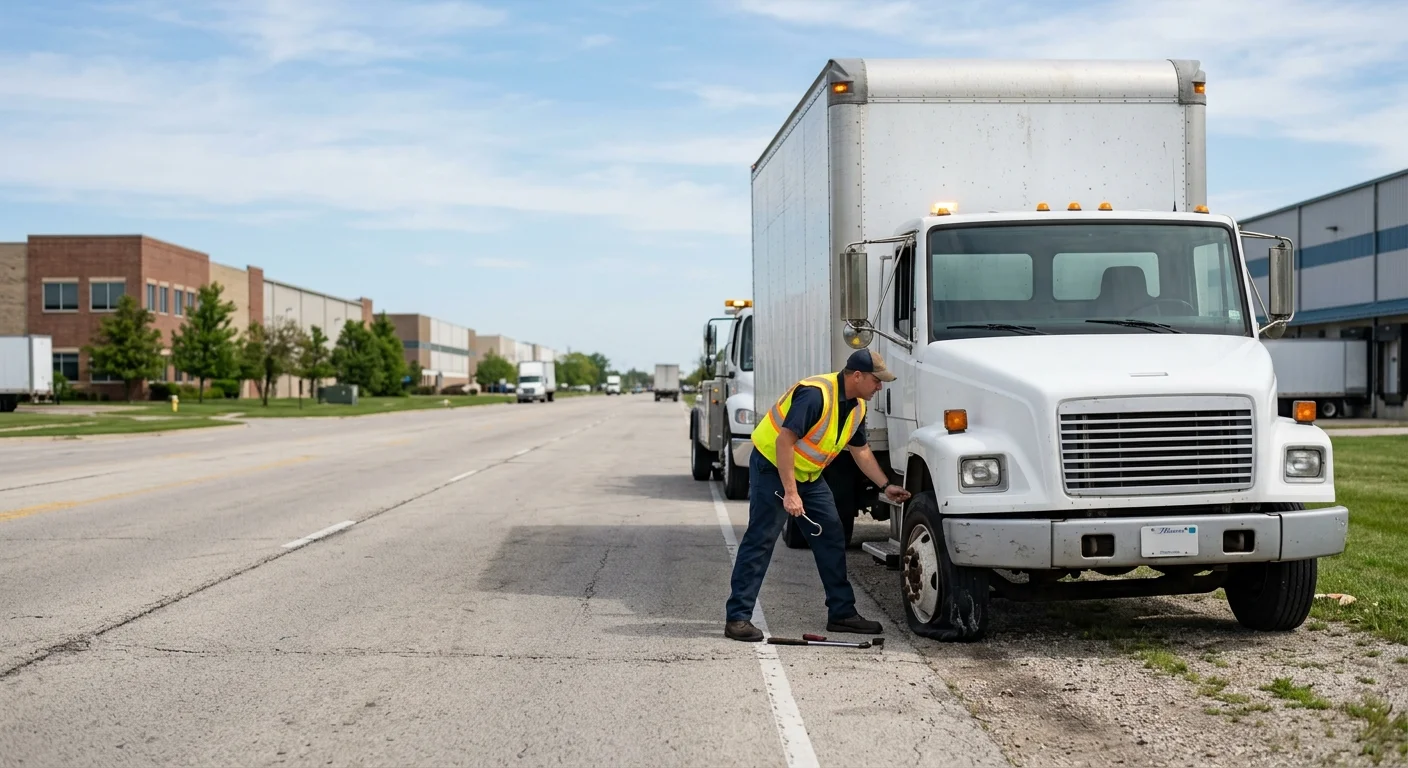
Pin down the truck’s location and access
Start with a map pin, then describe what surrounds the truck. A street address alone may point to an office entrance. Your box truck could be behind that building, inside a gated yard, or beside another warehouse.
In Elk Grove Village’s industrial district near O’Hare, one property may have several driveways. Give the business name, street, nearest cross street, and correct entrance. Mention a dock number, gate number, or nearby sign when one exists. If security controls access, explain how the operator should enter.
An I-90 breakdown needs different details. State your direction of travel, nearest exit, and whether you’re on the main roadway or a ramp. Say whether the truck is fully on the shoulder or affecting a travel lane. Don’t step into traffic to find a marker.
IDOT’s Emergency Traffic Patrol serves Chicago-area expressways. Its workers, often called Minutemen, protect responders and establish emergency lane closures. They don’t repair vehicles or tow them away. Tell dispatch if IDOT, police, fire crews, or another tow operator is already present.
Access details matter beyond the roadway. Report locked gates, low entrances, steep ramps, soft ground, and parked trailers. Mention any property rule that limits entry after business hours. If the truck blocks a dock or driveway, say which side remains open.
Share a dropped map pin and current photos when possible. Include the truck, its position, and the operator’s approach. That gives dispatch more than a mailing address and reduces avoidable back-and-forth.
Describe the truck body, load, and condition
A box truck isn’t simply a passenger vehicle with a taller roof. The body, chassis, cargo, and installed equipment all affect the request. Dispatch shouldn’t guess those details from a company name or rental logo.
Start with the truck’s year, make, and model when known. Give the overall height and length from a label or fleet record. Share the gross vehicle weight rating shown on the vehicle label. Don’t estimate it from appearance. If you can’t find a figure safely, say it’s unconfirmed.
Next, describe the box itself. Note a standard dry box, refrigerated body, cab-over design, or extended cab. Tell dispatch about a liftgate, refrigeration unit, rooftop equipment, or damaged rear door. Say whether the liftgate is raised, lowered, or stuck.
The load matters too. State whether the truck is empty, partly loaded, or loaded. Describe the cargo without exposing customer information. Use a bill of lading, scale ticket, or fleet record for weight when available. If the weight isn’t known, don’t invent one.
Report cargo that shifted during a stop or collision. Mention leaking material, unusual odors, or visible placards immediately. Don’t open damaged packaging or climb into an unstable cargo area to investigate.
Explain the truck’s present condition in plain words. Useful details include collision damage, an engine failure, an electrical problem, overheating, or a broken liftgate. Avoid diagnosing the cause unless a mechanic has confirmed it.
A heavy-duty towing request starts with these facts. The label alone doesn’t dictate one fixed towing method. An independent operator must review the truck, load, damage, and access before confirming the job setup.
Report which wheels, brakes, and steering still work
A running engine doesn’t mean a box truck can roll. A dead engine also doesn’t prove its wheels are locked. Dispatch needs separate answers about movement, steering, braking, and ground contact.
Report what you know about each wheel position. Mention a flat tire, missing wheel, bent rim, shifted axle, or wheel sitting at an unusual angle. Say if any part of the body rests on a tire. Note debris trapped near an axle.
Describe the steering next. Tell dispatch whether the steering wheel turns and whether the front wheels respond. Mention a broken steering component only if it’s visible or confirmed. Don’t crawl beneath the truck to inspect it.
Dispatch also needs the brake status. Say whether the parking brake releases and whether any wheel appears locked. Report warning lights or audible alerts without interpreting them. If the brake condition hasn’t been tested, label it unconfirmed.
Share whether the transmission selects neutral. Tell dispatch if the key is present, the battery has power, and the cab can be entered. For keyless trucks, explain whether the fleet has provided the required access device.
Photos help here, especially after a collision. Take wide views from each side when conditions allow. Add close photos of visible wheel or axle damage. Don’t conduct a roadside movement test solely to answer dispatch questions.
Box trucks and tractor-trailers require different descriptions. Our guide to a semi-truck breakdown near Joliet explains trailer, tractor, and combination details. Don’t copy those assumptions onto a straight box truck. Describe the vehicle actually sitting in Elk Grove Village.
Clear answers help an operator assess the request. “It won’t move” is a start, but it doesn’t explain why. Wheel, brake, steering, and transmission details make the situation much easier to understand.
Explain clearance around docks and industrial roads
The final approach can matter as much as the road location. Elk Grove Village’s industrial park sits against O’Hare, but every dock lane has its own access limits. A broad industrial road may lead into a crowded service court.
Describe the truck’s position first. Say whether it’s nose-in at a dock, parallel to a curb, across a driveway, or inside a trailer row. Mention how much open space exists at the front and rear. Use visible landmarks instead of saying there’s “plenty of room.”
Look above the truck from a safe position. Report posted height limits, dock canopies, utility lines, trees, signs, and overhead doors. Don’t guess at clearance. Share the posted number or say no readable limit is visible.
Then describe the path into the site. Mention narrow gates, one-way lanes, security arms, fencing, bollards, parked trailers, curbs, and tight corners. Report snow, ice, mud, gravel, or a sloped surface. Those conditions can change how an operator evaluates access.
The property contact may need to move trailers or unlock another entrance. Confirm that before dispatch when possible. If no one can open the gate, say so. Don’t assume an operator can enter restricted property without authorization.
For an expressway stop, focus on lane position and roadside access. A truck on an I-90 shoulder presents a different situation from one inside a warehouse lot. Our breakdown guide for I-55 and I-90 covers the location details that matter along those routes.
Send one wide photo showing the entire approach. Add views from the front and rear when safe. Close-up damage photos are useful, but they can’t show whether another commercial vehicle has room to reach the truck.
Choose a repair or delivery destination
Choose the destination before the operator is dispatched whenever possible. The destination affects routing, distance, entry instructions, and the full scope of the request. “Take it somewhere nearby” isn’t enough for a loaded commercial truck.
Call the repair facility first. Confirm that it accepts the truck’s make, size, and problem. Ask whether it can receive the vehicle at the expected drop-off time. Get the correct service entrance, gate instructions, and unit or work-order reference.
A delivery address needs similar confirmation. A receiver may accept the freight but not a disabled truck. Towing the vehicle to the receiver also doesn’t arrange cargo transfer or unloading. Tell dispatch if another carrier, forklift, dock crew, or cargo decision is still pending.
Small fleet managers should provide the truck’s unit number and authorized destination. Drivers should know who can approve a change if the first shop refuses the vehicle. Keep a backup destination ready, especially outside normal shop hours.
Longer moves need the same truck and load details. Review our long-distance towing service when the chosen facility isn’t near Elk Grove Village. Quick Tow Chicago doesn’t set the operator’s price. You receive the quoted price before the operator is dispatched.
Be clear about who requested the move. A driver-authorized breakdown tow isn’t the same as a property-ordered relocation. Illinois regulates private-property relocation separately. The Illinois Commerce Commission’s relocation towing page explains its oversight in Cook, DuPage, Kane, Will, and Winnebago counties. Quick Tow Chicago connects property managers with relocators who hold the required license. The brand itself isn’t a licensed relocator.
Before ending the call, repeat the pickup pin and destination address. Confirm the truck, load, wheel condition, and access notes. That final check gives the independent operator a clear request to review.
When to call us
Once the truck can’t move safely, won’t steer or brake normally, or sits where access needs coordination, this isn’t a do-it-yourself move. The line takes calls 24/7 and records them after a notice, then we use your truck details to line up an independent local operator. Call us at (773) 830-6930.