Yes, someone else can retrieve your car from a City of Chicago auto pound. Your representative needs an original notarized letter from you and the required release documents. A suburban impound or private relocation lot may follow a different process, so confirm its rules before anyone travels there.
First identify who has the car
Start by finding out whether the vehicle was impounded, relocated, or taken by a private company. Those situations look similar from the curb. They follow three different processes across the Chicago area.
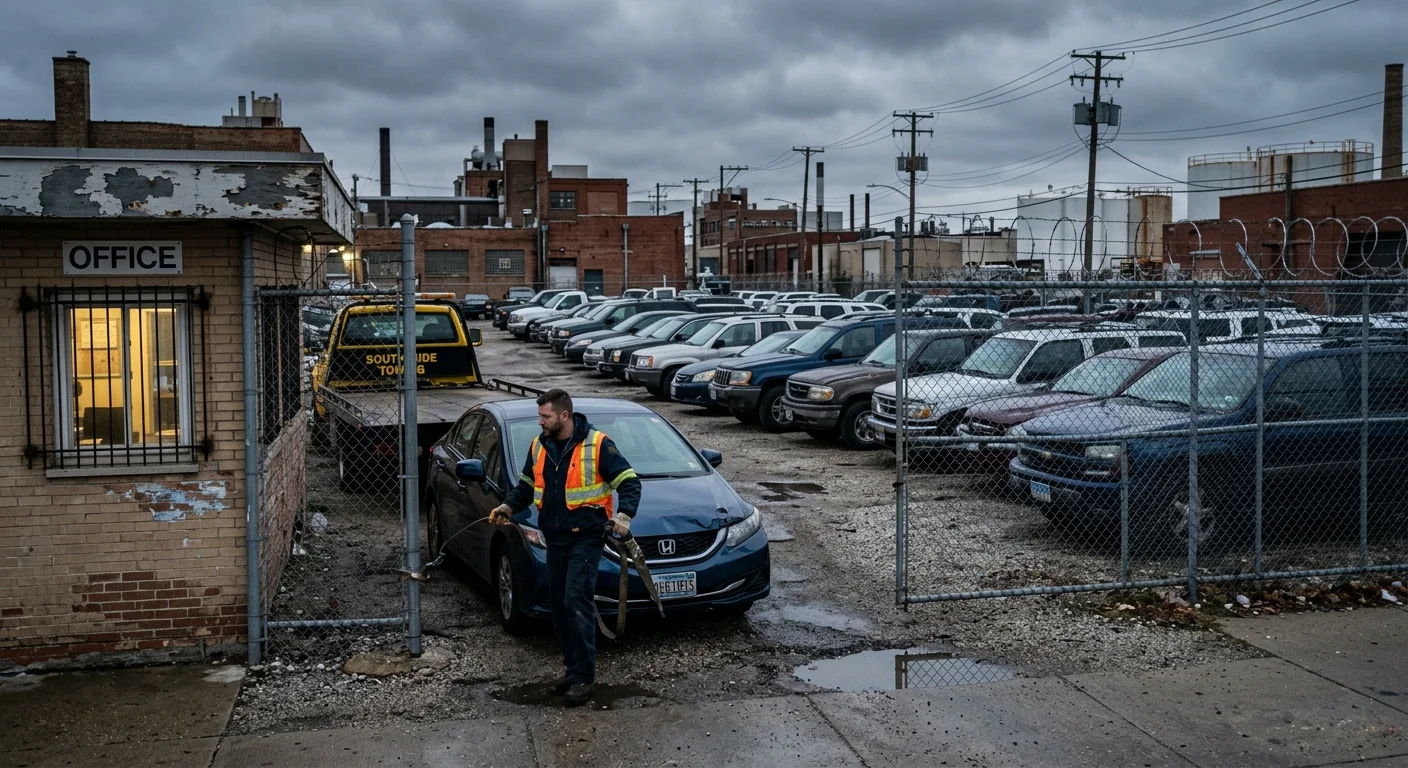
A City of Chicago tow goes through the city’s pound system. Chicago operates four auto pounds. They include the Central Auto Pound beneath Wacker Drive, the O’Hare pound on Bessie Coleman Drive, Pound 2 near 103rd and Doty, and Pound 6 at 701 North Sacramento. All four are open around the clock.
A missing car may also have been relocated for street work or an emergency. The city warns that emergency relocations can happen without posted signs. Check the Find Your Towed Vehicle tool before assuming the car was stolen.
Outside Chicago, a village or municipality may control the impound. A Cicero impound isn’t governed by Chicago’s release schedule. The same distinction applies in Berwyn, Naperville, Aurora, and Joliet.
A private-property relocation is different again. It usually begins in an apartment lot, shopping center, or another privately controlled space. Our guide to Illinois towing laws explains these separate systems.
Get the facility’s exact name before preparing documents. The correct answer depends on who ordered the tow and who holds the vehicle.
What a Chicago representative must bring
Chicago’s published rules expressly allow an owner to use a representative. The representative must bring an original notarized letter from the vehicle owner. A casual note, text message, or verbal instruction doesn’t match that published requirement.
Every person claiming the vehicle needs valid photo identification. The claimant must also provide proof of ownership. Chicago accepts a valid title, current registration card, or a bill of sale no more than 30 days old. A lessee must provide the lease agreement.
The person driving the car away needs a current valid driver’s license. The vehicle also needs current state plates and a Chicago Vehicle Sticker where required. All charges and fines must be paid before release. The city’s accepted payment methods are cash and the major cards listed in its Common Towing Questions.
Bring the original notarized authorization, not a photo stored on a phone. Keep the ownership document, identification, and payment method together. That reduces the chance of reaching the counter with one missing item.
These rules apply to City of Chicago auto pounds. They don’t establish a statewide authorization form. Our Chicago impound fee guide covers the city schedule separately from private and suburban charges.
Before leaving, contact the pound through its official page. Confirm the car’s location, release status, and required paperwork. Ask whether any police or administrative hold remains on the vehicle.
A hold can stop the release
Authorization doesn’t override a hold. Chicago won’t release a vehicle while police hold it for an investigation. Several impoundment categories also require action through the Vehicle Impoundment Office at 400 West Superior rather than the pound counter.
Those categories include DUI, firearms, narcotics, reckless driving, and suspended or revoked license cases. They also include several other listed violations. The owner or representative should confirm the release path before traveling to a pound.
A representative’s notarized letter proves permission to act for the owner. It doesn’t settle the underlying hold, replace missing ownership records, or make an unregistered vehicle eligible for release.
This distinction matters when the owner can’t appear personally. A family member may have every document needed for an ordinary city release. The same person can still be turned away if the vehicle hasn’t been cleared by the appropriate office.
Don’t rely only on where the car is parked. The holding facility and the office controlling its release may be different places. Ask two direct questions: Is the vehicle eligible for release now, and can the representative complete that release at the pound?
For more detail on these special cases, see our guide to the Chicago Vehicle Impoundment Office.
Private-property relocation has different rules
A private relocation from a parking lot isn’t a City of Chicago pound release. In Cook, DuPage, Kane, Will, and Winnebago counties, this work is performed by commercial vehicle relocators licensed by the Illinois Commerce Commission.
The verified state materials don’t establish one statewide rule saying every private relocator must release a vehicle to an owner’s representative. Because that specific third-party rule couldn’t be confirmed, ask the relocator what authorization it requires before sending someone.
The towing sign should identify the appropriate relocator and provide its contact information. Ask whether the owner must appear, whether a notarized authorization is accepted, and which ownership documents the representative must bring. Get the answer in writing when possible.
State rules do establish some protections around storage and payment. A relocator can’t assess storage after the vehicle is claimed, proper identification is produced, and payment is tendered. No storage fee applies if the vehicle is claimed within 24 hours with proper identification and payment. Storage also can’t be charged for periods when the relocator is closed to the public.
Relocators must accept cash, money orders, cashier’s or certified checks, and major credit cards without added fees. The owner must receive a complete relocation towing invoice with complaint instructions. The Illinois Commerce Commission relocation towing page provides its consumer guide and complaint form.
Read our Chicago private towing law guide if the car disappeared from private property.
Suburban municipal impounds require a local check
A suburban municipal impound isn’t part of Chicago’s four-pound system. Each municipality runs its own process and sets its own administrative fee. Chicago’s documents, payment rules, and fee schedule shouldn’t be assumed to apply.
No verified third-party release rule was available for every suburb in the metro. That means an owner in Cicero, Oak Lawn, Schaumburg, Elgin, or Joliet should contact the municipality or holding lot directly.
Ask whether a representative may retrieve the car. Then request the exact authorization language, identification requirements, ownership documents, accepted payment methods, and release location. Also ask whether the car has a hold that must be cleared elsewhere.
Illinois law does provide procedural protections for qualifying municipal impounds. The owner has a right to an administrative hearing. Notice must be sent within 10 days of impoundment, and the initial hearing must be held no later than 45 days after that notice was mailed. If the hearing officer finds that the vehicle was stolen or hijacked when impounded, the municipality, county, or Illinois State Police must refund administrative fees already paid.
Those hearing protections don’t answer whether a particular suburb accepts a notarized letter at its release counter. Treat that as a separate question. Our overview of Illinois impound laws explains the hearing rules without mixing them with Chicago’s pound procedures.
Record the name of the office providing instructions. Bring exactly what it requests. A second trip across the Tri-State or Stevenson is avoidable when the paperwork is confirmed first.
Check the car before driving away
Release paperwork doesn’t mean the car is ready for the road. A vehicle may have a dead battery, damaged tire, missing plate, or another problem after sitting. The person collecting it should inspect the car before trying to leave.
The driver must hold a current valid license for a Chicago pound release. The vehicle also needs current state plates and a Chicago Vehicle Sticker where required. If those conditions aren’t met, arrange legal transport instead of trying to drive away.
Confirm access conditions with the facility. Ask where the car can be inspected and whether an outside operator can enter the pickup area. Don’t assume every pound, suburban lot, or private relocator follows the same access process.
Take the release papers and invoice with you. Check that the vehicle identification and listed charges match the car being collected. For a private-property relocation, the invoice should include the complaint instructions required under the state rules.
If the car can’t be driven, emergency towing assistance can connect you with an independent local operator. Quick Tow Chicago is a referral service. We don’t run the pound, control its release decision, or set the operator’s price.
When to call us
Call after the vehicle is released if it won’t start, can’t be driven legally, or needs transport from the lot. We can line up an independent local operator, with the price quoted before dispatch. The line takes calls 24/7, and calls are recorded after a notice. Call us at (773) 830-6930.