An impound notice can start several different clocks. Under Illinois impound laws, a municipal owner gets notice within 10 days, and an initial hearing must occur no later than 45 days after that notice is mailed. Those deadlines don’t automatically govern Chicago pound tows or private-property relocations.
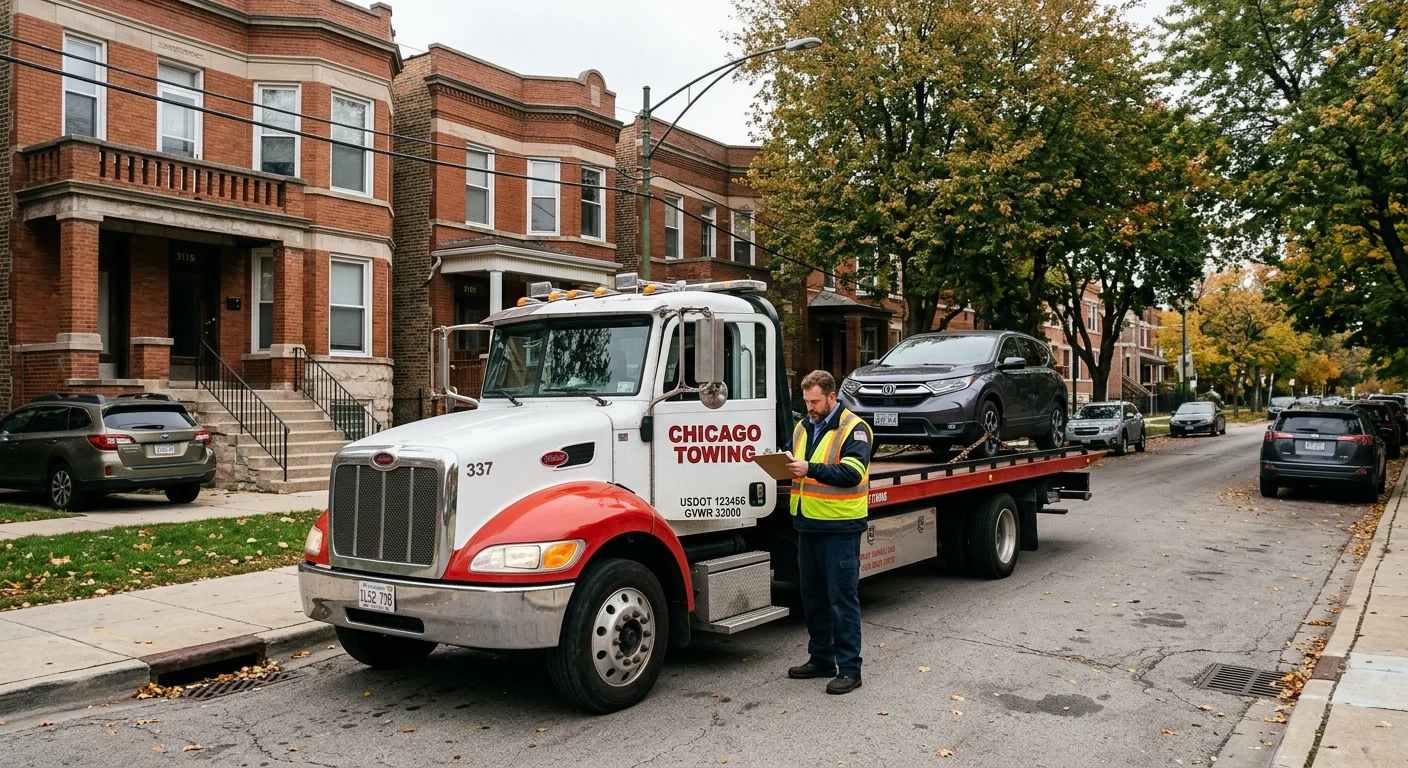
Start by identifying the type of tow
Illinois doesn’t have one impound process covering every missing vehicle. Chicago-area drivers usually face one of three separate systems.
A City of Chicago tow goes through the city pound system. This can follow parking enforcement, a boot, an abandoned-vehicle report or certain alleged offenses. Chicago publishes its own pound locations, redemption requirements and fee schedule.
A suburban municipal impound follows a different path. Cicero, Berwyn, Naperville and Joliet each administer their own local programs. State law supplies notice and hearing rules, but each municipality sets its own administrative fee. Chicago’s pound prices don’t apply outside Chicago.
A private-property relocation is different again. It covers vehicles removed from private lots by commercial vehicle relocators. In Cook, DuPage, Kane and Will counties, those businesses are regulated by the Illinois Commerce Commission. The same system also applies in Winnebago County.
Location alone doesn’t answer the question. A car taken from a Little Village street isn’t treated like one removed from a Cicero apartment lot. A disabled vehicle on the Stevenson also isn’t a private-property relocation.
Start with the agency or business named on your paperwork. Chicago drivers can also check the city’s vehicle lookup before reporting a car stolen. Our broader guide to Illinois towing laws explains how these systems connect.
Suburban municipal notice and hearing rights
For a municipal impound, 625 ILCS 5/11-208.7 supplies the main statewide procedure. It applies to administrative fees imposed by a county, municipality or the Illinois State Police.
The owner has a right to an administrative hearing. Notice must be sent within 10 days of impoundment. The initial hearing must be scheduled and convened no later than 45 days after the notice’s mailing date.
Those are separate deadlines. The 10-day rule controls notice. The 45-day rule controls when the initial hearing occurs. Neither creates a punitive 30-day impound hold.
The administrative fee must be reasonable and related to administrative and processing costs. The statute sets no dollar cap. It also doesn’t create one fee for every Illinois municipality. A Chicago fee shouldn’t be used to predict what Aurora, Elgin or Oak Park will charge.
The statute contains a specific protection for stolen or hijacked vehicles. If the hearing officer finds the vehicle was stolen or hijacked when impounded, the government must refund administrative fees already paid. That language concerns the administrative fee. It shouldn’t be rewritten as a promise that every towing or storage charge will disappear.
Keep the notice and its envelope. The mailing date controls the hearing clock. Follow the hearing instructions printed by the issuing municipality. If they’re unclear, contact that municipality’s administrative hearing office. Individual suburban fees couldn’t be confirmed from the sources reviewed for this page, so check the issuing village or city’s current ordinance.
City of Chicago pound rules
Chicago publishes a separate pound system under Municipal Code 9-92-080. The city’s Common Towing Questions page lists a $250 tow fee for vehicles under 8,000 pounds and $350 for heavier vehicles. Storage is $50 or $100 per day, based on the same weight break.
Those are city charges, not Quick Tow Chicago prices. They also don’t apply to suburban impounds or private-property relocations. The city accepts cash and major credit cards at its pounds. Checks and money orders aren’t accepted.
Chicago operates four auto pounds. They include the Central Auto Pound beneath Wacker Drive, the O’Hare pound on Bessie Coleman Drive, Pound 2 near 103rd and Doty, and Pound 6 on Sacramento Avenue. All four are open around the clock throughout the year.
Bring valid photo identification and proof of ownership. Accepted ownership records include a valid title, current registration or a bill of sale no more than 30 days old. Lessees need their lease. A representative needs an original notarized letter from the owner. Driving the vehicle out requires a current valid driver’s license. Current state plates and a Chicago Vehicle Sticker are also required where applicable.
An unclaimed vehicle is normally stored for no less than 21 days after the city mails notice. The registered owner can request one 15-day extension before disposal. This is a disposal clock, not a required waiting period before redemption.
A different 15-day deadline applies only to Chicago’s special offense-based impoundment program. It covers allegations such as DUI, firearms and narcotics. It isn’t a general hearing deadline for every city tow. A general post-tow hearing deadline for ordinary Chicago tows couldn’t be confirmed from the current city material.
Private-property relocation rules
A private-property relocation isn’t governed by the suburban municipal hearing schedule. In Cook, DuPage, Kane, Will and Winnebago counties, it must be performed by a commercial vehicle relocator licensed by the Illinois Commerce Commission.
This law doesn’t cover vehicles on public streets, disabled vehicles, repossessions or police-directed towing. That boundary matters when a car disappears from a shopping center, apartment lot or private loading area.
Under 625 ILCS 5/18a-300, a relocator generally needs written authorization from the property owner, lawful occupant, authorized agent or law enforcement officer. Where signs are required, removing a vehicle without the required signs is unlawful.
A relocator can’t complete removal when the owner arrives before removal is finished and is willing and able to move the vehicle immediately. The statute contains a narrow service-fee exception for certain commercial vehicles requiring a commercial driver’s license.
The relocator must notify law enforcement in that jurisdiction within one hour after removal. It also can’t take the vehicle more than 10 air miles from most locations. The limit becomes 15 air miles when the vehicle was removed from an unincorporated area.
Another one-hour rule concerns phone access. When the owner makes a reasonable effort but can’t reach the relocator for one hour during a required response period, towing, storage and other fees must be waived.
Storage rules add more protection. No storage fee applies when the owner claims the vehicle within 24 hours with proper identification and payment. A relocator also can’t charge storage for periods when it’s closed to the public. The owner must receive a complete relocation towing invoice with complaint instructions.
A current maximum ICC relocation rate couldn’t be confirmed. Don’t rely on figures copied from an old article or another tow receipt. Ask the Illinois Commerce Commission to verify the current authorized rate. See our guides to private towing laws in Chicago and Illinois towing and storage fee rules for more detail.
Protect the deadlines and your paperwork
Treat the first notice as the start of your timeline. Save the envelope, notice, pound receipt and every invoice. Photograph private-lot signs before weather, construction or another vehicle blocks them.
For a suburban municipal case, mark the impound date and mailing date separately. The government has 10 days to send notice. The initial hearing must occur within 45 days after mailing. Use the hearing method stated by the issuing municipality.
For a Chicago pound tow, identify whether you’re dealing with ordinary redemption, an unclaimed-vehicle disposal deadline or the special offense-based program. The 21-day disposal floor, 15-day disposal extension and special 15-day hearing request are three different rules. Don’t combine them.
For a private-property relocation, ask for the complete invoice. Record when you first tried to reach the relocator. Keep proof showing when identification and payment were offered. If the facts support a complaint, the Illinois Commerce Commission regulates the relocator.
Retrieving the vehicle and challenging the action are separate practical problems. Before visiting a Chicago pound, gather the required ownership and identification records. If the released vehicle can’t be driven safely, arrange flatbed towing or another suitable transport method. The operator sets that service price, and it’s quoted before dispatch.
When to call us
Call when the vehicle has been released but can’t leave under its own power. Our line is taking calls 24/7, and calls are recorded after a notice. We’ll match you with an independent local operator for emergency towing, with the price quoted before dispatch. Call us at (773) 830-6930.