Chicago police impound fees start with a $250 tow for vehicles under 8,000 pounds. The fee is $350 at 8,000 pounds or more, with daily storage added. Certain police holds also require a trip to the Vehicle Impoundment Office at 400 W Superior before the pound can release the vehicle.
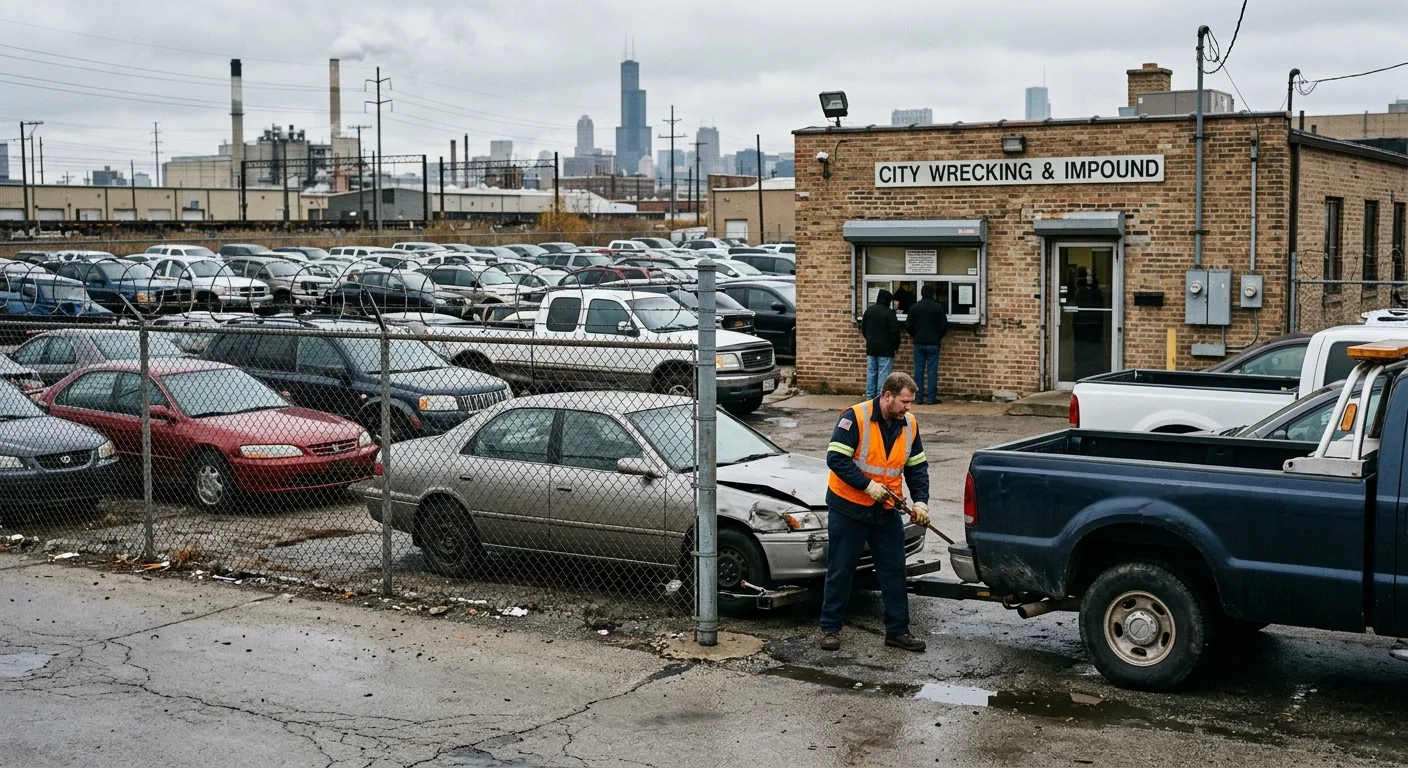
What Chicago police impound fees cover
The City of Chicago publishes two weight-based tow fees. Under Municipal Code 9-92-080, the tow fee is $250 for a vehicle under 8,000 pounds. It rises to $350 for a vehicle weighing 8,000 pounds or more.
Storage also depends on weight. The city charges $50 per day for vehicles under 8,000 pounds. Vehicles at or above that threshold accrue storage at $100 per day. These are city pound charges, not prices set by Quick Tow Chicago or an independent roadside operator.
The City of Chicago’s Common Towing Questions page publishes those amounts and the payment rules. City pounds accept cash, Visa, Mastercard, Discover, American Express and Diners Club. Checks and money orders aren’t accepted.
A ticket, administrative penalty or police hold may create another balance or required step. The published tow and storage schedule doesn’t tell you whether the pound can release the vehicle. That depends on why it was impounded and whether another city department placed a hold.
Don’t apply these figures to a private-property tow or suburban impound. Those situations follow different rules. Our guide to City of Chicago impound fees explains the city schedule in more detail.
Why some cases go through 400 W Superior
A routine city tow can often be resolved at the auto pound. A vehicle connected to certain alleged offenses cannot be released there. Those cases require action through the Vehicle Impoundment Office at 400 W Superior.
The city identifies holds involving narcotics, firearms, DUI, solicitation, fly dumping, fireworks and drag racing. The list also includes fleeing and eluding, reckless driving, noise violations, littering and suspended or revoked licenses. Other listed categories cover altered temporary registration, counterfeit wheel tax emblems, unlicensed public passenger vehicles and funeral procession violations.
The pound clerk can’t remove one of these holds. Paying the published tow and storage charges alone may not resolve the case. Read every notice carefully and confirm which office controls the release before visiting the pound.
The city has a separate administrative hearing process for its 19-offense vehicle impoundment program. An owner must submit a written hearing request within 15 days after notice is mailed or otherwise provided. Missing that window leads to a default order for the penalty, towing and storage fees. The owner then has 21 days to file a motion asking that the default be set aside.
That 15-day deadline only applies to this specific impoundment program. A general 15-day hearing right for every ordinary Chicago tow couldn’t be confirmed. For an ordinary tow, ask the Bureau of Traffic Services which review process applies.
A criminal case and the administrative impoundment case are also separate. Winning the criminal case doesn’t automatically release the vehicle. In controlled-substance cases, city rules can impose owner liability regardless of who was driving.
Find the vehicle before visiting an office
A missing car isn’t always sitting at a pound. Chicago sometimes relocates vehicles to clear streets for emergency work or another public project. The city says an emergency relocation can happen without time to post signs.
Start with the city’s Find Your Towed Vehicle tool. Check it before reporting the car stolen. If the vehicle was relocated, the result may direct you to its new location instead of an impound facility.
Chicago has four city auto pounds. All are open 24 hours a day, every day of the year:
- Central Auto Pound, 500 E Wacker Drive, Lower Level
- O’Hare International Airport Auto Pound, Bessie Coleman Drive
- Auto Pound 2, 103rd and Doty Avenue
- Auto Pound 6, 701 N Sacramento Avenue
Finding the pound is only the first step. Everyone claiming a vehicle needs valid photo identification. Proof of ownership can be a valid title, current registration card or bill of sale no more than 30 days old.
A lessee needs the lease agreement. A representative acting for the owner needs an original notarized letter from that owner. Anyone driving the vehicle out needs a current valid driver’s license.
The vehicle also needs current state plates and a Chicago Vehicle Sticker where required. All charges and fines must be paid in full. A police investigation hold still prevents release, even when the documents and payment are ready.
Chicago, suburban and private tows aren’t the same
The Chicago metro has three distinct towing systems. Identifying the correct one prevents bad fee comparisons and trips to the wrong office.
A City of Chicago tow uses the city pound system. Its published weight-based fees apply inside Chicago. A qualifying police hold can route the owner through 400 W Superior before release.
A suburban municipal impound follows the rules of that city or village. Berwyn, Cicero, Naperville and Joliet don’t use Chicago’s pound fee schedule. Illinois law requires a municipal administrative fee to be reasonable and related to administrative and processing costs. The law doesn’t set a dollar cap.
For those municipal impounds, 625 ILCS 5/11-208.7 provides a right to an administrative hearing. Notice must be sent within 10 days of impoundment. The initial hearing must be scheduled and held no later than 45 days after the notice was mailed. The municipality sets its own fee, so confirm the current amount directly with that municipality.
Private-property relocation is the third system. In Cook, DuPage, Kane and Will counties, that work is performed by commercial vehicle relocators licensed by the Illinois Commerce Commission. It doesn’t cover vehicles on public streets or police-directed towing.
The current maximum ICC relocation rate couldn’t be confirmed from the published material reviewed for this page. Ask the Commission to confirm the current rate instead of relying on an online figure. Our guide to Illinois impound laws explains where the state and municipal systems differ.
Watch the notice and disposal dates
Chicago normally stores an impounded vehicle for no less than 21 days from the date the city mails notice to the registered owner. Under Municipal Code 9-92-100(a), the registered owner can request one 15-day extension before the vehicle is sold or otherwise disposed of.
That extension isn’t the same as the 15-day hearing-request window for the 19-offense impoundment program. One affects the disposal date. The other affects an administrative hearing. Treating them as one deadline could cost you a procedural right.
Keep the mailed notice, envelope and every receipt. Write down when the notice arrived and when you contacted each office. Ask whether the vehicle has a police hold, which pound has it and what must happen before release.
An unclaimed vehicle may be sold at auction or otherwise disposed of. The owner can still owe outstanding fines and fees afterward. If you need the extension, request it through the Auto Pound Office before the existing storage period ends.
Once release is approved, check whether the vehicle can legally and safely leave under its own power. A dead battery, collision damage or missing current registration can turn the last step into a separate transport problem. Emergency towing assistance can connect you with an independent local operator after the city authorizes release.
When to call us
Once the pound authorizes release but the vehicle can’t be driven, the problem becomes a transport job. Our line takes calls 24 hours a day and connects callers with independent local operators. The operator’s price is quoted before dispatch. Call us at (773) 830-6930.