A Chicago snow route can fall under two different winter restrictions. The two-inch ban covers 500 miles of main streets and activates when at least two inches of snow are on the street, regardless of the date or time.
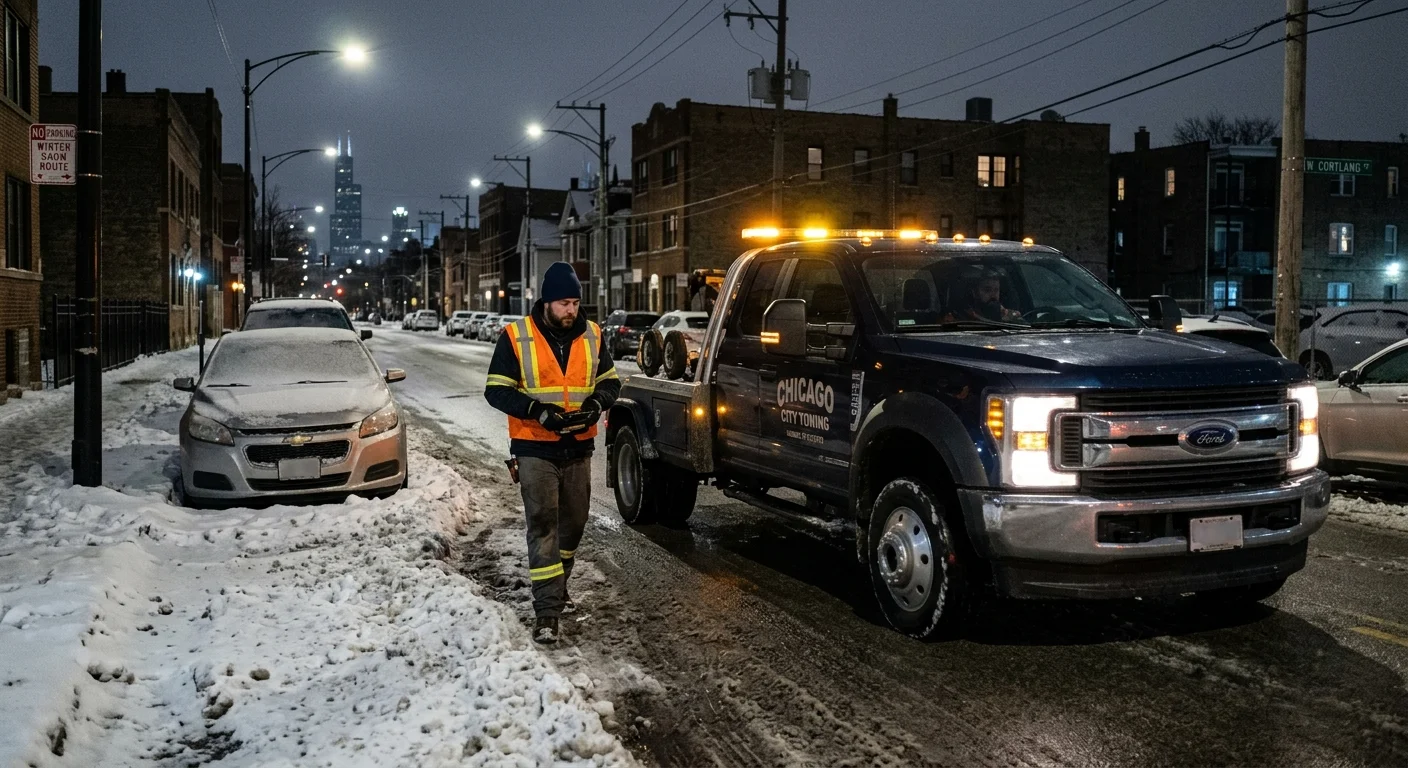
That’s different from the overnight rule many drivers know. Mixing them up can leave you searching for a relocated car during a snowstorm.
How the two-inch snow ban works
Chicago’s two-inch parking ban applies to 500 miles of main streets. It takes effect once at least two inches of snow are on the street. It can apply at any hour and on any calendar date.
That last point matters. The restriction isn’t limited to the coldest months. It also doesn’t wait for the overnight window used by Chicago’s other winter ban. If the snow threshold is met, the two-inch restriction can affect parking during the morning, afternoon or evening.
The ban helps keep major streets open for snow removal. Chicago created its winter parking restrictions after storms in 1967 and 1979 brought city traffic to a standstill. Those events still shape how the city handles parked cars during major snowfall.
Chicago receives 38.4 inches of snow in an average year, based on National Weather Service climate normals for O’Hare. Conditions can also vary across the city. A street near O’Hare may look different from one near the Dan Ryan or the lakefront.
The city’s threshold concerns snow on the street. Don’t treat the amount on your roof, sidewalk or lawn as the official measure. Check the City of Chicago winter parking restrictions page and read the signs where you park.
The overnight ban is a separate restriction
The winter overnight parking ban covers 107 miles of arterial streets. It runs from 3 a.m. to 7 a.m. every day between December 1 and April 1. It applies even when there’s no snow.
The two-inch ban works differently:
- It covers another 500 miles of main streets.
- It starts when at least two inches of snow are on the street.
- It can apply at any time of day.
- It isn’t tied to December 1 through April 1.
A car can therefore be legal under one rule but affected by the other. A driver parking at noon in November doesn’t face the seasonal overnight window. The same space may still fall under the two-inch ban if the snow trigger has been reached.
The reverse can also happen. A dry street covered by the overnight ban remains restricted between 3 a.m. and 7 a.m. during its December-to-April season. The absence of snow doesn’t suspend that rule.
That’s why “Chicago snow route” isn’t enough information by itself. You need to identify the restriction posted for that block, then match it to the current conditions and time. Don’t assume the rules on one arterial carry onto the next block or a nearby side street.
A ticket, relocation and impound aren’t the same
Under the two-inch ban, the city says a vehicle could receive a ticket or be relocated. Relocation means the car may have been moved to another street rather than taken into a city pound.
That distinction changes what you should do next. A missing car isn’t automatically at an auto pound. It also isn’t automatically stolen. Our guide to impound versus relocation in Chicago explains how those outcomes differ.
The city’s winter restrictions page publishes a separate cost set for ban tows. It lists a minimum $150 towing fee, a $60 ticket and a $25-per-day storage fee. Those are the city’s published winter-ban figures, not Quick Tow Chicago’s prices.
Chicago’s Common Towing Questions page publishes another schedule under Municipal Code 9-92-080. That schedule lists a $250 tow fee for vehicles under 8,000 pounds and $350 at or above that weight. It lists storage at $50 or $100 per day, depending on vehicle weight.
These schedules shouldn’t be merged. They come from different city pages and address different circumstances. Confirm which action occurred before deciding which published schedule may apply.
Suburban impounds are different again. Berwyn, Cicero, Oak Lawn and other municipalities set their own administrative fees. The Chicago schedules don’t establish a suburban village’s charge.
Private-property relocation is a third regime. In Cook, DuPage, Kane and Will counties, that work is performed by commercial vehicle relocators licensed by the Illinois Commerce Commission. A shopping-center relocation isn’t a Chicago snow-ban action.
What to do when your car is missing
Start with the place where you parked. Record the street, cross street and direction the car faced. Check nearby blocks because a snow-related relocation may leave the vehicle on another street.
Next, use Chicago’s Find Your Towed Vehicle tool. The city advises drivers to check for a relocation or impound before reporting a vehicle stolen. You can also contact the city’s nonemergency service for help locating it.
Search with accurate vehicle information. A wrong plate character can turn a quick lookup into a dead end. Keep the vehicle identification number available if you have access to it.
If the lookup shows a city pound, confirm the location before traveling. Chicago operates four auto pounds, all open 24 hours a day throughout the year. The destination depends on why and where the vehicle was taken. Our guide to Chicago’s four auto pounds covers the published locations.
City pounds require valid photo identification and proof of ownership. Acceptable ownership documents include a valid title, current registration card or a bill of sale no more than 30 days old. A lessee needs the lease agreement. Someone acting for the owner needs an original notarized letter.
A current driver’s license is required if you’ll drive the vehicle out. Current state plates and a Chicago Vehicle Sticker are also required where applicable. Police holds must be resolved through the correct city office rather than at the pound counter.
Plan before snow reaches the curb
Winter parking decisions are easier before the first accumulation. Check restrictions whenever you leave a car on a main street during a forecast snow event. A familiar daytime space can become a problem once the two-inch trigger is reached.
Don’t rely on yesterday’s conditions. Snowfall, plowing and parked vehicles can create different conditions across Chicago. That’s especially true between the North Side, the lakefront and neighborhoods near Midway.
Keep a photo of the block and nearby signs. It can help you remember exactly where the car was parked. Save your plate number and vehicle identification number somewhere accessible outside the car.
If you’re leaving town, move the vehicle away from a restricted street first. The overnight ban lasts through April 1, while the two-inch rule isn’t limited to that season. Watching only one calendar leaves a gap.
Once you find the car, inspect it before driving. Clear snow from the windows, lights and plate. Check the area around the tires and tailpipe. If the car won’t start, has a damaged tire or can’t be driven safely, stop trying to move it yourself.
Quick Tow Chicago is a referral service. We match drivers with independent local operators. We don’t run a pound, set city fees or decide whether Chicago relocates a parked vehicle.
When to call us
Call when you’ve found the car but it won’t start or can’t be driven safely. The line takes calls 24/7, and we can arrange emergency towing through an independent local operator. Call us at (773) 830-6930.