Chicago’s winter overnight parking ban covers 107 miles of signed arterial streets. It runs from 3am to 7am, December 1 through April 1. The ban applies every night, even when there’s no snow.
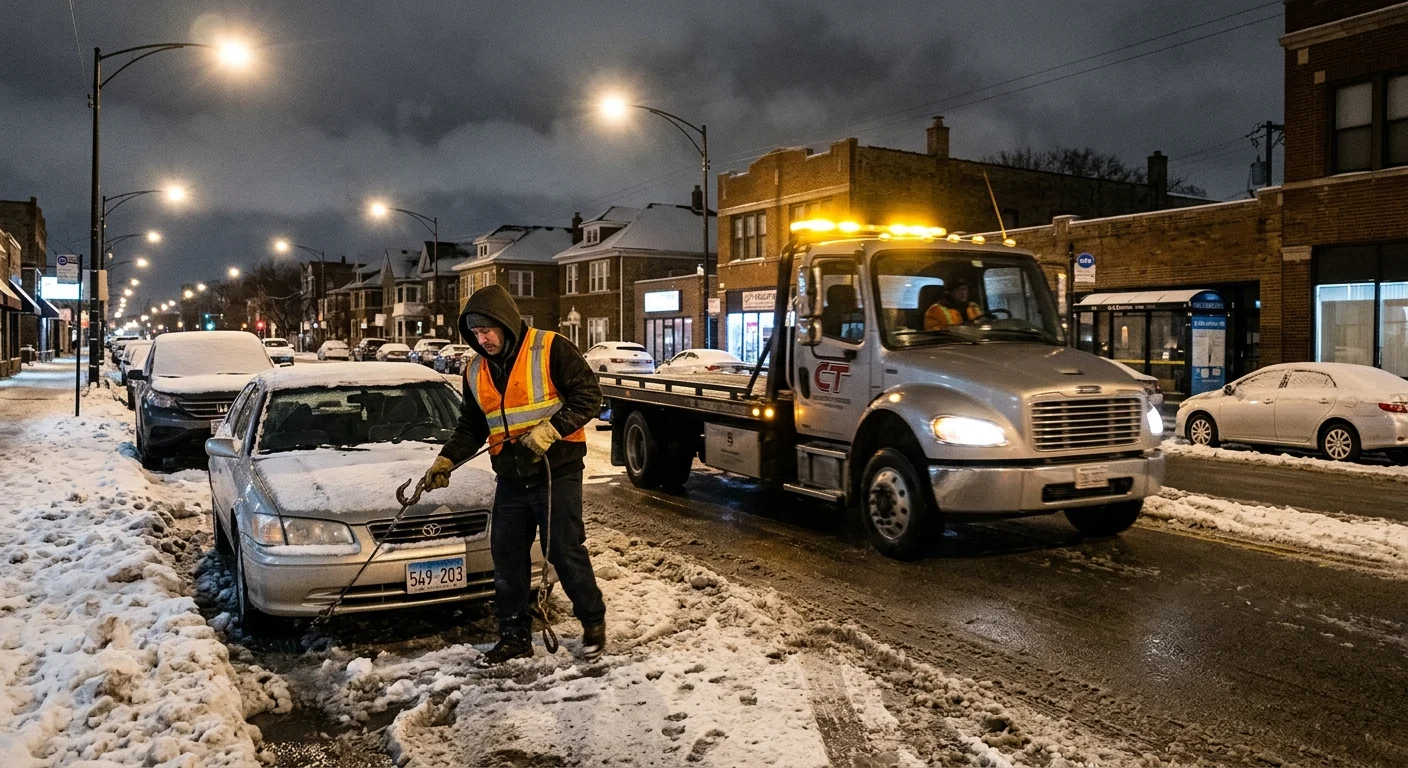
The overnight ban follows the calendar
The overnight ban isn’t triggered by a storm forecast. It starts on December 1 and continues through April 1. Dry pavement doesn’t suspend it. Neither does a mild night.
Permanent signs identify the affected streets. The city also places flyers on parked cars before enforcement begins. Still, the posted sign controls where you park. Check it before leaving your car overnight.
The restriction lasts four hours, from 3am through 7am. Moving the car after enforcement begins may be too late. If you regularly park on an arterial, confirm whether that block appears on the city’s winter restriction map.
Don’t assume every large street is covered. Don’t assume an unplowed side street is covered either. The restriction applies to the 107 signed miles identified by the city. A road’s width, traffic level, or connection to the Kennedy doesn’t decide its status.
The purpose is to preserve space for traffic and snow operations. Chicago says both winter restrictions stem from problems during the major snowstorms of 1967 and 1979. Those storms brought the city to a standstill.
The City of Chicago winter restrictions page has the controlling details. Review it before December 1, especially if your usual parking spot has a permanent winter sign.
The two-inch ban is a separate rule
Chicago also has a two-inch parking ban. It covers another 500 miles of main streets. This isn’t another name for the overnight restriction.
The two-inch ban activates when at least two inches of snow are on the street. It can apply at any hour and on any date. That means it can matter before December 1 or after April 1. It can also remain relevant during the daytime, when the overnight ban isn’t operating.
The difference matters during an active storm. A car might be legally parked under the overnight calendar rule at noon. It could still be affected by the two-inch rule if that restriction has activated.
Chicago says vehicles on those streets could receive a ticket or be relocated. A relocation means the car may have been moved elsewhere instead of taken into a pound. Street work and emergencies can also cause city relocations, sometimes without time to post advance signs.
Start with the city’s vehicle lookup when a parked car disappears. The city advises drivers to check for a tow or relocation before reporting the car stolen. Our guide to finding a towed car in Chicago explains that process in order.
A city relocation isn’t the same as a private-property tow. Private-property relocations follow a separate Illinois Commerce Commission system. The differences are covered in our guide to impounds and relocations in Chicago.
Where winter-ban tows go
Vehicles towed for the winter overnight ban go to one of two city pounds. The city names Pound 2 at 10301 S. Doty Avenue and Pound 6 at 701 N. Sacramento Avenue. Both are open around the clock.
Don’t drive to whichever pound seems closer. Search the Find Your Towed Vehicle tool first. It can tell you whether the vehicle was impounded or relocated and where it was taken.
Bring a valid photo ID for each person claiming the vehicle. The city also requires proof of ownership. Accepted ownership documents include a valid title, current registration card, or a bill of sale no more than 30 days old.
A lessee needs the lease agreement. Someone acting for the owner needs an original notarized letter. A current valid driver’s license is required if you’ll drive the vehicle out.
The city won’t release a vehicle without current state plates. A Chicago Vehicle Sticker is also required where applicable. A police investigation hold can prevent release even when the documents and payment are ready.
These are City of Chicago pound rules. They aren’t a universal Illinois process. A vehicle impounded by Cicero, Berwyn, or another suburb follows that municipality’s system. Each municipality sets its own administrative fee, and no suburban amount has been confirmed for this page.
A private-property removal is different again. In Cook, DuPage, Kane, and Will counties, those relocations are handled by commercial vehicle relocators licensed by the Illinois Commerce Commission. The Chicago winter ban doesn’t supply their rules or rates.
What the city publishes about fees
Chicago’s winter restrictions page publishes a specific set of charges for winter-ban tows. It lists a minimum towing fee of $150, a $60 ticket, and storage at $25 per day. Those are city figures, not Quick Tow Chicago prices.
A different city page publishes the general pound schedule under Municipal Code 9-92-080. The Common Towing Questions page lists a $250 tow fee for vehicles under 8,000 pounds. It lists $350 for vehicles weighing 8,000 pounds or more.
That general page lists daily storage at $50 below 8,000 pounds. Storage is $100 per day at or above that weight. It also says city pounds accept cash and specified major cards. Checks and money orders aren’t accepted.
These two published schedules shouldn’t be merged. Don’t add them together, average them, or assume the general schedule replaces the winter page. The city presents the winter-ban charges on its winter restriction page and the general schedule on its towing questions page.
Confirm the charges attached to your vehicle before paying. The pound can identify the tow reason and the actual balance in its system. Our breakdown of City of Chicago impound fees provides more context about the general pound schedule.
Quick Tow Chicago doesn’t set city tickets, tow charges, or storage fees. If you need an independent operator after release, that operator’s price is quoted before dispatch.
What to do before and after a storm
Read the entire sign before leaving your car overnight. Winter restrictions may appear alongside other parking instructions. Take a clear photo if the wording or location could become important later.
Move the vehicle before 3am when the overnight ban applies. Don’t wait for snowfall. The calendar ban is enforced regardless of street conditions.
During a storm, check the separate two-inch restriction too. The forecast alone doesn’t establish what applies. The city’s wording refers to at least two inches of snow on the street, so use its current restriction information.
If the car is missing, don’t assume it went to the closest pound. Search the city lookup first. A relocated car may be parked elsewhere, while a winter-ban impound should appear at Pound 2 or Pound 6.
Once you find the vehicle, note its location and status. Gather identification, ownership documents, and any required lease or authorization paperwork. Confirm that the vehicle can be legally released before arranging transportation.
Inspect the car before driving away. Winter conditions can hide a flat tire, damaged wheel, weak battery, or packed snow around the underbody. If it can’t be driven safely, don’t force it onto Doty Avenue or Sacramento Avenue traffic.
An operator dispatched through the emergency towing can move a disabled vehicle after release. For cars requiring all four wheels off the road, the operators we dispatch may use flatbed towing when appropriate.
When to call us
Call when the pound has released your car but it can’t be driven safely or legally. The line takes calls 24/7, and calls are recorded after a notice so we can match you with an independent local operator.
Call us at (773) 830-6930.