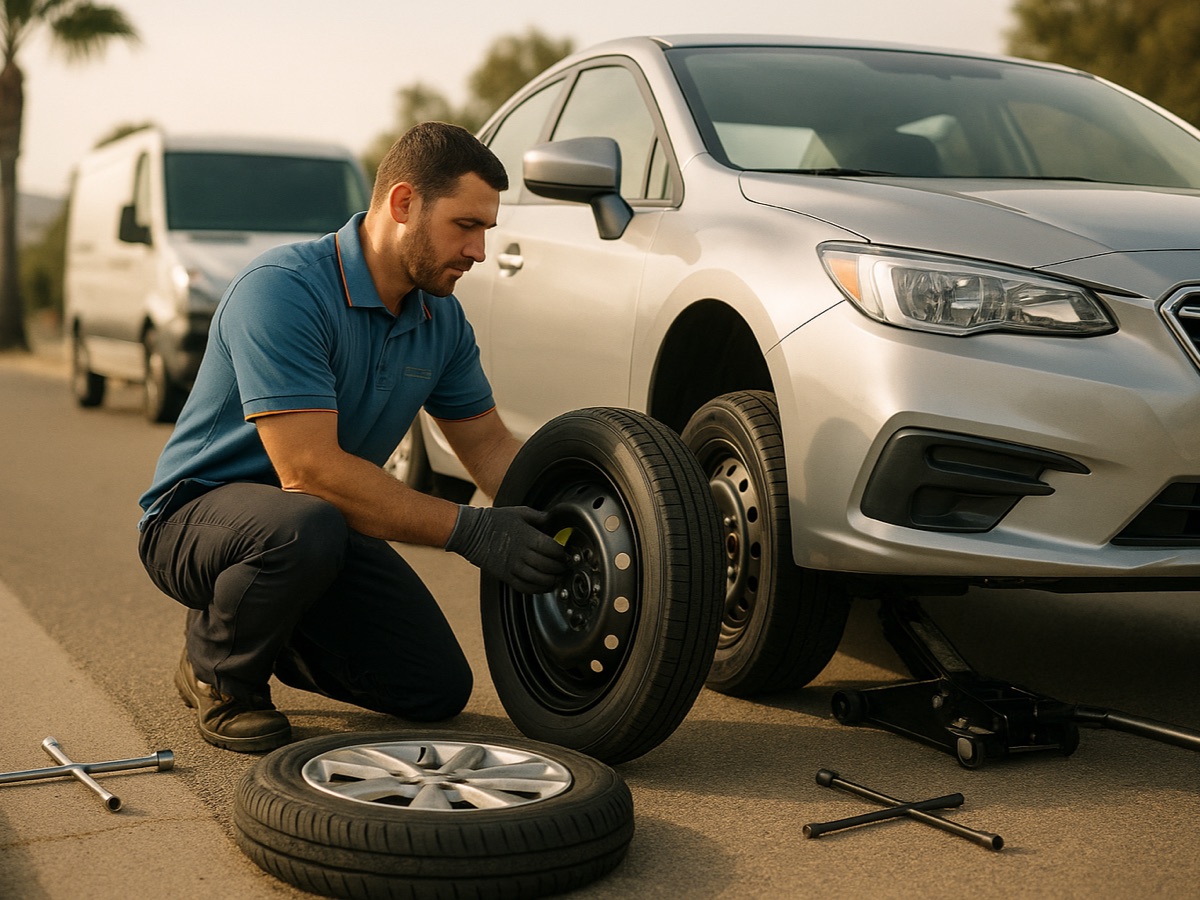
A flat tire in Chicago doesn’t always require a tow. Change it when the car is safely parked, the spare is usable, and you have the right tools. Request a tow when traffic, unstable ground, wheel damage, or a missing spare makes the change uncertain.
Make the decision from the location first
Look at where the car stopped before inspecting the tire. A flat beside moving traffic is a different problem from one inside a quiet parking lot.
Chicago streets leave little working room. Bike lanes, bus stops, snow piles, loading zones, and narrow shoulders can put you close to traffic. An expressway shoulder on the Kennedy, Dan Ryan, Stevenson, or Eisenhower brings another level of exposure. Don’t begin a tire change there just because the spare is available.
Choose a roadside change only when the entire car is away from traffic. The surface should be firm and level. You also need enough open space to work without entering a travel lane. If those conditions aren’t present, stay out of the roadway and request help.
Turn on the hazard lights if the vehicle’s electrical system works. If the car is creating an immediate danger, contact 911. Don’t stand between the car and moving traffic while inspecting the wheel.
Weather matters too. Snow can hide soft ground or an uneven curb. Ice can make footing uncertain. Chicago averages 38.4 inches of snow at O’Hare, along with 121.3 freezing nights each year. Those conditions can turn a simple change into a poor roadside choice.
Our roadside assistance service can connect you with an independent local operator. Explain the car’s exact position before anyone is dispatched.
Change it only when the car and spare are ready
A do-it-yourself change makes sense when the setting is controlled. Start by checking the spare, jack, lug wrench, and vehicle manual. The manual identifies the approved lifting points and any limits tied to the spare.
Confirm that the spare appears inflated and undamaged. Some cars carry a compact spare. Others use an inflator kit or sealant instead. Many newer vehicles don’t include a spare at all. Don’t discover that after removing the damaged wheel.
Inspect the flat without crawling beneath the car. A nail through the tread presents a different situation from a split sidewall, bent rim, or damaged suspension. The visible tire may not be the only issue, especially after striking a pothole or curb.
Stop if the lug nuts won’t move with the tools provided. Also stop if the jack tilts, shifts, or begins sinking. Don’t improvise with loose bricks, roadside debris, or an unfamiliar lifting point.
After installing the spare, follow the vehicle manual’s instructions. Compact spares may carry model-specific driving limits. Those limits must come from the tire label or manufacturer, not a generic roadside rule.
A parking garage, driveway, or level store lot may provide workable conditions. Lower Wacker Drive, an expressway shoulder, or a sloped neighborhood street usually presents a different decision. The tire is only half the question. The location decides whether changing it yourself is sensible.
Tow it when the tire isn’t the whole problem
Request a tow when the vehicle can’t be moved safely on its remaining wheels. That includes cases involving a damaged rim, broken wheel components, steering trouble, or damage after hitting a deep pothole. A second flat also rules out a normal spare change.
A tow also makes sense when no usable spare is available. Sealant can’t solve every type of damage. A torn sidewall, separated tire, or wheel that no longer sits correctly needs more than air.
Tell the operator what happened before dispatch. Mention whether you hit a curb, pothole, or road debris. Describe any scraping, leaning, fluid on the pavement, or warning messages. Those details help the operator determine what equipment may fit the job.
The vehicle’s design also matters. Electric cars, low-clearance cars, motorcycles, and vehicles with driveline restrictions may need specific loading methods. The operator should follow the manufacturer’s towing instructions. Our flatbed towing page explains when an operator may choose a carrier instead of lifting one end.
Don’t try driving a flat vehicle across several blocks just to reach a quieter street. Continuing can damage the tire, wheel, or nearby components. If the car can’t be repositioned without driving on the flat, explain that during the request.
Quick Tow Chicago doesn’t own trucks or perform the tow. We match drivers with independent operators. The operator sets the price, and you receive that price before dispatch.
Handle Chicago expressways differently
A flat on a Chicago expressway calls for a location-first response. The Kennedy, Edens, Dan Ryan, Bishop Ford, and Stevenson carry fast traffic through tight urban corridors. Interchanges can leave little shoulder space, especially near downtown.
If the vehicle still responds normally, move as far from active traffic as conditions permit. Don’t cross moving lanes to reach a preferred exit. Once stopped, avoid standing beside the traffic-facing side of the car.
Share the roadway, direction, and nearest visible marker when requesting help. “I-90 near Chicago” covers too much ground. An inbound or outbound direction, nearby exit, interchange, or readable sign gives the operator a clearer starting point. Our guide for drivers who break down on the Kennedy or Dan Ryan explains how to describe these locations.
IDOT’s Chicago-area Emergency Traffic Patrol responds to traffic disruptions caused by crashes, disabled vehicles, and hazardous debris. Its workers are also called Minutemen. They can establish emergency lane closures and warn approaching traffic, but IDOT states that they don’t repair or tow vehicles.
That distinction matters. Traffic protection and vehicle transport are separate needs. You may still need an independent tow operator after IDOT personnel secure the scene.
If you’re stranded on I-55, I-90, I-57, I-80, or the Tri-State, use our broader Chicago expressway breakdown guide for location details. Never attempt a roadside change when the available space doesn’t support it.
Know what kind of tow you’re requesting
The tow you request after a flat tire is different from a city impound, suburban municipal impound, or private-property relocation. Those are three separate legal situations around Chicago. Don’t treat their rules or fees as interchangeable.
A consensual service tow begins because you ask an operator to move your disabled car. You choose the destination, subject to what the operator can accept and safely reach. The price comes from that operator before dispatch. City pound charges and private-property relocation rules don’t set our price.
A City of Chicago tow involves the city pound system. A suburban impound follows that municipality’s process and fee schedule. A private-property relocation in Cook, DuPage, Kane, or Will County must be performed by a commercial vehicle relocator licensed by the Illinois Commerce Commission.
This distinction becomes relevant if you leave the flat vehicle parked and later find it missing. Inside Chicago, the city says a vehicle may have been relocated to clear a street for agency work. Its guidance is to check the Find Your Towed Vehicle tool and contact 311 before reporting the car stolen.
Don’t assume a missing car went to the nearest repair shop. Find out whether it was relocated, impounded, or removed from private property. Our guide to impounds versus relocations in Chicago explains how those paths differ.
When you arrange the tow yourself, confirm the destination before dispatch. Give the operator the vehicle’s make, model, condition, and parking location. Mention garage height restrictions, locked wheels, or limited access where applicable.
When to call us
Call when traffic, damaged wheels, missing tools, or unstable ground takes the job beyond a basic tire change. The line takes calls 24/7, and calls are recorded after a notice. We’ll match your request with an independent local operator, with the price quoted before dispatch. Call us at (773) 830-6930.