If you broke down on the Kennedy, or your car quit on the Dan Ryan, get out of moving traffic if the vehicle can still move. Once you’re clear, note your direction, nearest exit, and shoulder. Call 911 when a crash, injury, fire, smoke, or active-lane stop creates an immediate emergency.
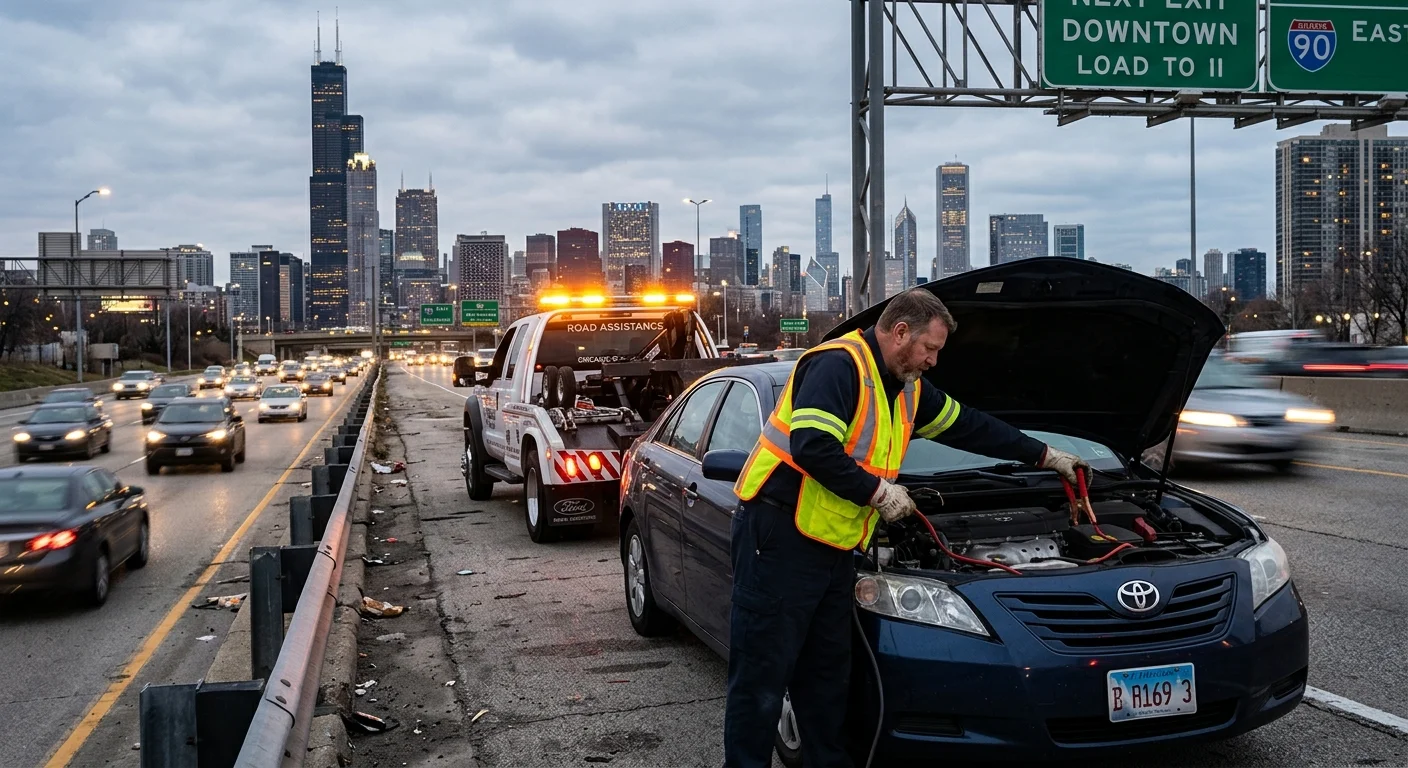
Get clear and pinpoint your location
An expressway shoulder isn’t a parking lot. Don’t begin diagnosing the car while part of it remains in a live lane. If the vehicle still responds, move completely out of traffic before reaching for your phone.
Turn on the hazard lights. Keep your seat belt fastened while you assess the scene. If there’s smoke, fire, leaking fluid, an injury, or no clear separation from traffic, call 911. Don’t cross expressway lanes or stand between the disabled car and approaching vehicles.
Next, build a location description another driver can follow. “Inbound on the Kennedy” isn’t enough. Give the direction of travel, the last exit passed, the next visible exit, and your shoulder position. Mention whether you’re near an entrance ramp, exit ramp, overpass, or interchange.
Corridor details matter in Chicago. On the Kennedy, say whether you’re closer to O’Hare, the Edens junction, or the Jane Byrne Interchange. On the Dan Ryan, identify the local or express lanes when possible. Also say whether you’re near downtown or farther south toward the Skyway and Bishop Ford split.
Read signs exactly as they appear. A photo of the nearest overhead sign can help, provided you can take it without leaving a protected position. Your phone’s map pin is useful, but it shouldn’t replace a plain description.
The operator needs to know which side of the roadway you’re on. A truck approaching the wrong direction may not have a safe path to your shoulder. Precise details also help everyone understand whether roadside work is practical or whether the car needs to be removed.
Understand what IDOT’s expressway patrol does
The IDOT Emergency Traffic Patrol responds to Chicago-area traffic disruptions involving crashes, disabled vehicles, and hazardous debris. Its workers are also known as the Minutemen.
The patrol’s job is traffic protection. Its workers establish emergency lane closures, warn approaching drivers, and protect responders at the scene. Because they patrol the expressways continually, they’re often among the first crews to encounter a disabled vehicle.
There’s one important limit: IDOT’s Emergency Traffic Patrol doesn’t repair vehicles and doesn’t tow them away. An IDOT vehicle appearing behind you doesn’t replace the need for roadside service or a tow operator.
IDOT doesn’t publish a public callout number for this patrol. When your vehicle is blocking a lane or the scene involves immediate danger, use 911. Explain the roadway, direction, nearest exit, and blocked lane. Dispatchers can determine which public response fits the situation.
If an IDOT worker or police officer reaches you, follow the scene directions you’re given. Expressway traffic control may affect where an independent operator can approach or load the car.
After the scene is protected, arrange the mechanical help you need. Quick Tow Chicago connects drivers with independent local operators. We don’t operate the IDOT patrol, employ its workers, or control traffic closures.
Describe the failure before requesting help
A useful service request explains what happened, not just that the car stopped. Tell the operator what you felt, heard, smelled, or saw before the vehicle quit. That information helps determine whether to discuss roadside assistance or a tow.
Start with the basics: vehicle year, make, model, color, and current position. Mention whether the engine starts, the transmission shifts, and the steering works. Say whether every wheel still rolls. Report any collision damage, missing wheel, visible fluid, smoke, or warning lights.
A dead battery, flat tire, empty fuel tank, and overheated engine aren’t interchangeable calls. The shoulder may also make an otherwise simple task unsuitable for roadside work. Don’t attempt a repair when the vehicle remains exposed to moving traffic.
For an electric vehicle, provide the battery level and any messages shown on the dashboard. Tell the operator whether the vehicle can enter neutral or its transport setting. If it can’t roll normally, say so before equipment is sent. Our guide to flatbed towing explains why vehicle condition affects loading decisions.
Also mention passengers, pets, or mobility needs. These details don’t change the mechanical problem, but they help the operator understand the scene. If another vehicle struck yours, share that before anyone is dispatched.
The independent operator decides which equipment fits the vehicle and location. Quick Tow Chicago doesn’t own trucks or perform repairs. We pass along your details and line up an operator.
The operator also sets the price. You get the price before anyone is dispatched. If the scope changes after the operator reaches the scene, ask what changed before approving added work.
Decide between roadside service and a tow
The key question is whether the car can leave under its own power after limited roadside work. A reachable battery or repairable tire may support a roadside service call. Collision damage, a nonrolling wheel, major fluid loss, or a car that won’t shift may point toward towing.
Don’t force the cheaper-sounding option when the vehicle’s condition says otherwise. Describe the symptoms, then let the independent operator evaluate the equipment needed. A service attempt that can’t address the actual failure only keeps you beside traffic longer.
Think about the destination before requesting a tow. Choose a repair shop, dealership, home, or other place that can receive the vehicle. Confirm the destination will accept it before the operator leaves with your car. If the shop is closed, ask where the vehicle can legally and practically be left.
Keep your keys, identification, phone, medication, and essential belongings together. Remove valuables only when you can do so without stepping into traffic. Tell the operator if the keys are missing or locked inside.
If the vehicle was involved in a crash, police may direct parts of the scene. Ask who is taking the car and where it will go. Record the operator’s business name and the destination instead of relying on memory.
For a vehicle that can’t be made drivable on the shoulder, review the emergency towing option. Quick Tow Chicago connects you with an independent local operator based on the information provided. The operator handles the vehicle and sets the quoted price.
If the vehicle is gone when you return
Sometimes a driver leaves a disabled car and returns to an empty shoulder. Don’t assume immediately that it was stolen. First determine whether a public agency or tow operator removed it and where it was taken.
Chicago distinguishes between an impound and a relocation. The city says a missing vehicle may have been relocated instead of impounded. It can relocate vehicles to clear streets for agency work, including during an emergency when signs couldn’t be posted.
Start with the city’s Find Your Towed Vehicle tool. The city advises checking its system and contacting its non-emergency service before reporting a vehicle stolen. Our guide to finding a towed car in Chicago explains the lookup process.
Don’t mix this situation with private-property relocation. A City of Chicago tow, a suburban municipal impound, and a private-property relocation follow separate rules. The Chicago pound schedule doesn’t set suburban fees, and it isn’t Quick Tow Chicago’s price.
Ask three direct questions: who ordered the removal, which company moved the car, and where it went. If police directed the tow, use the agency information connected to the incident. If you requested service yourself, contact the operator using the information provided during dispatch.
If the city’s tool shows a pound, follow the city’s instructions for that location. The City of Chicago’s towing questions page lists its pounds, accepted payment methods, and required redemption documents. Confirm the current record before traveling across the city.
When to call us
Call when the car can’t safely continue, roadside work isn’t practical, or you need an independent operator to move it. The line takes calls 24/7, and calls are recorded after a notice so we can use your location and vehicle details to line up an operator. Call us at (773) 830-6930.