Your car has stopped on Boughton Road, Weber Road, or inside a Bolingbrook parking lot. You already know it needs moving. A clear location, vehicle description, and destination help dispatch match you with the right local operator.
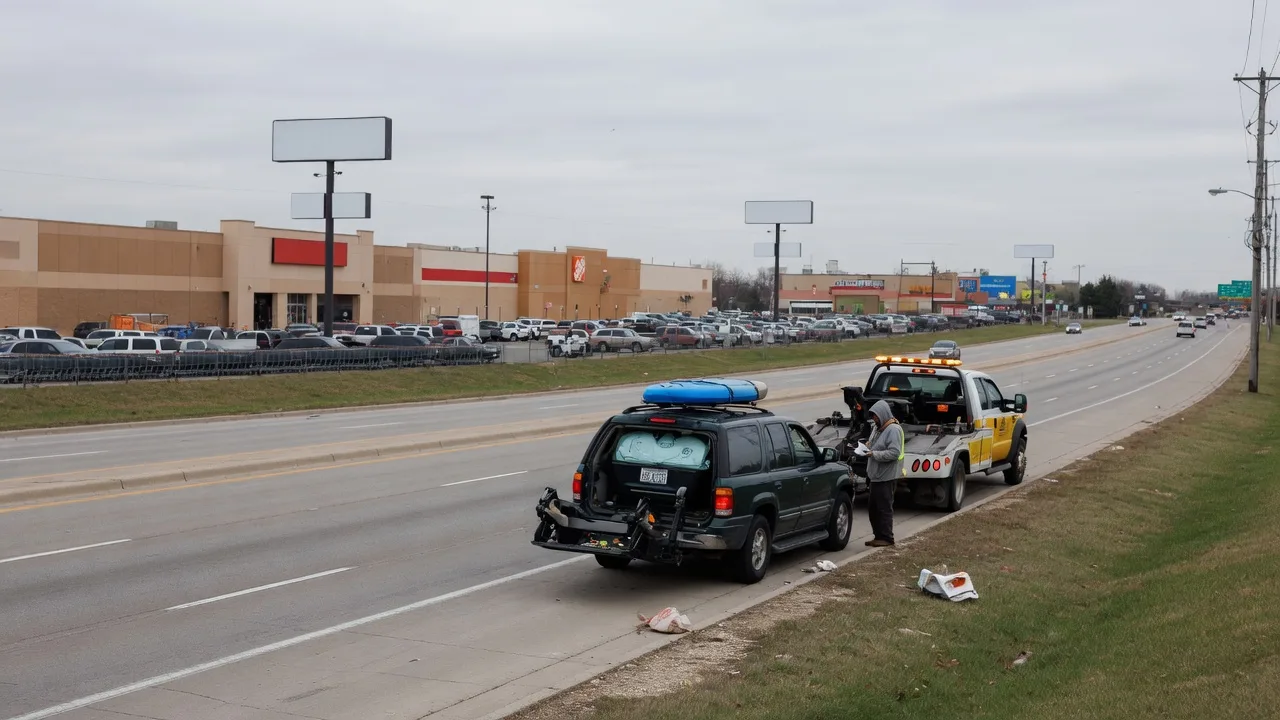
Pin down your Bolingbrook street, lot, or I-355 location
Start with the car’s exact location. A street name alone often isn’t enough. Boughton Road and Weber Road both cover long stretches with many entrances, turn lanes, and commercial lots.
Give dispatch the nearest cross street and travel direction. Add the business name when you’re in a shopping center. If the lot has several entrances, describe the closest one. A map pin can settle confusion faster than repeating an address.
Useful location details include:
- The street and nearest cross street
- Your direction of travel
- The business or property name
- The entrance, aisle, or building side
- A nearby sign that’s easy to identify
- Your parking level when the car is inside a garage
- Whether the operator needs a gate code or property access
An I-355 location needs more detail. State whether you’re on the main roadway, an entrance ramp, an exit ramp, or a nearby surface street. Share the direction you were traveling and the most recent exit you passed. Don’t describe an expressway shoulder as simply “near Bolingbrook.”
Stay with a safe, accurate description. Don’t cross active lanes to inspect a marker. If the vehicle is creating an immediate traffic danger, contact 911 before arranging the tow.
The operator also needs to know how the vehicle can be reached. Mention a narrow aisle, low garage ceiling, locked gate, steep curb, or blocked approach. Those details affect which equipment can reach the car. They’re part of a useful Bolingbrook towing request, not minor extras.
This page is for a village street or lot, not the I-55 shoulder
This guide covers a driver-requested tow from a Bolingbrook village street, driveway, garage, or parking lot. It also covers accessible areas near I-355. An active I-55 shoulder requires a different location report and roadside plan.
For a breakdown on I-55, use our guide to dispatch after a car breakdown on I-55 in Bolingbrook. That page focuses on expressway position, direction, exits, and shoulder conditions.
The distinction matters because “Bolingbrook” doesn’t describe the operator’s working space. A disabled car parked in a broad retail lot presents different access than one stopped beside moving expressway traffic. The same vehicle may need a different pickup approach in each setting.
A private lot can also create another question. This page assumes you own or control the vehicle and want it moved. It doesn’t cover an involuntary private-property relocation ordered by a property owner. Private-property relocation in Will County falls under Illinois Commerce Commission oversight. The Illinois Commerce Commission’s relocation towing page explains that separate process.
Tell dispatch if a property manager, security employee, or police officer is directing the move. Don’t describe an impound as an ordinary breakdown tow. The person ordering the removal, the vehicle’s status, and the destination can change the request.
If the car might only need a jump, tire change, or similar help, review roadside assistance options before requesting a full tow. If it can’t be driven, a tow request is the clearer choice.
Report size, drivetrain, and whether it rolls
Dispatch needs more than the vehicle’s color. Start with the year, make, model, and body style. Say whether it’s a sedan, crossover, pickup, van, motorcycle, or another type.
Report the drivetrain if you know it. Tell dispatch whether the car is front-wheel drive, rear-wheel drive, all-wheel drive, or four-wheel drive. If you’re unsure, say that. The operator can confirm the suitable towing setup before assignment.
Next, explain what the car can and can’t do. These details help an operator prepare:
- Does the engine start?
- Can the transmission shift into neutral?
- Does the steering wheel turn?
- Do the wheels roll freely?
- Is the parking brake stuck?
- Is a wheel bent, missing, or locked?
- Are the keys available?
- Can the driver’s door open?
- Is the vehicle lowered or modified?
- Is there visible collision damage?
“Won’t start” and “won’t move” aren’t the same problem. A car with a dead battery may roll normally once placed in neutral. A car with a damaged suspension may not roll at all. Describe what happened without diagnosing the cause.
Mention fluid leaking from the vehicle. Don’t touch or taste an unknown liquid. Tell dispatch where you see it and whether the leak appears active.
If the car left the pavement, explain its position. A tire resting on soft ground differs from a vehicle lodged in a ditch. State whether all wheels remain upright and whether the car is stable. Don’t attempt to push a vehicle near moving traffic or on a slope.
Photos can help confirm wheel damage, ground clearance, and access. Avoid including readable personal documents or unrelated people. The goal is to show the vehicle and its position.
Accurate details help the referral line match the request with an operator who can confirm the equipment. Our emergency towing service covers requests where the vehicle needs to be moved rather than repaired at its current location.
Choose a shop or home destination in Will County
A tow request needs both ends of the trip. Give dispatch the pickup point and your intended destination. That may be your home, a repair shop, a dealership, or another place authorized to receive the vehicle.
Confirm the destination before the operator is assigned. Call the shop yourself when possible. Ask whether it will accept the car, where tow deliveries should enter, and what happens if the service desk is closed. Don’t assume every lot accepts unattended vehicles or after-hours key drops.
Share a complete destination address. Similar business names can appear in different towns. A shop name without a street address leaves room for a wrong turn.
Think about access at the destination too. Tell dispatch about:
- A locked residential gate
- A narrow driveway
- Street parking restrictions
- A parking garage
- A shop entrance away from the public entrance
- Instructions provided by the repair facility
Remove valuables and required personal items before the car leaves. Take your house keys, identification, medication, and work equipment. Don’t leave the only copy of an important key inside unless the receiving shop requires it.
If you’re deciding between nearby repair and a longer move, make that choice before assignment. The destination is part of the operator’s quote. Changing it after the truck is assigned can change the job.
You don’t need to choose a destination based on guesswork. A repair shop can tell you whether it handles the suspected problem. If you’re comparing a local request with a broader metro tow, our guide to finding a tow truck near Chicago explains what location and vehicle details matter across the service area.
What a referral line can and cannot promise
Quick Tow Chicago is a referral service. We take the details you provide and match your request with an independent local tow operator. We don’t own trucks, employ drivers, operate a storage yard, or perform the tow.
The operator confirms the equipment and sets the price. You get the price before anyone is dispatched. Confirm the pickup location, destination, vehicle condition, and quoted amount before the truck is assigned.
Ask what the quote covers. Make sure the operator has the same information you gave the referral line. A blocked wheel, damaged suspension, garage clearance, difficult access, or changed destination can affect the requested work. Accurate information gives the operator a fair picture of the job.
No arrival time or response window is promised. Road conditions, traffic, operator availability, and the required equipment can vary. A useful request focuses on facts that can be confirmed.
Before assignment, check these points:
- The operator has the correct pickup pin
- The destination address is complete
- The vehicle description is accurate
- Wheel, steering, and transmission problems are disclosed
- Keys and access instructions are available
- The equipment has been confirmed
- The operator’s quote has been stated
Keep your phone available after leaving a message. If your location or vehicle condition changes, provide the updated facts before dispatch. Don’t move the car to another lot without reporting the new pickup point.
The referral line can help organize the request. It can’t diagnose the vehicle, control traffic, authorize access to private property, or decide what a repair shop will accept. Those decisions remain with the operator, property representative, or receiving facility.
Clear information is the fastest route to a workable assignment. For Bolingbrook towing, the essentials are simple: exact location, accurate vehicle condition, confirmed destination, suitable equipment, and the operator’s quote.
When to call us
Call when the vehicle can’t be safely driven and you’ve confirmed its location and destination. The line takes calls 24/7, and calls are recorded after a notice so we can match your request with an independent local operator. Call us at (773) 830-6930.