A disabled car in Romeoville can mean two very different scenes. You may be parked safely in a lot, or stranded beside I-55. For towing in Romeoville, IL, dispatch needs clear details before matching you with an independent operator.
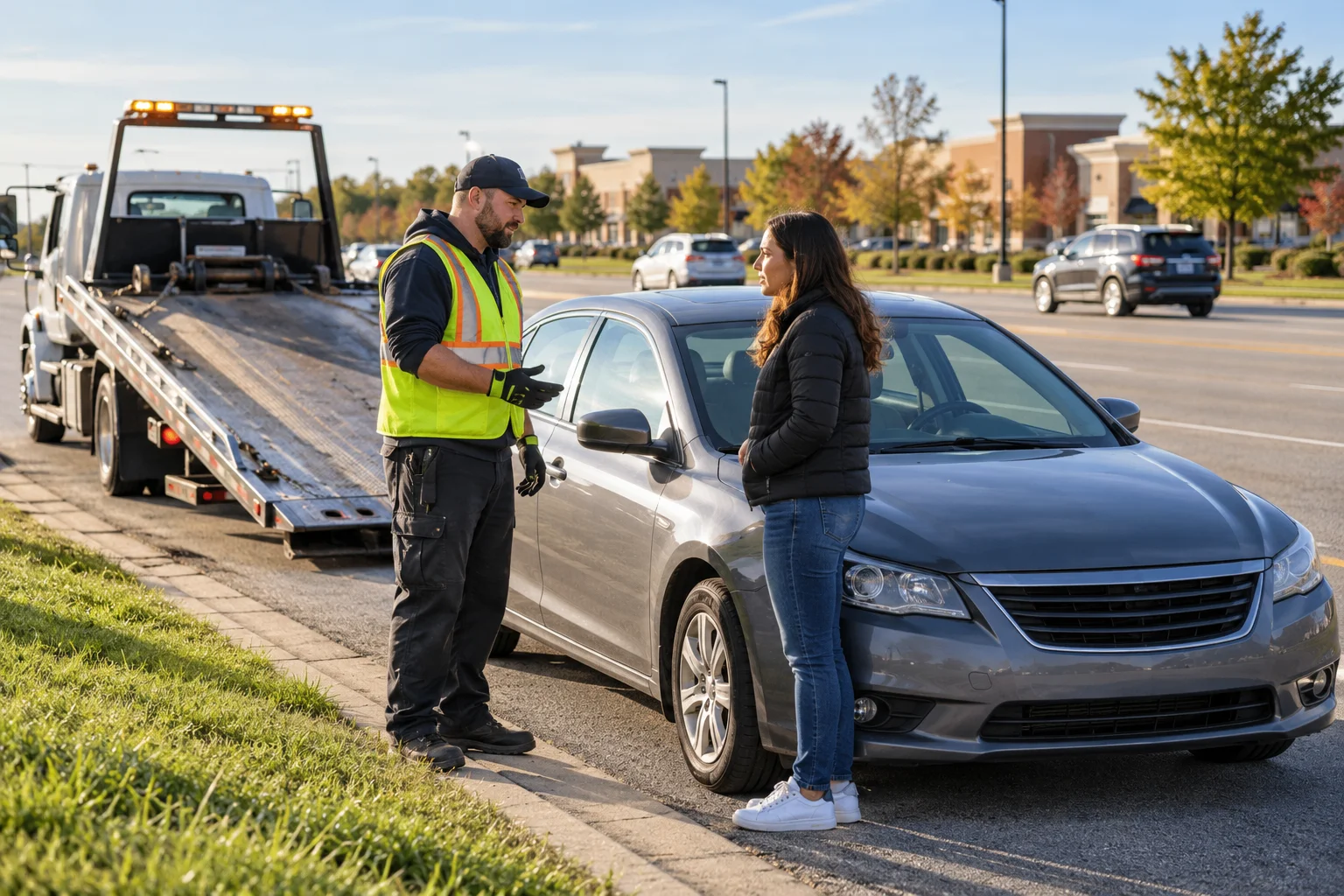
Pin down your Romeoville street, lot, or I-55 location
Start with the exact location of the vehicle. A street address works well when you’re near a home, store, office, or repair shop. Add the business name, lot entrance, or nearby sign when the address covers a large property.
A map pin helps when there isn’t a clear address. Check that the pin sits beside your vehicle, not across the road or behind the property. Then describe what the operator should look for. Your vehicle’s color, body style, and position can separate it from every other car nearby.
Parking lots need extra detail. Tell dispatch whether you’re near the main entrance, a loading area, or the back of the property. Mention gates, parking decks, tight turns, posted restrictions, or limited overhead space. If the lot has several driveways, identify the best entrance.
An I-55 shoulder requires a different description. Give the direction you were traveling and the nearest confirmed exit or visible marker. Don’t guess. Read the information from a map, sign, or navigation screen when it’s safe.
Say whether you’re on the right shoulder, left shoulder, ramp, or another protected area. Tell dispatch if traffic blocks access to one side of the car. If there’s an immediate danger, contact 911 and follow instructions from responders.
IDOT’s Emergency Traffic Patrol works around Chicago-area traffic disruptions. Its crews protect incident scenes and help restore traffic flow, but they don’t repair or tow vehicles. You’ll still need an operator to move the car.
Drivers just north of Romeoville can also review the Bolingbrook dispatch guide for another I-55 corridor example.
Say what happened and whether the vehicle still rolls
Dispatch doesn’t need a mechanical diagnosis. It needs a clear account of what the car does now.
Say whether the engine starts. Then report whether the vehicle shifts into neutral, rolls, steers, and brakes. These details matter more than saying it’s simply “broken down.” A car that starts but can’t move presents a different pickup than one with locked wheels.
Describe the event in plain terms. The battery may be dead. A tire may be flat. The engine may have stopped while driving. The car may have entered a ditch, struck something, overheated, or leaked fluid. Tell dispatch what you saw, heard, or smelled without guessing at the failed part.
Some situations may only need roadside assistance. A dead battery or accessible tire problem may not require moving the vehicle. However, towing becomes the better request when the car can’t be made roadworthy at its current location.
Use emergency towing when the vehicle needs to leave the scene. Tell dispatch if police, fire crews, property staff, or another authority is already present. Relay any instructions they gave about vehicle placement or access.
Damage after a crash needs specific reporting. Mention loose body panels, deployed airbags, broken glass, leaking fluid, or wheels sitting at an unusual angle. Don’t touch leaking material or crawl beneath the car. Report what you can see from a safe position.
Also say whether anyone remains inside and whether passengers need another ride. Operators move vehicles, not an unknown number of occupants. Clear information helps everyone plan before an assignment is made.
Report the vehicle size, drivetrain, and access
Give the year, make, model, and body style when you know them. A model name alone may not show whether the vehicle is a sedan, SUV, pickup, van, or commercial vehicle. Tell dispatch about trailers, cargo, modifications, or anything attached to the vehicle.
Drivetrain information also matters. Say whether the vehicle is front-wheel drive, rear-wheel drive, all-wheel drive, or four-wheel drive. If you’re unsure, check the owner’s manual, vehicle settings, or manufacturer information. Don’t guess based on the badge alone.
Electric vehicles and hybrids need to be identified early. Tell dispatch if the battery is depleted, the vehicle won’t enter neutral, or a transport setting can’t be activated. Share the manufacturer’s towing instructions if you have access to them. The operator can then confirm the planned equipment before accepting the job.
Next, describe the wheels. Report any flat, missing, locked, bent, or badly damaged wheel. Say if the parking brake won’t release. Mention missing keys, a locked steering wheel, or a transmission that won’t shift.
Access can change the whole pickup. A vehicle in an open roadside space isn’t the same as one inside a low garage. Tell dispatch about narrow alleys, steep driveways, soft ground, curbs, gates, loading docks, or cars parked tightly around yours.
Measure clearance only if you can do it safely. Otherwise, describe the structure and ask the operator what measurements are needed. Never promise that a certain truck will fit.
Share the vehicle’s parked position too. Say whether it faces into a space, sits against a wall, or has open access in front and behind. Good access notes help the independent operator decide whether the available equipment matches the scene.
Choose a destination in the Will County corridor
A tow request needs a pickup point and a destination. Decide where the vehicle should go before the operator is assigned whenever possible.
The destination might be a repair shop, dealership, tire shop, home, or another legal parking location. Confirm the full address. Similar business names and multiple entrances can cause confusion, especially when a property has separate service and customer areas.
Contact the destination before dispatch if you can. Ask whether it will accept the vehicle and where a tow operator should leave it. Confirm any instructions for an after-hours drop. Quick Tow Chicago doesn’t control a shop’s hours, access, or acceptance policy.
Tell dispatch if the destination has a gate, narrow driveway, indoor service lane, or restricted drop area. If keys must go into a box, identify the location without sharing sensitive access codes in public. Keep the keys ready for the operator.
Don’t choose a destination based only on distance. The right location must be able to receive the vehicle and handle its condition. A car with collision damage may need a different destination than one with a dead battery or flat tire.
Romeoville sits within the Will County service corridor, with Bolingbrook to the north and Joliet farther along the corridor. If your intended shop changes, give dispatch the final address before assignment. Drivers heading toward Joliet can compare the details requested in the Joliet towing dispatch guide.
If you haven’t chosen a repair facility, say so plainly. You can still gather addresses and confirm acceptance before anyone is sent. That avoids placing the vehicle somewhere that can’t receive it.
Confirm the operator’s equipment and quote
Quick Tow Chicago is a referral service. We take the call information and match drivers with independent local tow operators. We don’t own trucks, employ drivers, run a storage yard, or set towing prices.
Before assignment, confirm what the operator understands about the job. Review the pickup point, vehicle, damage, wheel condition, access, and destination. Correct any detail that changed while you waited for a callback.
Ask what equipment the operator plans to send. Don’t request a truck type based only on appearance. The operator should evaluate the drivetrain, damage, clearance, and loading conditions. Your role is to provide accurate facts and confirm that the proposed setup fits those facts.
If the car has manufacturer towing instructions, share them before assignment. This is especially useful for an all-wheel-drive car, electric vehicle, low-clearance model, motorcycle, or vehicle with disabled wheels. The operator should know about those conditions before reaching the pickup.
The operator sets the price. You get that quote before the truck rolls. Confirm the amount stated by the operator, what work it covers, the destination, and any condition that could change the job. If something isn’t clear, ask before agreeing to dispatch.
Romeoville municipal impound charges and private-property relocation rates aren’t the same as a driver-requested tow. No verified Romeoville village fee schedule was provided for this page, so none is quoted here. For a village impound, confirm the current amount and release process directly with the village authority that holds the vehicle.
Keep the operator’s name and instructions available. If the vehicle’s condition or location changes, report it before loading begins. Accurate updates help prevent the wrong equipment from being assigned.
When to call us
Call when the vehicle can’t safely continue, roadside help won’t solve the problem, or the pickup needs professional equipment. The line takes calls 24/7, records them after a notice, and helps match you with an independent local operator. Call us at (773) 830-6930.