A disabled car on a Chicago street can turn one call into several. Clear details help dispatch line up the right independent operator for the situation. Quick Tow Chicago’s line takes calls 24/7 for drivers who need emergency towing.
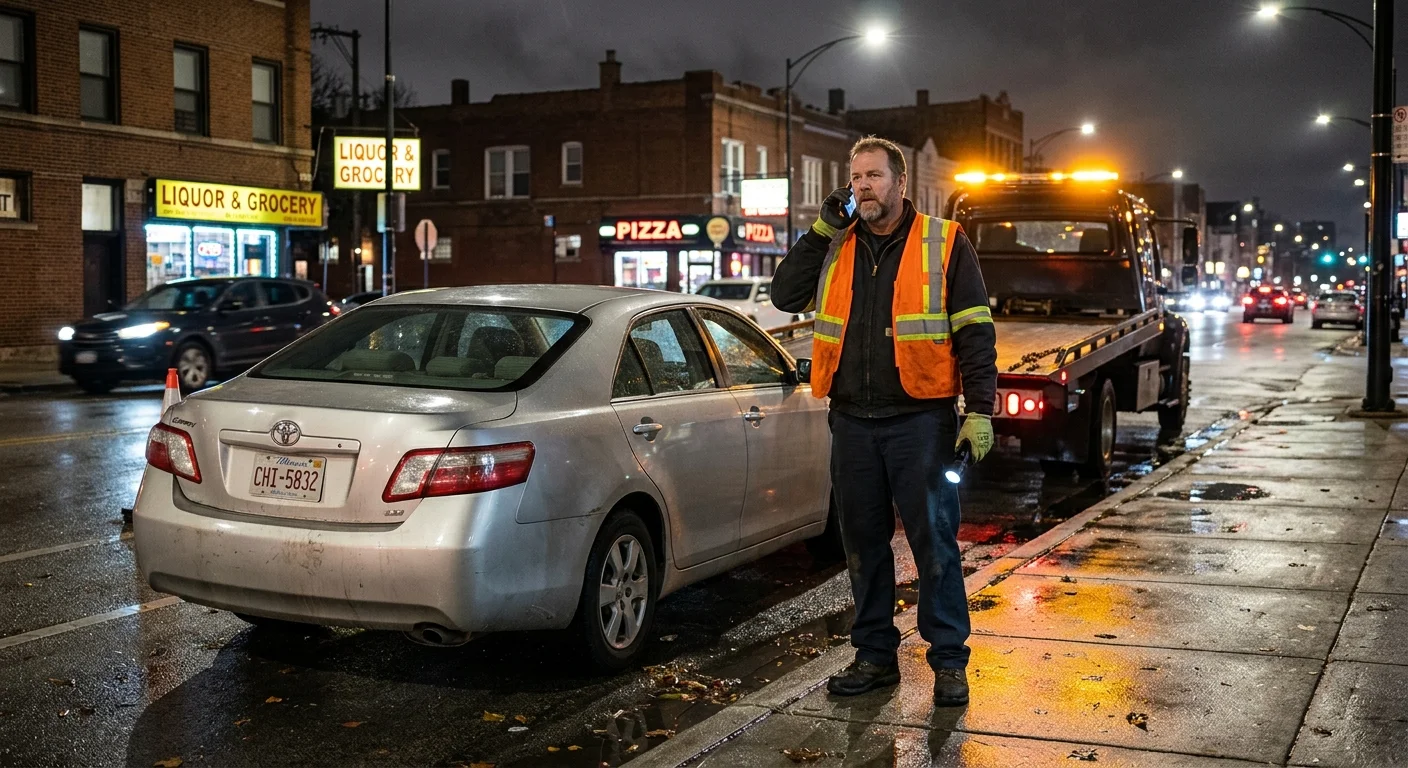
Send your exact location first
Start with the car’s location, not your home address. Share the nearest street number, intersection, entrance, or visible landmark. A map pin helps, but it needs a short explanation. Pins can land across a divided road, behind a building, or on another garage level.
Expressway calls need more detail. Name the road and your direction of travel. “Inbound Kennedy near the Addison exit” is more useful than “on the highway.” Say whether the car is before or after the exit. Include the nearest mile marker when you can see one. Tell dispatch whether you’re on the right shoulder, left shoulder, ramp, or traffic lane.
The same rule applies on the Dan Ryan, Eisenhower, Stevenson, Edens, Bishop Ford, Tri-State, I-57, I-80, and I-88. Near the Jane Byrne Interchange, name the road you entered from and the road you intended to follow. That detail can separate two nearby locations with very different access.
Chicago garages require their own description. Give the garage name, street entrance, level, section, and clearance posted at the entrance. Say whether the car sits near a ramp, pillar, tight turn, payment gate, or locked exit. In an alley or rear lot, describe which street provides access.
A voluntary roadside tow starts with a car that’s still present. A missing parked vehicle may have been relocated or impounded instead. Chicago advises drivers to use its Find Your Towed Vehicle tool before reporting the vehicle stolen. Our guide to finding a tow truck near you in Chicago also explains how to sort out the type of help you need.
Describe the vehicle and what happened
Give the year, make, model, color, and body style. “Blue Honda” leaves too much open. A blue Honda Civic sedan and a blue Honda Pilot require different planning. Mention whether it’s a motorcycle, passenger car, pickup, work van, electric vehicle, RV, or trailer.
Then explain what happened in one or two plain sentences. Examples include an engine that stopped running, a collision, a car stuck in snow, a vehicle that won’t shift, or a wheel damaged by a pothole. Describe what the car does now, not only what happened before it stopped.
Tell dispatch whether the engine starts. Say whether the transmission can move into neutral. Mention whether the steering turns and whether the parking brake releases. If the key is missing, locked inside, or damaged, include that detail. The operator needs to understand how the vehicle can be loaded.
Vehicle modifications also matter. Mention lowered suspension, oversized tires, running boards, body kits, trailer attachments, roof cargo, or an unusually long wheelbase. If the car is an EV, give the exact model and say whether you can access its towing or transport settings. Don’t guess about settings you haven’t checked.
If there was a collision, describe the visible condition without diagnosing hidden damage. Say whether airbags opened, glass broke, fluids appeared under the car, or body panels contact a wheel. Mention any detached parts still near the vehicle. Dispatch can pass those facts to the independent operator.
Photos can make the description clearer when the intake process allows them. Capture the whole vehicle, its position, the damaged area, and the approach path. Avoid sending documents, faces, plates, or other personal information unless they’re needed for the request.
Mention traffic, clearance, and wheel damage
A car beside traffic presents a different access problem than one in a quiet lot. Tell dispatch which side faces moving vehicles. Mention barriers, parked cars, snowbanks, curbs, construction equipment, and narrow shoulders. Describe the space in front of and behind the car.
On Chicago expressways, state whether the vehicle blocks any part of a lane or ramp. IDOT’s Chicago-area Emergency Traffic Patrol handles traffic disruptions caused by crashes, disabled vehicles, and hazardous debris. Its workers can establish emergency lane closures and protect responders. They don’t repair vehicles or tow them away.
Vertical clearance matters inside parking structures. Read the posted clearance exactly. Then mention lower pipes, signs, ramps, or beams between the entrance and the vehicle. A truck that fits beneath the entrance still needs a workable path through the structure. Tell dispatch if the car faces a wall or sits between closely parked vehicles.
Describe every wheel that won’t roll normally. A flat tire differs from a wheel folded under the car. Say whether a wheel is bent, missing, locked, turned sharply, or pressed against damaged bodywork. Mention shredded tires, broken suspension parts you can see, or a steering wheel that won’t move.
Also explain the ground beneath the car. Asphalt, concrete, gravel, mud, snow, grass, and a loading dock each create different conditions. Note slopes, curbs, soft shoulders, and tight turns. If the vehicle left the pavement, say how far it traveled and whether any wheels remain on solid ground.
Clear facts help the operator decide what equipment may fit. They don’t create an arrival promise. Conditions can also change before an operator reaches the location, so report any meaningful change when the line contacts you again.
Choose a safe destination for the vehicle
Dispatch needs a destination before the operator starts the trip. Give the complete street address, business name, and entrance instructions. A shop name alone isn’t enough when it has multiple locations or separate service entrances.
Confirm that the destination can receive the vehicle. If a repair shop is closed, ask the shop where after-hours vehicles may be left. Get any gate, key-drop, parking, or access instructions directly from that facility. Don’t assume its front parking lot is an approved drop area.
A home address may also require planning. Mention a narrow driveway, steep grade, low tree limbs, permit-controlled garage, alley entrance, or limited curb space. Say where you want the vehicle placed, while leaving the final approach to the operator on scene.
Chicago-area trips often cross municipal boundaries. A pickup in Chicago and a destination in Cicero, Oak Lawn, Schaumburg, Naperville, or Joliet needs two complete addresses. Don’t describe the destination as “near home” or “my usual mechanic.” Dispatch can’t route an operator from a neighborhood name alone.
If you haven’t selected a repair facility, say so during intake. The operator’s quote depends on the trip being requested, so changing the destination changes the request. Choose the location before approving dispatch whenever possible.
This destination step also separates roadside assistance from towing. A jump start, lockout, or tire problem may call for roadside assistance when the car can remain where it is. A car that must leave the scene needs a towing destination.
Confirm the operator’s quote before the tow
Quick Tow Chicago is a referral service. We take the call and connect drivers with independent local tow operators. We don’t own trucks, employ drivers, operate a storage lot, or set the operator’s price.
The price must be quoted before anyone is dispatched. Make sure the operator’s quote reflects the pickup point, destination, vehicle, access limits, and known damage. If any of those details change, explain the change before the tow begins.
Repeat the essential facts back during confirmation. State the exact pickup entrance and destination address. Confirm the vehicle type and whether its wheels roll. Mention the garage clearance, collision damage, locked steering, or off-pavement position again.
Don’t substitute City of Chicago pound fees for a voluntary towing quote. The city publishes its own impound schedule, while independent operators set their own prices for requested roadside tows. Suburban municipal impounds follow their municipality’s rules and aren’t covered by Chicago’s fee schedule.
Private-property relocations are another separate process. In Cook, DuPage, Kane, and Will counties, that work is regulated by the Illinois Commerce Commission. A driver requesting help for a disabled car isn’t asking the same question as a property manager removing an unauthorized vehicle.
Our guide to tow costs in Chicago explains why the vehicle, access, distance, and requested work must be identified before dispatch. It doesn’t promise a rate. No verified operator rate card is available for this site, so publishing a guessed price would mislead readers.
Keep the operator’s name, quote, and destination with your other trip details. If the vehicle description was incomplete, correct it before the truck rolls. Accurate intake gives the operator a clear request to accept and price.
When to call us
Call when the vehicle can’t reach its destination and an independent local operator needs to move it. Our line takes calls 24/7, plays a recording notice, and collects the details needed for referral and dispatch. Call us at (773) 830-6930.