A stall on DuSable Lake Shore Drive can become stressful fast. First, call 911 if you’re in immediate danger. Then identify your direction, nearest landmark, vehicle condition, and preferred tow destination.
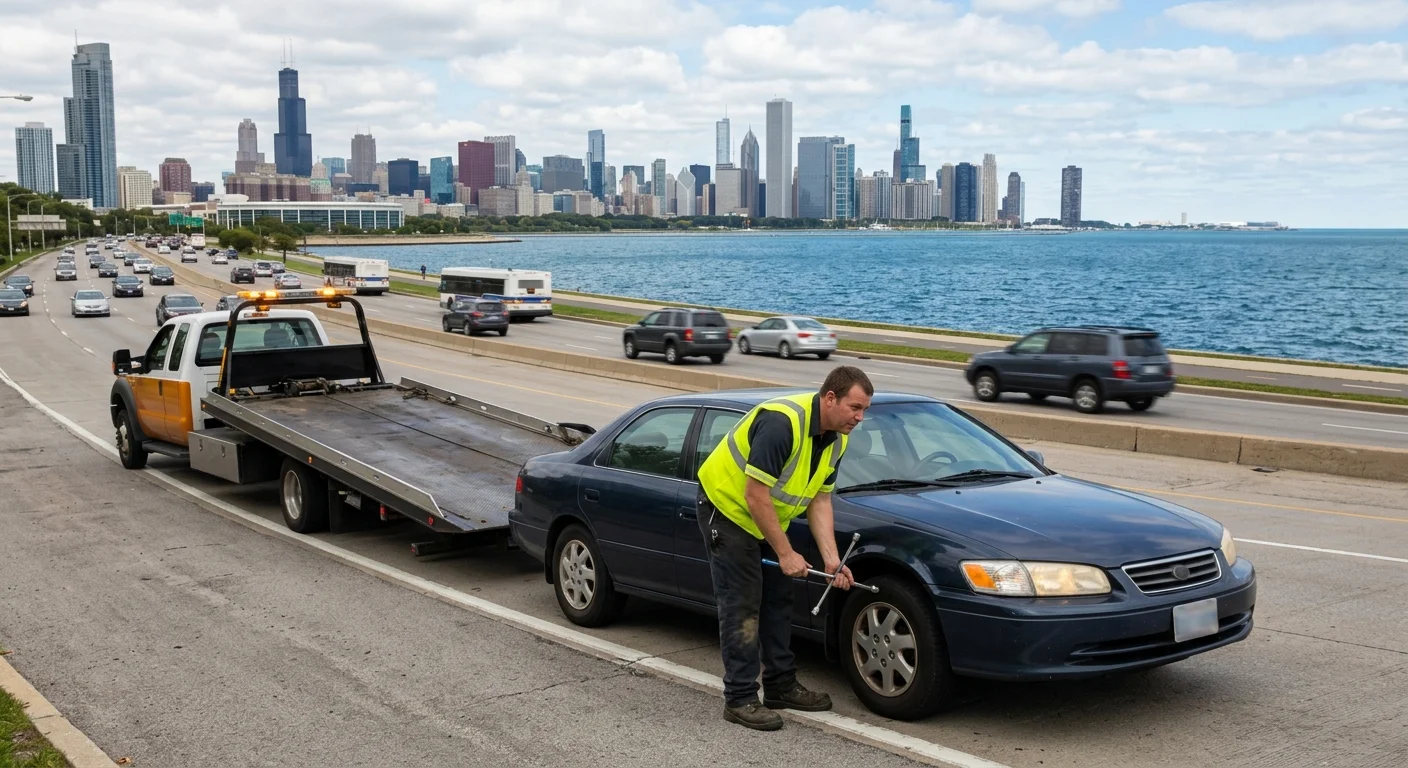
Describe your direction and nearest visible landmark
Towing on Lake Shore Drive in Chicago starts with a precise location. Saying only “Lake Shore Drive” leaves too much ground to search. The route passes beaches, harbors, downtown streets, parks, museums, and major event areas.
Start with your direction of travel. Say northbound or southbound, using the last sign or your navigation screen. If the roadway curves and you’re uncertain, say that. An honest description is more useful than a confident guess.
Next, give the nearest visible place. Useful examples may include:
- Montrose Harbor or Belmont Harbor
- North Avenue Beach or Oak Street Beach
- The downtown curve near Streeterville
- Museum Campus or Soldier Field
- McCormick Place
Use a cross street or exit name when you can see one. A navigation app may also show a named ramp, junction, or nearby street. Read that wording exactly instead of shortening it.
A map pin can help, but it shouldn’t stand alone. GPS can place the marker beside the roadway instead of on the correct carriageway. Pair the pin with your travel direction and a visible landmark.
Also describe where the vehicle stopped without giving unsafe details. Tell dispatch whether it’s beside the moving roadway, near a ramp, or in another accessible area. Don’t attempt to verify a lane or marker by entering traffic.
Chicago drivers often call the whole route “the Drive.” That works in conversation, but towing dispatch needs more detail. “Southbound near Belmont Harbor” is far more useful than “somewhere by the lake.”
Handle immediate danger through the proper authority
A towing request isn’t a substitute for emergency help. Call 911 if anyone is injured or the stopped vehicle creates an immediate danger. Clearly describe what happened, where you are, and what danger you can see.
Don’t rely on a universal instruction about staying inside or leaving the car. The safer choice depends on your exact position and surrounding traffic. Follow instructions from emergency personnel who can assess the scene.
Quick Tow Chicago can’t close a lane, direct traffic, or control access. We connect drivers with independent local tow operators. An operator can approach only when the location is available for towing.
Chicago drivers may know IDOT’s Emergency Traffic Patrol from trips on the Kennedy or Dan Ryan. IDOT says its workers, often called Minutemen, handle traffic disruptions on Chicago-area expressways. They establish emergency lane closures, warn traffic, and protect responders. IDOT also states that they don’t repair vehicles or tow them away.
That distinction matters. Emergency authorities manage immediate roadway danger. A local operator handles the towing request after access becomes possible.
Our guide for drivers stranded on the Kennedy or Dan Ryan covers those expressway situations separately. DuSable Lake Shore Drive needs its own location description and access check.
Tell dispatch where the vehicle stopped
Once the scene permits towing access, give dispatch a short, exact report. Your message should let an independent operator understand the pickup before accepting it.
Include these details:
- Northbound or southbound travel
- The nearest cross street, ramp, beach, harbor, or landmark
- The location shown by your map pin
- Your vehicle’s year, make, model, and color
- Whether the car is beside traffic or in another accessible area
- Any collision damage, loose parts, smoke, or visible fluid
- Whether police, fire, or other personnel are present
- Your intended tow destination
Mention anything blocking normal access. A tight roadside position differs from an open parking area. Traffic control, damaged wheels, and a locked transmission can also affect the operator’s planning.
Quick Tow Chicago is a referral service. We take the details you provide and work to match the request with an independent local operator. We don’t own trucks, employ drivers, or control the roadway.
Our 24/7 emergency towing page explains how referral requests work. The phone line takes calls at any hour, but that isn’t an arrival-time promise. No response window is published because road access and operator availability vary.
The operator sets the price. You get that price before anyone is dispatched. If your destination or vehicle condition changes, share that before accepting the quote.
Searching for a tow truck near you in Chicago may produce many broad listings. For a stop on the Drive, direction and access matter more than a map result that simply appears close.
Report whether the car can roll or steer
A car broke down on Lake Shore Drive for many possible reasons. Dispatch doesn’t need your diagnosis. It needs a clear description of what the vehicle can and can’t do.
Report what you already know:
- Does the steering wheel turn normally?
- Can the transmission shift into neutral?
- Can the vehicle roll?
- Is one tire flat or separated from its wheel?
- Does a wheel point in an unusual direction?
- Is the vehicle sitting unusually low?
- Did the engine stop, or did the car lose electrical power?
- Is anything dragging beneath the vehicle?
Don’t perform roadside tests when your position feels exposed. Tell dispatch what happened before the car stopped. A dashboard message, impact, sudden noise, or loss of power gives the operator useful context.
A vehicle that rolls and steers presents a different pickup than one with locked wheels or collision damage. The operator uses those facts to select a suitable setup. Quick Tow Chicago doesn’t choose the equipment or perform the work.
Some problems may lead to a roadside-service discussion. A dead battery or damaged tire doesn’t automatically establish which service is appropriate. Access, vehicle condition, and surrounding danger still matter. Review our Chicago roadside assistance options when the vehicle is safely accessible.
Avoid promising yourself that a quick repair will solve it. If the cause isn’t clear, choose a tow destination where the vehicle can be inspected. That decision is often easier before an operator starts toward the pickup.
Choose a safe destination before arranging the tow
Pick the destination before accepting dispatch whenever possible. This keeps the request clear and lets the operator quote the actual trip. Quick Tow Chicago doesn’t set that price.
Common destinations include:
- Your regular repair shop
- A dealership that services the vehicle
- Your home or another private address
- A repair facility recommended by your insurer
- A secure location you have permission to use
Confirm that the destination can receive the vehicle. Check its location, entrance, and current availability through the business itself. We don’t verify another company’s hours, storage terms, or acceptance policy.
Consider the car’s condition. A vehicle with collision damage may need a shop equipped to inspect that damage. An electric vehicle may need a destination familiar with its model. A flat tire or dead battery may call for a closer repair option. Describe the condition and let the operator decide the towing setup.
Don’t default to the closest map result without checking it. A nearby building may have a similar name or an entrance on another street. Downtown addresses can also involve loading areas, garages, and restricted approaches.
If you don’t yet have a destination, say so during the request. The price can’t be settled around an unknown trip. Choose the location, confirm it independently, and then review the operator’s quote before dispatch.
Keep the pickup and destination separate in your notes. For example, record the pickup as “southbound near Museum Campus” and then list the repair shop’s full address. That prevents a downtown landmark from being mistaken for the delivery point.
When to call us
Call when the vehicle can’t safely continue and you’ve identified your direction, landmark, condition, and destination. The line takes calls 24/7, records after a notice, and helps connect requests with independent local operators when roadway access is allowed. Call us at (773) 830-6930.