Your car was in a Cicero apartment lot, and now the space is empty. Before assuming it was stolen, determine whether it was removed from private property or impounded through municipal action. That distinction tells you who has the car and which process applies.
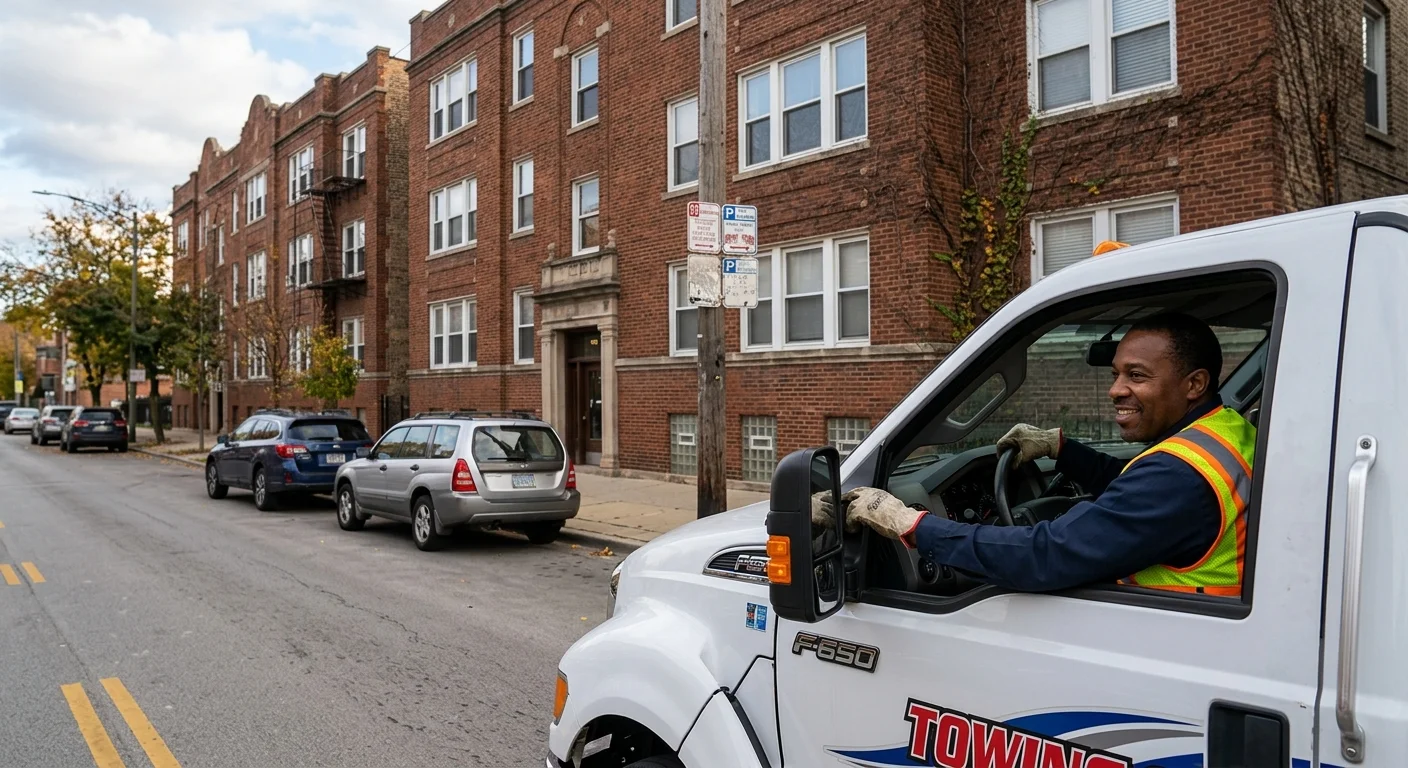
Check whether the car was moved from the lot or the street
Start with the exact place where you parked. A space inside an apartment complex, gated lot, rear parking area, or marked resident section points toward a private-property relocation. A space on a public street can involve a different process.
This matters because Cicero isn’t part of the City of Chicago pound system. Chicago’s four auto pounds, published fees, and city release instructions don’t automatically apply to a vehicle removed in Cicero. Our guide to an impound versus relocation explains why the same missing-car problem can lead to different agencies and rules.
Walk back to the parking space if you can do so safely. Check the stall number, curb, entrance, and nearby signs. Look for temporary notices, permit markings, reserved-space labels, or posted tow information. Photograph the full parking area before focusing on individual signs. That wider view can establish where the vehicle sat.
Ask whether anyone moved the car with permission. A household member, property employee, repair shop, or lender may know something you don’t. If nobody can confirm a removal, contact the law-enforcement agency serving that Cicero address and explain where the car was last seen.
Don’t rely on a Chicago vehicle lookup as the final answer. That tool serves City of Chicago records, while this incident began in Cicero. The correct search starts with the parking location and the party controlling it.
Ask the property contact who ordered the tow
Call or visit the apartment office, landlord, building owner, or property manager. Ask one direct question: who authorized the vehicle’s removal? Write down the person’s name, role, answer, and the time of the conversation.
Illinois law requires written authorization for a private-property relocation. That authorization may come from the property owner, someone lawfully controlling the property, an authorized agent, or an authorized law-enforcement officer. The rule appears in 625 ILCS 5/18a-300.
Ask the property contact for these details:
- The name of the relocator that received the vehicle
- When the removal was authorized
- Which parking rule allegedly applied
- Whether the vehicle lacked a permit or occupied a reserved space
- Where the relevant rule appeared in the lease, parking agreement, or posted notice
- Whether the authorization was written
Request copies when available. Don’t claim that a document proves misconduct before reviewing the full record. A permit may have fallen from view. A guest space may have time restrictions. The manager may also have confused your vehicle with another one.
Photograph every sign at each vehicle entrance. Illinois has detailed sign rules for many private-property removals, including size, placement, visibility, relocator information, and the posted charge. Residential property clearly reserved or intended only for residents or their vehicles can fall under an exception to the express-notice requirement. Our guide to Illinois private-property towing signs explains that distinction.
Separate a private relocation from a village impound
A private relocation and a municipal impound aren’t two names for the same event. They involve different decision-makers, records, and challenge routes.
Private-property relocations in Cook County are performed by commercial vehicle relocators licensed by the Illinois Commerce Commission. The property side authorizes the removal, while the relocator takes custody of the vehicle. The relocator must notify law enforcement in the jurisdiction within one hour after removal.
A municipal impound starts through government or law-enforcement action. Illinois law allows municipalities to impose an administrative fee that is reasonable and related to administrative and processing costs. State law doesn’t set a dollar cap. It also provides a right to an administrative hearing, notice within 10 days, and an initial hearing no later than 45 days after that notice is mailed. Those rules appear in 625 ILCS 5/11-208.7.
No verified Cicero administrative fee, storage rate, release checklist, local deadline, or lot contact was available for this page. Confirm those details directly with the responsible Cicero municipal department. Don’t use Chicago’s published pound charges as a substitute. They belong to a different government and towing system.
The first record usually reveals which path applies. A relocation invoice naming a commercial relocator points toward the private-property process. Municipal paperwork, an enforcement record, or instructions from the responsible local department points toward an impound.
For more context, read our Illinois towing laws explainer. It separates private relocations, suburban municipal impounds, and City of Chicago tows without blending their rules.
Confirm the current retrieval process with the responsible party
Once you know who holds the vehicle, contact that party before traveling. Ask for the current storage location, public hours, accepted identification, ownership documents, payment methods, and any restrictions affecting release. Repeat the vehicle description and plate information to reduce the chance of a mistaken trip.
Before driving to any result labeled a Cicero impound lot, confirm that the location actually has your car. Search listings can be old or may refer to a different towing system. Use information from the responsible operator or municipal department.
For an ICC-regulated private relocation, the relocator must accept cash, money orders, cashier’s or certified checks, and major credit cards without adding a payment fee. No storage fee applies when the vehicle is claimed within 24 hours with proper identification and payment. Storage can’t be charged for days or hours when the relocator is closed to the public.
The owner must also receive a complete Relocation Towing Invoice as a receipt. It includes complaint instructions. The Illinois Commerce Commission relocation towing page provides its consumer guide and complaint route.
The current ICC maximum relocation rate couldn’t be confirmed from the approved primary-source record. Ask the relocator for the posted rate and an itemized invoice. The Illinois Commerce Commission sets the applicable rate framework.
Quick Tow Chicago can’t release a relocated or impounded vehicle. We don’t operate a yard, control the paperwork, or set retrieval charges. Our private-property towing referral service connects property contacts with independent local operators when a separate, authorized tow is needed.
Save records before challenging the tow
Collect records before details disappear. Start with photographs of the parking space, every vehicle entrance, posted signs, permit markings, and nearby restrictions. Keep the original files because their timestamps may help establish when you documented the scene.
Save these items together:
- Your lease and any parking addendum
- Resident, guest, or temporary parking permits
- Messages from the landlord or property manager
- Notes from every phone call
- The relocation invoice or municipal paperwork
- Proof of payment
- Photographs taken before and after removal
- The vehicle registration and ownership documents
- Any written explanation of the alleged parking violation
For a private relocation, compare the documents with the Illinois rules. Check who authorized the removal, what signs were present, when law enforcement was notified, and whether the invoice is complete. If you were present before removal was complete and were willing and able to move the car immediately, record that fact. Illinois law generally bars removal in that situation, subject to a narrow exception involving certain commercial vehicles.
Direct an ICC-regulated relocation complaint to the Illinois Commerce Commission. Follow the instructions on the invoice and the Commission’s current page. Keep your explanation factual. Dates, photographs, names, and documents carry more weight than guesses about motive.
For a municipal impound, ask the responsible Cicero department how to request the administrative hearing provided by state law. Confirm the current filing method and local instructions. Don’t assume that an ICC complaint form applies to a municipal decision.
Paying to retrieve a vehicle and challenging the removal can be separate decisions. Ask the responsible party what payment means under its current process. Keep the receipt and avoid signing anything you haven’t read.
When to call us
Call after the vehicle is released if it won’t run or can’t be driven safely. We can line up an independent local operator, with the price quoted before dispatch, and the line takes calls 24/7 after a recording notice. Call us at (773) 830-6930.