When a motorcycle won’t start before winter storage, choose roadside help for an on-site start attempt. Arrange transport when the bike needs shop attention or can’t be moved normally. The right request depends on what the motorcycle does, its physical condition, and where an operator can reach it.
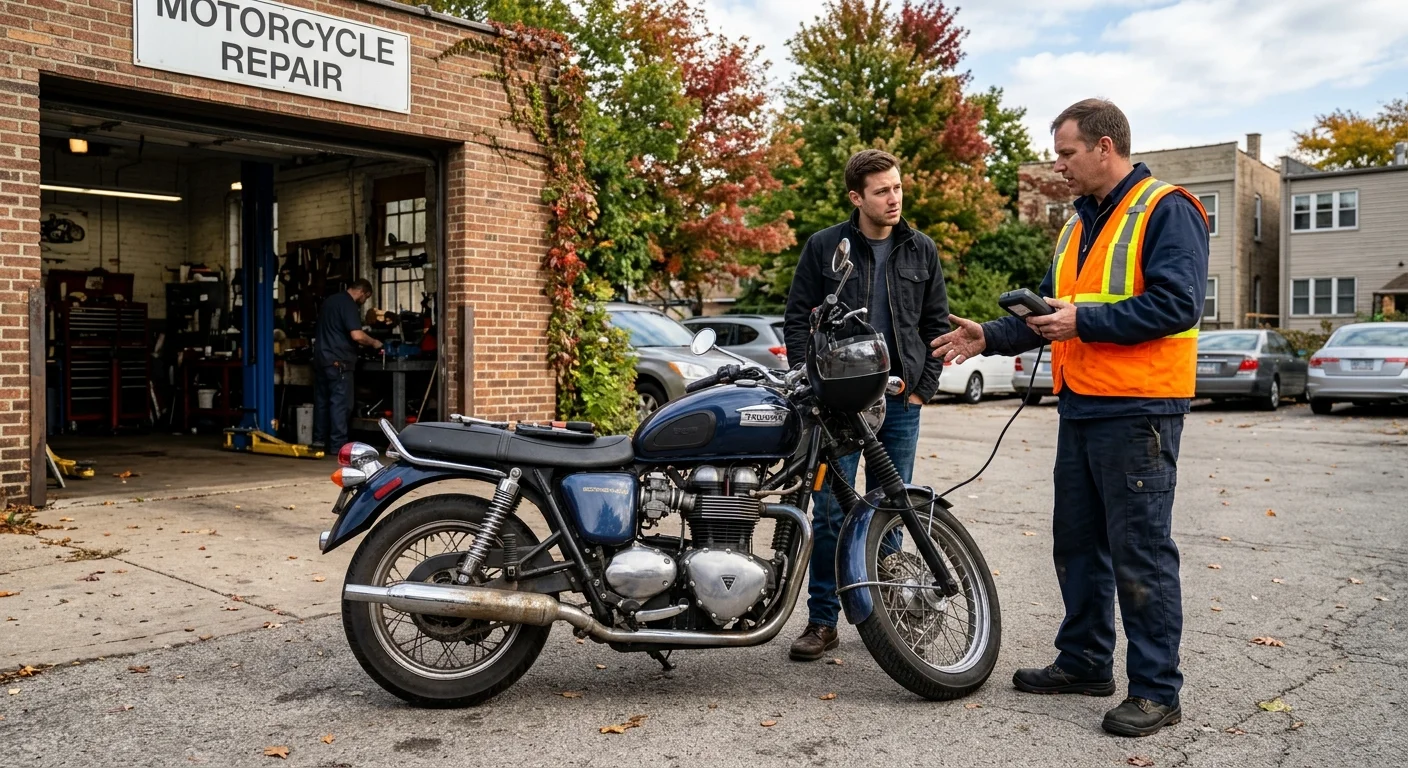
Describe what happens when the motorcycle tries to start
Start with what you can see and hear. Don’t begin with a diagnosis. A description gives the operator more useful information than saying the battery is dead.
Note exactly what happens when you try to start the motorcycle:
- Nothing changes when you use the starting control.
- The motorcycle makes one click or several clicks.
- The starter turns, but the engine doesn’t start.
- The engine starts and then stops.
- The lights appear normal, dim, or don’t come on.
- A warning light or message appears.
- You notice a fluid leak, damaged part, or unusual smell.
Those details don’t confirm the cause. They help distinguish a straightforward start request from a motorcycle that may need transport and diagnosis elsewhere.
Tell dispatch when the motorcycle last ran normally. Mention whether it sat overnight, several weeks, or the full riding season. Also report any attempt already made. If someone tried to jump it, say what happened afterward. Don’t repeat the attempt just to produce a better description.
Chicago’s storage season can arrive quickly. National Weather Service climate normals for O’Hare record 38.4 inches of annual snowfall and 121.3 nights each year at or below freezing. A motorcycle that ran in early fall may be sitting when the first long cold stretch arrives.
The immediate goal matters too. Some riders only need the motorcycle moved into storage. Others need it delivered to a repair shop before storage. State that goal at the beginning. It may change whether roadside assistance or transportation is the better request.
When roadside help may fit the problem
Roadside help may fit when the motorcycle is accessible and the request is limited to an on-site start attempt. This is the practical first choice when you haven’t already decided that the bike needs a shop.
A jump request doesn’t promise that the motorcycle will start. It also doesn’t confirm why it failed to start. The operator can review the situation on site and decide whether the requested attempt is appropriate. Once that attempt is complete, you can discuss the result and the next step.
Location can change the request. A motorcycle inside a residential garage presents a different pickup than one beside the Kennedy, Dan Ryan, Eisenhower, Stevenson, Edens, Bishop Ford, Tri-State, I-57, I-80, or I-88. Tell dispatch whether the bike is in a travel lane, on a shoulder, in a parking area, or behind a closed gate.
IDOT’s Chicago-area Emergency Traffic Patrol responds to traffic disruptions involving crashes, disabled vehicles, and hazardous debris. Its workers, also called Minutemen, establish emergency lane closures and protect responders. They don’t repair vehicles or tow them away. A rider still needs to arrange the appropriate roadside or towing service.
Consider what happens after the start attempt. A motorcycle sitting outside a Pilsen apartment may only need to reach its assigned garage space. One in a Cicero parking lot may have a planned shop destination. A bike at a storage facility in Aurora may need transport regardless of whether an on-site attempt changes anything.
For more cold-weather context, see our guide to winter breakdowns in Chicago. It explains why the location and the immediate plan belong in the first call.
When the motorcycle may need transport
Transport may fit when an on-site start attempt doesn’t resolve the situation. It also makes sense when the owner already wants the motorcycle delivered to a shop, garage, or storage location.
The motorcycle’s condition may point toward transport from the beginning. Tell dispatch if the steering won’t turn normally, a wheel won’t roll, a tire is flat, or visible damage affects movement. These observations don’t decide which towing setup will be used. They let the operator evaluate the request before accepting it.
Don’t assume a specific truck or loading method will arrive. Motorcycle condition, access, clearance, and operator equipment all affect that decision. Our guide on whether a motorcycle needs a flatbed tow explains why the answer depends on the individual pickup. Quick Tow Chicago doesn’t promise a particular towing method.
Have a destination ready when possible. Give the full address and identify whether it is a repair shop, private garage, dealership, or storage facility. Confirm access with the destination before dispatch. A locked building or closed gate can complicate an otherwise clear transport request.
Street parking adds another Chicago-specific concern. The city’s winter snow parking restrictions include two separate programs. The overnight ban covers 107 miles of arterial streets from 3 a.m. to 7 a.m., December 1 through April 1, regardless of snow. A separate two-inch ban applies on another 500 miles of main streets when at least two inches of snow is present. Check posted signs and the city’s current information if the motorcycle remains outside while you arrange storage.
When transport is the chosen path, our motorcycle towing service connects the request with an independent local operator.
Check steering, wheels, clearance, and pickup access
A motorcycle can be easy to see but difficult to reach. The operator needs a clear picture of the pickup area before choosing equipment or accepting the job.
Begin with the steering. State whether it turns, remains locked, or appears damaged. Don’t force it for the sake of testing. Simply report its current position and whether you have the key.
Next, describe both wheels and tires. Say whether each wheel rolls and whether either tire is flat. Mention visible damage or anything physically blocking movement. If you can’t confirm whether a wheel rolls, say that it hasn’t been checked.
Then describe the space around the motorcycle. Useful details include:
- Whether the bike is inside or outside.
- The floor or ground surface beneath it.
- Steps, curbs, slopes, or tight turns along the exit.
- Garage-door height and available space beside the motorcycle.
- The distance from the bike to an accessible driveway or street.
- Parked vehicles, snow, gates, or doors blocking the path.
Chicago pickups often involve rear garages reached through alleys. Downtown and neighborhood parking structures may have height limits, ramps, ticket gates, or tight corners. A suburban pickup might be inside a condo garage, commercial lot, or storage unit. Name the setting instead of calling it a regular garage.
Dispatch also needs access instructions. Provide a gate code only through the appropriate private exchange. Identify the entrance the operator should use. If a property manager, shop employee, or storage attendant controls access, arrange that access before pickup.
Photos may help an operator understand clearance and visible damage. Send them only when requested through the dispatch process. Keep license plates, access codes, and unrelated personal information out of the frame when possible.
These details don’t guarantee a particular method or outcome. They help the independent operator decide whether the request matches the available equipment and access.
What to tell dispatch before arranging help
A short, organized description can prevent confusion. Begin with the motorcycle and the decision you need help making.
Provide the year, make, and model if known. Describe any accessories or modifications that change the motorcycle’s dimensions. Don’t guess at its weight or mechanical condition. Say when a detail is unknown.
Next, give the exact pickup location. A street address is better than a neighborhood name. Add the garage level, lot entrance, alley direction, nearby intersection, or business name when relevant. If the motorcycle is near an expressway, identify the road, travel direction, and nearest known exit.
Explain the no-start behavior in one sentence. For example, say that the lights come on but the engine doesn’t start. Another useful description is that a prior start attempt didn’t change the condition. Keep the report factual.
Then cover movement and access:
- Does the steering turn?
- Do both wheels roll?
- Is either tire flat?
- Is there visible damage or leaking fluid?
- Is the key available?
- Is the motorcycle behind a gate or inside a garage?
- Are there height, width, slope, or turning restrictions?
State whether you want an on-site start attempt or transport. If you’re unsure, say so. Dispatch can refer the details to an operator for review. The operator, not Quick Tow Chicago, determines what work and equipment fit the request.
For transport, provide the destination and confirm someone can receive the motorcycle. Mention whether the destination has its own access instructions. If the destination isn’t settled, be clear about that before anyone is dispatched.
Ask for the price before dispatch. Quick Tow Chicago doesn’t set towing or roadside prices. The independent operator sets the amount, and the price is quoted before the truck rolls. Don’t rely on an online average or a price from a different job.
Quick Tow Chicago serves riders across Cook, DuPage, Kane, and Will counties. We take the request and match it with an independent local operator. We don’t own trucks, employ drivers, run a storage yard, or perform the roadside work.
When to call us
This stops being a do-it-yourself decision when you need an operator to assess a start request or transport the motorcycle. Our line takes calls 24/7, and calls are recorded after a notice. We can refer the request to an independent local operator. Call us at (773) 830-6930.