In Chicago a vehicle can become boot-eligible when its registered owner has three or more unpaid final determinations of liability, or two unpaid final determinations that are more than one year past their issue dates. Red light and bus lane determinations can count. Once the boot is on, the car can be towed if the immobilizing device is not released within 24 hours.
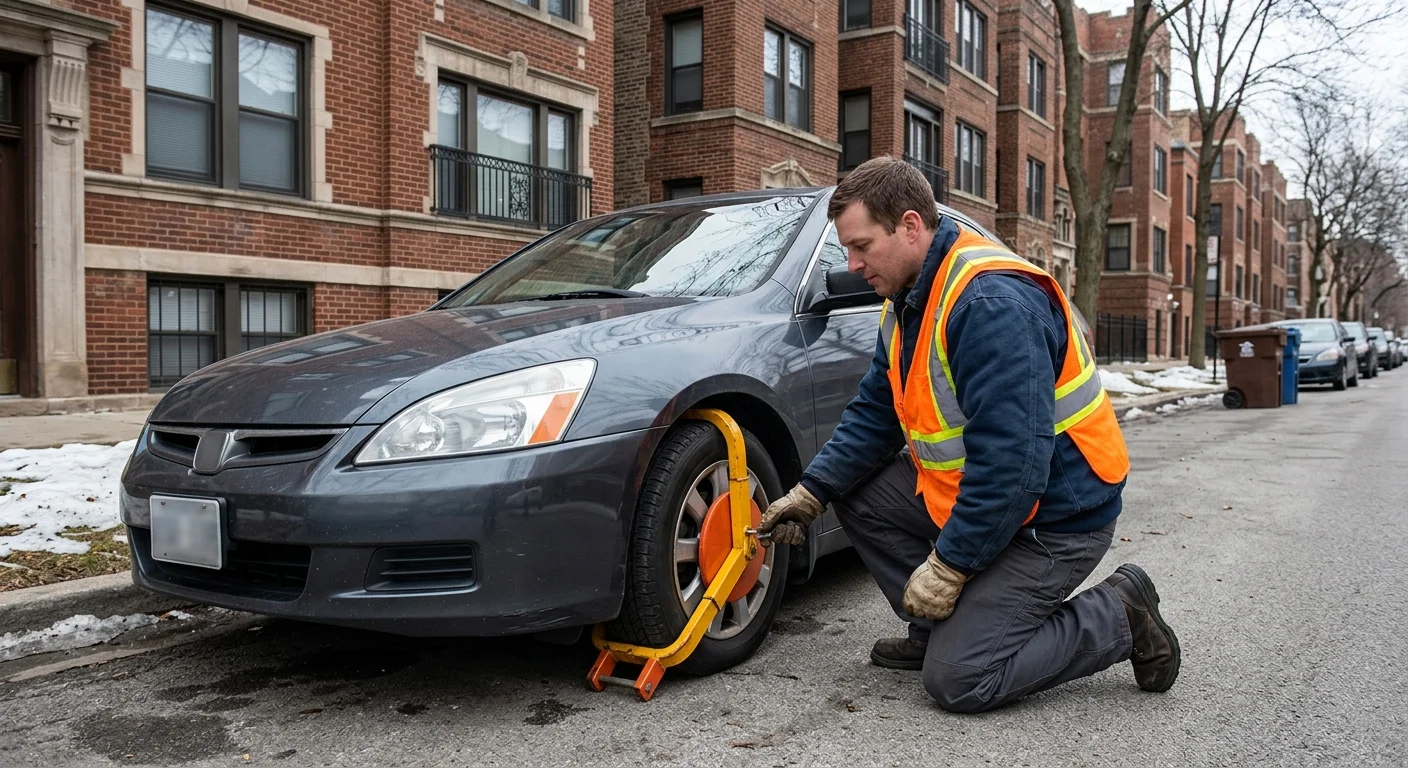
Start with the City of Chicago boot process
A City of Chicago boot is a Department of Finance matter. A private tow operator can’t approve its removal or change the balance. The first step is to follow the city’s payment or payment-plan process.
The city’s ticketing, booting, and towing reforms page confirms two ways to act during the first 24 hours. You can pay the amount in full or enter a payment plan. That page also confirms the extra 24-hour extension.
Use the current Department of Finance contact information on the city page when requesting that extension. We don’t print agency phone numbers here because numbers and contact routes can change. Confirm the instructions directly with the department before relying on them.
Don’t confuse a Chicago boot with a private-property relocation. A boot placed by the city is part of Chicago’s ticket enforcement process. A car removed from a private lot falls under a different Illinois system involving licensed commercial vehicle relocators.
Location matters too. Chicago’s process applies inside Chicago. A vehicle booted in Cicero, Berwyn, Oak Park, or another suburb may fall under that municipality’s rules. We couldn’t confirm one shared suburban removal process or fee. Contact the municipality named on the notice attached to the car.
Quick Tow Chicago is a referral service. We connect drivers with independent local operators, but we don’t remove city boots or control Department of Finance decisions.
Use the 24-hour window before the tow
The city’s clock starts after the car is booted. The owner then has 24 hours to pay in full or get on a payment plan before towing. The city allows one additional 24-hour extension by request.
Treat that first day as an action window. Read every notice attached to the vehicle. Confirm the plate number, ticket account, payment instructions, and extension process through the Department of Finance. Save any confirmation or receipt provided by the city.
The verified city material doesn’t say that simply contacting a towing company pauses the clock. It also doesn’t give Quick Tow Chicago authority to release the clamp. Resolve the boot with the city before arranging transportation or roadside help.
That distinction matters on busy Chicago streets. A car on Western Avenue in Pilsen follows the same city boot process as one parked near Pulaski Road in Little Village. Street location may affect where the vehicle goes after towing, but it doesn’t turn the boot into a private towing matter.
If the city approves removal and the car still won’t move, the situation changes. A dead battery, damaged tire, collision damage, or mechanical problem may require roadside assistance or emergency towing. The operator sets the price, and it’s quoted before dispatch.
Don’t wait for towing just because the car itself runs. Once the city moves it to a pound, separate tow and storage charges can begin.
How many tickets before you get a boot in Chicago
There are two thresholds. Under Chicago Municipal Code 9-100-120(b), a registered owner can become boot-eligible with three or more unpaid final determinations of liability, regardless of age. The other threshold is two unpaid final determinations that are more than one year past their issue dates. The covered categories include parking, standing, compliance, automated traffic-law enforcement, automated speed enforcement, and Section 9-105-020 violations, in any combination.
The words doing the work are final determination, not simply ticket. A ticket sitting on a windshield is not necessarily a final determination. A driver can hold more than three tickets and still not meet the threshold, while two unpaid final determinations more than one year past issuance can qualify.
Red light and bus lane violations count toward the same total. So does a violation issued against a different car: the city may consolidate violations from any vehicle registered to the same owner under the plate at issue, which is how an owner with two cars reaches the threshold faster than they expect.
Before a boot goes on, the city sends a Notice of Impending Immobilization. The code gives the owner 21 days from the notice date to pay the listed amounts or challenge the notice at a hearing with evidence that conclusively disproves liability. One listed challenge is that the owner had not accumulated three or more final determinations, or two or more determinations more than one year past issuance, when the notice was issued.
City sticker tickets are part of that chain. Chicago’s reforms page says a city sticker ticket reaches $250 with late fees. It also says the city restored a 15-day grace period after a sticker expires before ticketing. A ticket issued in error during that grace period can be challenged through the city.
The city also ended same-day and consecutive-day ticketing for a compliance violation. A resident gets a full day to correct the problem. A same-day or next-day repeat compliance ticket is dismissible under the city’s published reforms.
If the balance involves an expired sticker, review our guide to the Chicago city sticker late fee. If a ticket appears to fall within the restored grace period, see how to contest a city sticker ticket.
Check the city’s current account record before paying. A blog post can explain the process, but the Department of Finance controls the live balance and boot status.
If the car has already been towed
A booted vehicle may be towed after the first 24 hours unless the owner pays, starts a payment plan, or receives the additional extension. If the car is already gone, check the city’s Find Your Towed Vehicle tool before assuming it was stolen.
Chicago operates four auto pounds. All four are open 24 hours a day, every day of the year. The lookup result should help identify where the car was taken. Our guide to finding a towed car in Chicago explains the difference between an impound and a street relocation.
The city requires a valid photo ID from each person claiming a vehicle. It also requires proof of ownership. Accepted proof can include a valid title, current registration card, or a bill of sale no more than 30 days old. A lessee needs the lease agreement. Someone acting for the owner needs an original notarized authorization letter.
A current driver’s license is required if you plan to drive the vehicle out. Current state plates and a Chicago Vehicle Sticker are also required where applicable. The city won’t release a vehicle while it remains under a police investigative hold.
Chicago’s Common Towing Questions publishes a $250 tow fee for vehicles under 8,000 pounds. The figure is $350 at 8,000 pounds or more. Published storage is $50 or $100 per day, based on the same weight split. Those are city pound charges under Municipal Code 9-92-080. They aren’t Quick Tow Chicago prices, suburban impound rates, or private-property relocation rates.
The city accepts cash and major credit cards at its pounds. Checks and money orders aren’t accepted. Review the city page before leaving so you don’t arrive without an accepted document or payment method.
Keep the next compliance issue from becoming another balance
Once the car is released, check the problem that contributed to the account. If it involved a city sticker, confirm its expiration date and whether your vehicle requires one. Chicago residents who drive, park, lease, or own a vehicle for which they’re responsible in the city are subject to the Chicago Wheel Tax.
City stickers expire on the last day of the month. The city provides a 30-day grace period to buy one without a late fee or back charge. That purchase grace period is separate from the restored 15-day period after expiration before a city sticker ticket may be issued.
Those two windows shouldn’t be blended. One concerns buying the sticker without a late charge. The other concerns when ticketing starts after expiration. Confirm both against current City Clerk and Department of Finance instructions for your vehicle.
Keep the receipt after resolving the boot. Save payment-plan records, extension confirmation, and any ticket challenge paperwork. If the account still shows an unexpected balance, take the issue back to the city department shown on the notice.
A city boot also shouldn’t be confused with a towing dispute. Illinois private-property relocation rules apply when a licensed commercial vehicle relocator removes a vehicle from private property. Chicago’s boot process concerns city ticket enforcement. Suburban municipal impounds form a third system, with each municipality setting its own administrative fee.
Knowing which system applies keeps you from calling the wrong office. It also prevents a lost day while the 24-hour boot window continues.
When to call us
Call after the city releases the boot if the car still can’t move safely under its own power. The line takes calls 24/7, and calls are recorded after a notice. We can match you with an independent local operator, with the price quoted before dispatch. Call us at (773) 830-6930.