The late fee for a Chicago city sticker is $60. It drops to $30 for a senior-discounted sticker. Knowing the two separate grace periods can help you avoid that charge, a compliance ticket, and the boot-to-tow process.
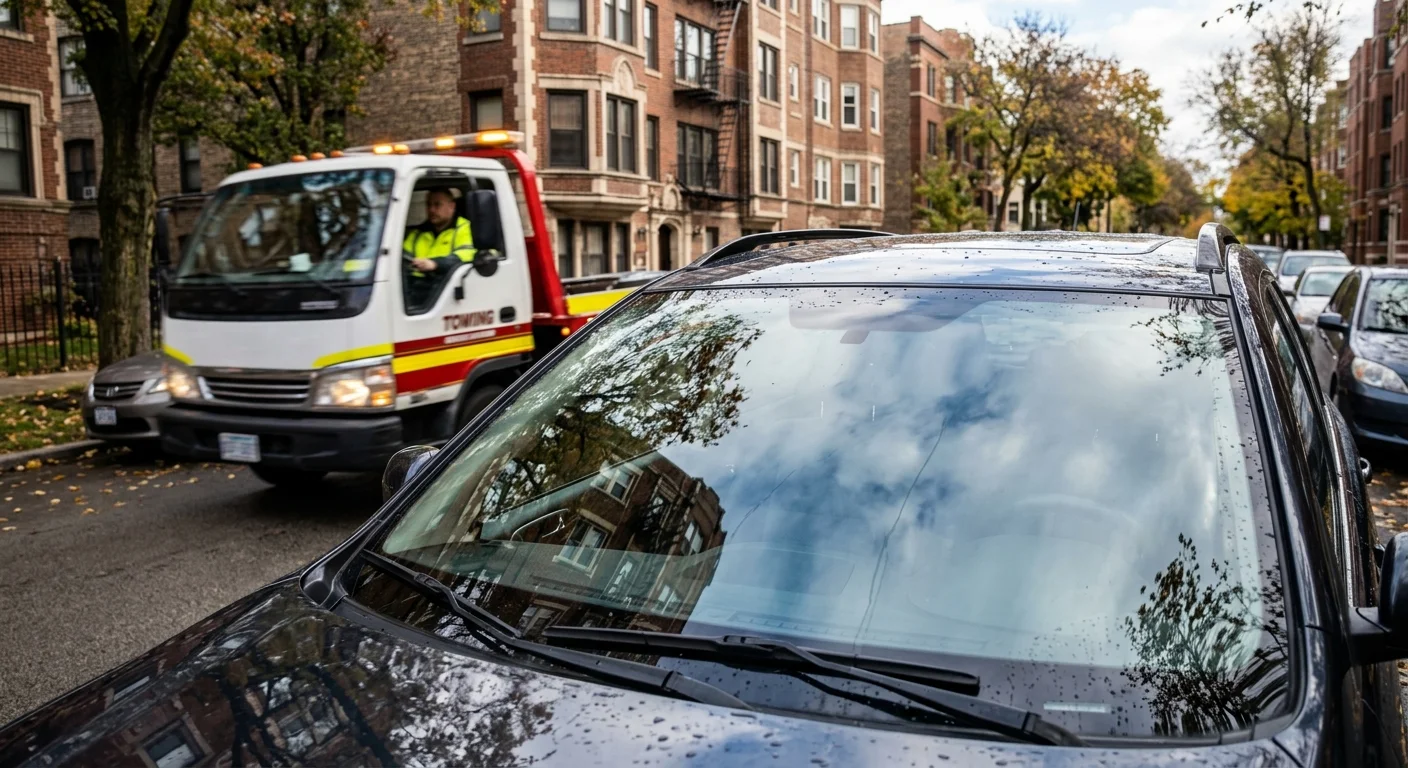
The late fee is $60
The Office of the City Clerk lists a $60 late fee. The fee is $30 when the vehicle has a senior-discounted sticker. Those amounts are separate from the annual sticker price and any city ticket.
The City Clerk provides a 30-day grace period to buy the sticker without a late fee or back charge. City stickers expire on the final day of the month. Check the month printed on yours before assuming it remains valid.
Chicago calls the city sticker its Wheel Tax. It applies to Chicago residents who drive, park, lease, or own a vehicle for which they’re responsible within the city. That rule covers neighborhoods across Chicago, from Little Village and Pilsen to Rogers Park and Beverly.
It isn’t a general Cook County sticker. Driving the Kennedy from a home in a suburb doesn’t make the Chicago requirement apply by itself. Suburban municipalities have their own rules. If your address or residency status is unclear, confirm it with the Office of the City Clerk.
The sticker’s annual price depends on its type. The City Clerk’s published price table is effective February 1, 2024. It shouldn’t be described as a 2026 price list. Our guide to the cost of a Chicago city sticker explains those listed categories and amounts.
The City Clerk FAQ says some pricing is prorated at the point of sale. It doesn’t publish a six-month or prorated amount. Don’t calculate one from the annual price. Ask the City Clerk to confirm the amount that applies when you buy.
Chicago has two different grace periods
The 30-day purchase grace period and the 15-day ticketing grace period aren’t the same rule. Mixing them up can turn a late renewal into a much larger problem.
The first clock concerns the sticker purchase. The City Clerk publishes a 30-day grace period during which you can buy without the $60 late fee or a back charge. That’s the clock connected to the question most drivers are asking.
The second clock concerns city enforcement. Chicago says residents receive a 15-day grace period after a sticker expires before ticketing. A ticket issued by mistake during those 15 days can be dismissed through the city’s process.
The city’s ticketing and towing reforms page explains that enforcement rule. It also says a city sticker ticket is $250 with late fees. That ticket amount isn’t the same as the City Clerk’s $60 sticker late fee.
The safest approach is to treat the expiration date as your deadline. Don’t assume the longer purchase window protects you from every enforcement action. The published materials describe two clocks governing different consequences.
Keep the receipt or confirmation after renewing. Check the sticker details against your vehicle information. If you received a ticket during the published ticketing grace period, follow the city’s dismissal instructions instead of paying without reviewing the dates.
Chicago also says compliance violations can’t receive same-day or consecutive-day tickets. A resident gets a full day to correct the problem. A same-day or next-day repeat compliance ticket is dismissible under the city’s published reforms.
How to avoid the late fee
Start with the expiration month shown on the sticker. Since it expires on that month’s last day, you don’t need to guess the renewal date. Put a reminder on your calendar before the month ends.
Next, confirm the vehicle category. The City Clerk’s table separates Motorbike, Passenger, Large Passenger, Small Truck, and Large Truck stickers. Passenger classifications also depend on curb weight and payload capacity. Don’t choose a category from the vehicle’s appearance alone.
If you use a senior discount, confirm that the renewal is being processed at the discounted rate. The published late fee is $30 for a senior-discounted sticker instead of $60. The annual senior rates and eligibility questions should be checked with the City Clerk.
Save proof after the purchase. A screenshot, receipt, or confirmation can help establish when you renewed. This matters if the city’s records don’t update as expected or a ticket appears during a grace period.
Don’t guess at a prorated price. The Clerk says proration happens at the point of sale, but its published pages don’t provide a six-month figure. The actual transaction should show what applies.
It also helps to understand what a Chicago city sticker is before buying. The sticker is tied to Chicago’s Wheel Tax requirements, not routine vehicle registration alone.
If you recently changed vehicles, addresses, or responsibility for a car, ask the City Clerk which documents and dates control your situation. Those details weren’t confirmed in the published claims reviewed for this page. Getting the answer from the agency is better than relying on a neighborhood rule of thumb.
How a missed sticker can lead to a tow
The $60 late fee doesn’t send a car directly to an auto pound. The risk develops through a longer chain: an expired sticker can produce a compliance ticket, unpaid tickets build a balance, and that balance can lead to a boot.
Once a vehicle is booted, the owner has 24 hours to pay in full or enter a payment plan before the city tows it. The city also allows one additional 24-hour period through the request process on its ticketing and towing reforms page.
Quick Tow Chicago can’t remove a city boot or cancel a city ticket. We’re a referral service that connects drivers with independent local operators. A city enforcement issue must be handled through the appropriate city department.
If the city tows the vehicle, the sticker problem may still block its release. Chicago says a vehicle won’t be released without current state plates and a Chicago Vehicle Sticker where required.
The city’s standard pound schedule also adds separate towing and storage charges. Under Municipal Code 9-92-080, the published tow fee is $250 for a vehicle under 8,000 pounds and $350 at or above that weight. Storage is $50 per day under 8,000 pounds and $100 per day at or above it.
Those are City of Chicago pound charges, not Quick Tow Chicago prices. They’re also not suburban impound charges or the separate winter parking-ban fee set. The city’s Common Towing Questions page explains the pound schedule, payment methods, required documents, and release conditions.
Paying attention to the sticker deadline is much cheaper than letting that chain continue. Renew early, keep proof, and address any compliance ticket before the balance grows.
If your car has already been booted or towed
A booted car is still a city enforcement matter. Follow the Department of Finance process to pay the balance or arrange an available payment plan. If you need the additional 24 hours before towing, use the request instructions on the city’s official reforms page.
If the car has disappeared from where you parked, don’t assume it went straight to a pound. Chicago sometimes relocates vehicles to clear streets for agency work. The city says an emergency relocation may happen without an opportunity to post signs.
Use the official Find Your Towed Vehicle search before treating the vehicle as stolen. Our guide to finding a towed car in Chicago also explains the difference between an impound and a relocation.
Chicago operates four auto pounds, and all four are open around the clock. To redeem a vehicle, each claimant needs valid photo identification and proof of ownership. Accepted ownership records include a valid title, current registration card, or a bill of sale no more than 30 days old.
A lessee needs the lease agreement. Someone acting for the owner needs an original notarized letter. A current valid driver’s license is required when driving the vehicle out. Charges and fines must be paid in full, and the car needs current plates plus a city sticker where required.
Some police holds can’t be released at the pound. Those cases must go through the Vehicle Impoundment Office. If you’re unsure which process applies, identify the hold or tow type before collecting documents or arranging transportation.
When to call us
Call when the vehicle has been released but can’t be driven because of a breakdown, collision damage, or another roadside problem. The line takes calls 24/7, and Quick Tow Chicago can line up an independent local operator through the emergency towing. Call us at (773) 830-6930.