A missing Illinois title doesn’t decide whether a car is salvage or junk. A junk car without a title in Illinois needs a record-specific answer from the Illinois Secretary of State and the receiving recycler. The verified statutes don’t create one universal shortcut for every missing-title vehicle.
What the choice changes
Salvage and junking aren’t two names for the same process. Illinois addresses them under separate statutes, with different consequences for the vehicle’s record.
Under 625 ILCS 5/3-117.1, a salvage certificate is required in six defined situations. Those situations concern how the vehicle was damaged, acquired, or declared a total loss. A missing title isn’t itself listed as the test.
Junking follows 625 ILCS 5/3-117.2. A junking certificate authorizes its holder to possess, transport, or transfer ownership of the junked vehicle by endorsement. The permanent consequence matters most: Illinois won’t issue another certificate of title for that vehicle.
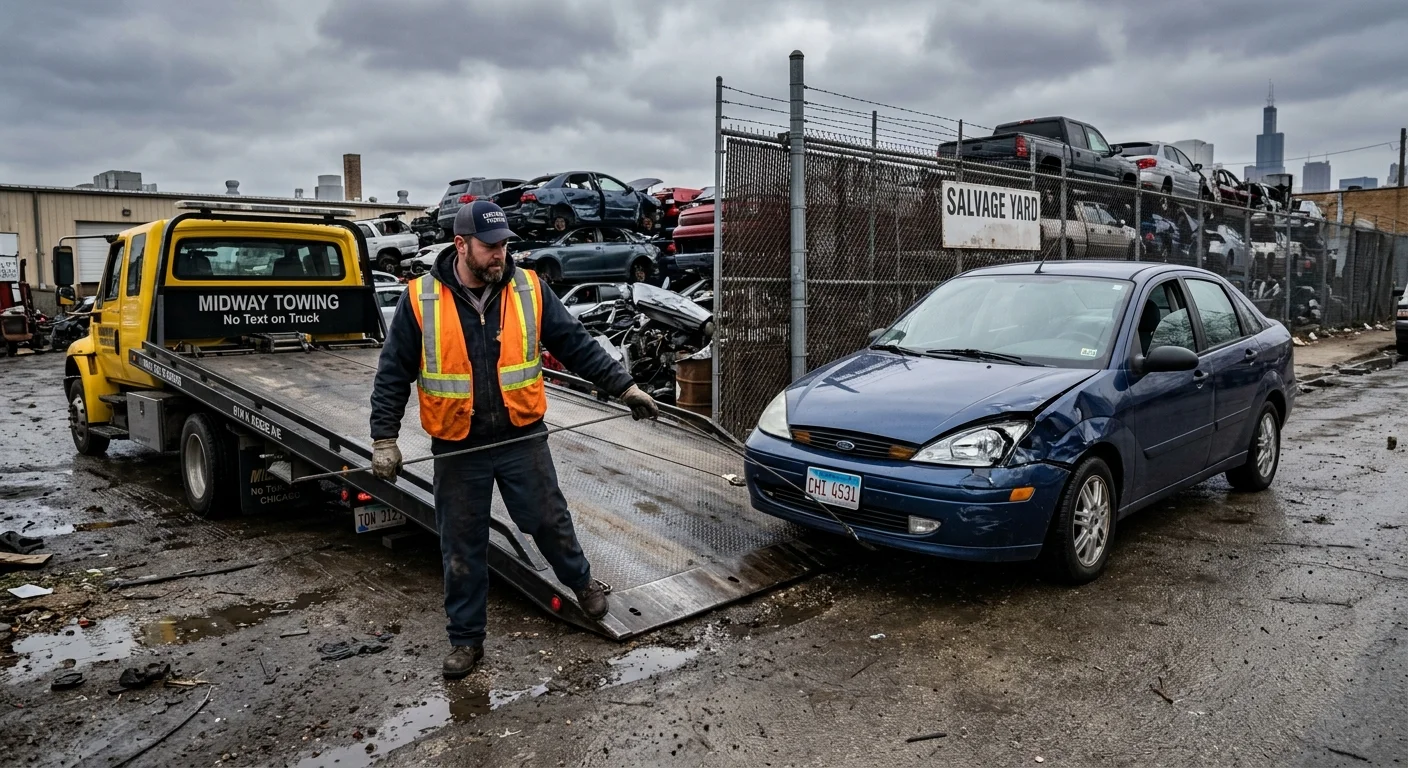
That means the decision shouldn’t begin with the tow truck. It should begin with the vehicle record and its intended destination. A damaged car near the Kennedy may need transport, but its location doesn’t decide its status. The same is true for a nonrunning car in Cicero, Naperville, Aurora, or Joliet.
Tell the Illinois Secretary of State and the receiving business what you intend to do. Ask whether the record calls for salvage, junking, replacement title documents, or another ownership step. Don’t surrender documents until you understand which status the transaction will create.
When Illinois requires a salvage certificate
Illinois law identifies six situations that require a salvage certificate. They include an insurance total-loss payment, subject to the statute’s hail and older-vehicle exceptions. A total loss involving a self-insured vehicle is also listed.
The remaining situations concern specific acquisitions or damage thresholds:
- Acquisition through an auction or certificate of purchase
- A repossessed vehicle damaged beyond 50 percent of fair market value
- A fleet vehicle damaged beyond the same threshold
- A flood-damaged vehicle beyond that threshold
These categories show why appearance alone isn’t enough. Severe body damage, a dead engine, or years of outdoor storage don’t independently answer the legal question. The vehicle’s history and the way ownership changed also matter.
The statute says the holder must promptly deliver or mail the certificate of title, proper application, and fee to the Secretary of State within 20 days. Our source review confirmed that deadline but couldn’t confirm the current fee amount. Check the amount directly with the Illinois Secretary of State before filing.
A salvage designation also doesn’t tell you whether the car can be driven today. Mechanical condition and legal record status are separate issues. Arrange transport if the vehicle can’t safely move under its own power. For more detail about the Illinois record process, read our guide to Illinois salvage title laws.
Before choosing a recycler or repair path, give the business the vehicle identification number and the documents you hold. Ask it to confirm, in writing, which Illinois status it expects to process.
What junking means when the title is missing
Junking is the final path described in the verified statute. Once a vehicle appears on the applicable junking record, the Secretary of State won’t issue another title or salvage certificate for it. That consequence makes guessing especially risky.
Illinois law also addresses scrap processors and automotive parts recyclers. A processor or recycler that acquires the ownership documents doesn’t have to obtain a junking certificate. It must submit those documents with a Junk Vehicle Notification within 15 days. The Secretary of State can’t later issue a title or salvage certificate for a vehicle listed on that notification.
That rule doesn’t establish that every recycler can accept every car without its title. It also doesn’t confirm that a bill of sale, registration card, or handwritten receipt always replaces the missing document. The exact no-title process couldn’t be confirmed from the approved sources.
Start by gathering the records you already have. That may include an old registration, bill of sale, lien paperwork, estate documents, or prior title correspondence. These items aren’t guaranteed substitutes. They can help the Secretary of State or recycler identify the correct next step.
Ask the receiving recycler two direct questions before arranging a tow. First, can it accept this specific vehicle with the documents available? Second, will it process the car as salvage, junk, or something else?
If the answer isn’t clear, pause the move. Our separate guide explains what to confirm before junking a car without a title. You can also review the broader Illinois junk-car process.
A tow doesn’t decide the vehicle’s legal status
Chicago-area drivers deal with three different towing systems. None of them automatically turns a vehicle into salvage or junk.
A City of Chicago tow sends a vehicle through the city pound system. For redemption, the city lists a valid title, current registration card, or a bill of sale no more than 30 days old as possible proof of ownership. Every claimant also needs valid photo identification. Those pound rules don’t create a general no-title junking process. The City of Chicago’s towing guidance explains its redemption requirements.
A suburban municipal impound is separate. Berwyn, Cicero, Schaumburg, Joliet, and other municipalities don’t use Chicago’s pound schedule merely because they sit in the same metro. Each municipality sets its own administrative fee. Illinois law requires that fee to be reasonable and related to administrative and processing costs, but the statute sets no dollar cap.
Private-property relocation is the third system. In Cook, DuPage, Kane, and Will counties, it must be performed by a commercial vehicle relocator licensed by the Illinois Commerce Commission. Quick Tow Chicago isn’t that licensee and doesn’t perform relocations.
If your car is already held by a city pound, village impound, private relocator, repair facility, or recycler, contact that custodian first. Confirm what must happen before another operator can move it. A towing referral can’t override a hold, settle ownership, or select the vehicle’s Illinois record status.
What to confirm before arranging removal
Work through the paperwork before the operator rolls. That prevents the car from reaching a business that can’t accept it.
Start with five practical checks:
- Identify the vehicle. Record the vehicle identification number, plate information, make, model, and present location.
- List the documents you hold. Tell the Secretary of State or recycler exactly what is available. Don’t describe a missing title as lost, stolen, or destroyed unless you know that is accurate.
- Confirm the intended status. Ask whether the transaction will involve salvage, junking, or another ownership process.
- Get destination approval. Make sure the recycler, dismantler, or repair facility will accept that vehicle with those documents.
- Confirm access. If another business or agency holds the car, ask what release it requires before pickup.
Don’t rely only on a verbal promise that paperwork will be handled later. Ask which Illinois record will be filed and what documents the receiving business will keep. The title and junking fee amounts couldn’t be confirmed from the approved sources, so verify current charges with the Secretary of State rather than relying on an online estimate.
Once the destination accepts the vehicle, junk car and abandoned vehicle removal can address the physical move. Quick Tow Chicago matches drivers with independent local operators. The operator sets the price, and it is quoted before dispatch.
When to call us
When the car can’t be driven and the receiving recycler has confirmed acceptance, transport stops being a do-it-yourself job. Quick Tow Chicago can line up an independent local operator, with the price quoted before dispatch. The line takes calls 24/7, and calls are recorded after a notice, so call us at (773) 830-6930.