For an abandoned car on private property in Illinois, start with the land beneath it. The correct path depends on whether the space is private, who controls it, and whether you want relocation or permanent disposal.
Identify whether the car is on public or private land
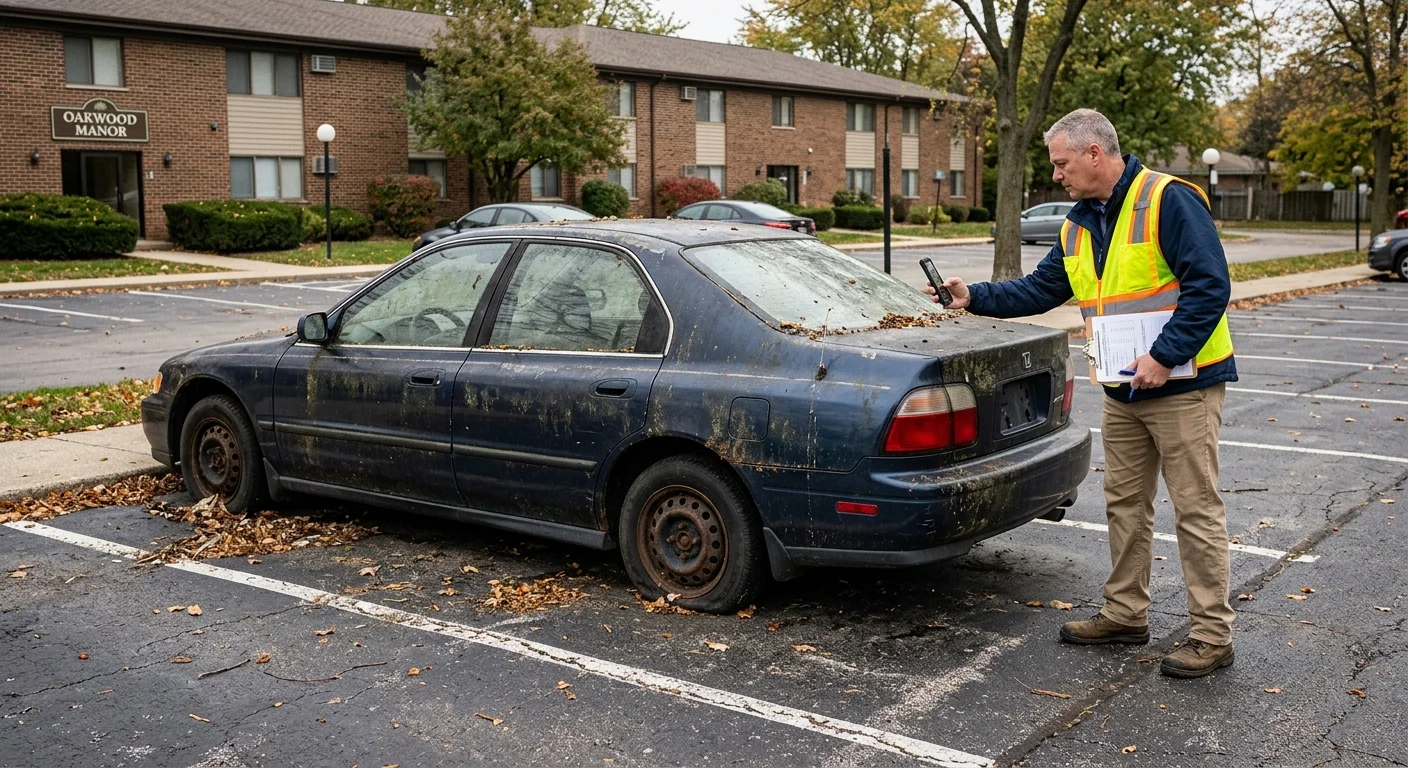
A car can look abandoned without sitting entirely on private land. It might be in an apartment lot, beside a storefront, or along a public curb. Confirm the boundary before requesting removal.
Start with the deed, lease, site plan, or parcel information. A painted parking line isn’t proof of ownership. Neither is a fence placed near a public alley. If the boundary remains unclear, ask the municipality to confirm who controls that space.
This distinction matters across the Chicago suburbs. A parking lot in Cicero, Naperville, Aurora, or Joliet can fall under private-property relocation rules. A vehicle on a village street belongs in the local municipal reporting process. Chicago’s city procedures shouldn’t be carried across the city line.
Illinois also separates private-property relocations from public-street towing, police-directed towing, disabled vehicles, and repossessions. Calling a vehicle abandoned doesn’t move it from one system to another.
Record where the vehicle sits and how it relates to the property line. Include the nearest building, parking space, entrance, and public roadway. Photos can help a municipality or operator understand the location without relying on a vague description.
For more background on how the term is used, read our guide to Illinois abandoned vehicle law. Don’t assume that a time period used by Chicago applies in Berwyn, Elgin, or another suburb. We couldn’t confirm one suburban waiting period that applies everywhere. Your municipality can identify its current local rule.
Separate village reporting from private removal
Private removal and a municipal impound are different processes. The correct one follows the vehicle’s location and the authority directing the tow.
In Cook, DuPage, Kane, Will, and Winnebago counties, private-property relocations are performed by commercial vehicle relocators licensed by the Illinois Commerce Commission. Quick Tow Chicago can connect eligible requests in its service area with an independent local operator. The brand doesn’t perform the relocation or operate a storage yard.
Illinois law requires written authorization from the property owner, a person in lawful possession or control, an authorized agent, or an authorized law enforcement officer. The private-property relocation statute also requires the relocator to notify the law enforcement agency for that jurisdiction within one hour after removal.
Signs are another key checkpoint. Where signs are required, they must be conspicuous and measure at least 24 by 36 inches. They must sit at least four feet above the ground but below eight feet. They must be illuminated, reflective, or both. The sign must identify the appropriate relocator and state the towing charge. The full requirements appear in 625 ILCS 5/18a-302.
Illinois doesn’t require that express notice on residential property clearly reserved or intended exclusively for residents or their vehicles. That exception doesn’t turn every residential tow into an automatic removal. Written authorization and use of a licensed commercial vehicle relocator still matter.
Review our private property towing guide when the vehicle is wholly on land you control. If any part sits on public land, pause the private request and contact the municipality.
Confirm who controls the property
The person reporting the vehicle and the person authorized to order removal may not be the same. Resolve that question before an operator is sent.
A homeowner can gather documents showing control of a driveway or residential parcel. A landlord should confirm whether the affected space is included in the property. A small property manager should have written authority from the owner or lawful controller. For a condominium or association lot, check the governing documents and current authorization before acting.
Don’t rely only on a tenant’s complaint, an old maintenance note, or a verbal message from a neighboring business. Identify the person or organization that controls the exact space. Keep their name, role, contact information, and written authorization together.
Also inspect the posted towing signs. Photograph each sign from the parking area, then take a closer image showing its wording. Record where the sign stands and whether landscaping, construction, or parked vehicles block it. Don’t alter the sign or add a notice after requesting the tow.
If the driver or owner appears before removal is complete, Illinois law limits what the relocator may do. The vehicle can’t be removed when that person is present, willing, and able to move it immediately. The statute contains a narrow service-fee exception involving certain commercial vehicles, so don’t apply that exception to an ordinary passenger car.
Property control doesn’t establish ownership of the vehicle itself. Keep those questions separate. Authorization may support a private relocation request, while permanent junking involves vehicle ownership documents and a different process.
If control can’t be documented, ask the municipal clerk or official municipal website which department handles the location. We couldn’t confirm one form, waiting period, or reporting office shared by every Chicago suburb.
Check title and vehicle details before arranging removal
Decide whether the goal is relocation or disposal. A landlord clearing an unauthorized vehicle from a tenant lot has a different task from an owner disposing of their own nonrunning car.
For a relocation request, collect the details an operator needs to identify the vehicle and evaluate the site:
- The exact parking location and property address
- The owner’s or authorized agent’s written approval
- The vehicle’s make, model, color, plate, and issuing state
- The visible VIN, if it can be read through the windshield
- Photos showing the vehicle, signs, entrances, and property boundaries
- The date first noticed and a factual log of later observations
Don’t enter the vehicle or remove anything from it. Don’t represent yourself as its titled owner unless the ownership documents support that statement.
If you own the vehicle and want permanent disposal, gather the title and any other ownership papers before calling. A junking certificate and a salvage certificate aren’t interchangeable. Under Illinois law, a junking certificate authorizes possession, transport, or transfer of a junked vehicle, and a title can’t later be issued for that vehicle.
Illinois title, salvage, and junking fees couldn’t be confirmed from the approved sources. Check current requirements with the Illinois Secretary of State rather than relying on an old form or an online fee estimate.
Our guide to junk car and abandoned vehicle removal explains the referral side of the process. If the title is missing, damaged, or held in another name, resolve that issue before treating the vehicle as ready for junking. Written permission to remove a car from a parking space isn’t a substitute for proof of vehicle ownership.
Use the correct local authority when removal isn’t private
A vehicle on a public street, municipal lot, or other public land isn’t a private-property relocation. Start with the official website for the village or city where the vehicle is located. Use its listed reporting process or ask which department handles abandoned vehicles.
Don’t borrow Chicago’s procedure for a suburban case. Chicago uses its own abandoned-vehicle reporting and pound system. Suburban municipalities maintain their own processes and set their own administrative fees. No individual suburb’s fee or storage rate could be confirmed from the supplied sources, so confirm current charges directly with that municipality.
When a municipal impound falls under 625 ILCS 5/11-208.7, the administrative fee must be reasonable and related to administrative and processing costs. The statute doesn’t set a dollar cap. It provides a right to an administrative hearing, notice within 10 days, and an initial hearing no later than 45 days after the notice is mailed.
That statute also requires a refund of municipal administrative fees already paid when the hearing officer finds the vehicle was stolen or hijacked when impounded. It doesn’t establish one suburban tow charge or one daily storage rate.
Location can be deceptive near municipal borders. Confirm the town using the property address, not the nearest recognizable intersection. Parts of the metro also cross county lines, while the private-relocation law names specific counties. Quick Tow Chicago serves requests across Cook, DuPage, Kane, and Will counties, but the correct public authority remains the municipality where the vehicle sits.
If the property is actually inside Chicago, use our separate guide on having a car towed from private property in Chicago. City procedures and pound rules don’t establish what a suburban village requires.
When to call us
Call once you’ve confirmed the vehicle is on private land, identified the lawful property controller, and gathered the vehicle and sign details. Our line takes calls 24/7, and Quick Tow Chicago can line up an independent local operator for an eligible request. The operator’s price is quoted before dispatch. Call us at (773) 830-6930.