To junk a car in Illinois, first confirm its ownership record and whether it belongs in the salvage or junking process. Then follow the Illinois Secretary of State paperwork path before arranging removal. Don’t let a recycler take the car until you understand what happens to its title.
Decide whether the car is salvage or junk
“Salvage” and “junk” aren’t interchangeable under Illinois law. The car’s appearance alone doesn’t decide which record applies.
Under 625 ILCS 5/3-117.1, a salvage certificate is required in six situations. Those situations include:
- An insurance total-loss payment, with hail and older-vehicle exceptions
- A total loss involving a self-insured vehicle
- Acquisition through an auction or certificate of purchase
- A repossessed vehicle damaged beyond 50 percent of fair market value
- A fleet vehicle damaged beyond that same threshold
- A flood-damaged vehicle beyond that same threshold
When one of those situations applies, the holder must promptly deliver or mail the title, proper application and fee to the Secretary of State within 20 days.
Junking carries a different result. A junking certificate authorizes possession, transport or transfer of the junked vehicle. Illinois won’t issue another certificate of title for that vehicle afterward.
That makes junking a lasting title decision, not just another name for selling a damaged car. Before signing anything, ask the buyer which Illinois process applies. If the answer is unclear, confirm it with Illinois Secretary of State vehicle services.
A recycler should be able to explain how it will document the transfer. Don’t choose a category simply because the car doesn’t run, has collision damage or has sat through several Chicago winters.
Get the ownership paperwork straight first
Start by locating the current certificate of title. Compare the owner and vehicle information against the car and the buyer’s paperwork. Don’t sign an incomplete document or leave blank fields for someone else to finish later.
The exact supporting documents for every missing-title, damaged-title or ownership-mismatch situation couldn’t be confirmed from the approved sources for this page. The current Illinois title, salvage and junking fee amounts also couldn’t be verified. Contact Illinois Secretary of State vehicle services for the current requirements and fee before submitting or paying anything.
That direct confirmation matters when:
- The title has been lost or damaged
- The owner’s name doesn’t match the person arranging disposal
- Another party appears on the ownership record
- The vehicle came through an insurance, auction or repossession process
- The buyer asks you to use paperwork you don’t recognize
A handwritten sale note shouldn’t be treated as a substitute for state paperwork unless the Secretary of State confirms the proper path. Keep copies of anything you sign and record the buyer’s business name and the handoff date. Those notes aren’t a replacement for the state record, but they give you a clear account of the transaction.
If the vehicle can’t move, paperwork still comes before transport. Our junk car and abandoned vehicle removal service can help arrange the physical move after the ownership path is settled. Quick Tow Chicago doesn’t determine title status or file Secretary of State documents.
Know who submits each Illinois record
The filing path can depend on who acquires the car and its ownership documents. That’s why the buyer’s role matters as much as the vehicle’s condition.
For a salvage situation covered by Section 3-117.1, the holder must send the title, application and fee within 20 days. Don’t assume that deadline always belongs to the person selling the car. Ask who will hold the documents and who will make the filing.
Illinois also provides a separate path for certain industry buyers. Under 625 ILCS 5/3-117.2, a scrap processor or automotive parts recycler that acquires the ownership documents doesn’t have to obtain a junking certificate. Instead, it must submit those documents with a Junk Vehicle Notification within 15 days.
Once a vehicle is listed on that notification, the Secretary of State won’t issue another title or salvage certificate for it. Ask the buyer to explain whether it will obtain a junking certificate or use the notification process described in the statute.
Before releasing the keys or vehicle, make sure the transaction paperwork identifies the same business you’re dealing with. Keep your completed copy somewhere accessible. Don’t rely only on a text exchange or an unsigned pickup note.
No current Illinois fee amount is stated here because it couldn’t be confirmed. Check the amount directly with the Secretary of State rather than trusting an old form, search result or recycler’s estimate of a state charge.
Don’t confuse junking with a Chicago-area impound
Junking is an ownership and title process. An impound or relocation is a towing process. One doesn’t automatically become the other because a car remains unclaimed.
Chicago has three separate towing regimes:
- A City of Chicago tow inside city limits
- A suburban municipal impound controlled by that municipality
- A private-property relocation performed by an Illinois Commerce Commission licensed relocator
Those systems have different rules. A city pound isn’t a salvage yard, and a private-property relocation doesn’t transfer ownership to the towing company.
For a City of Chicago tow, vehicles are normally stored for no less than 21 days from the date the city mails notice to the registered owner. The owner has the right to one 15-day extension before sale or disposal. The city also warns that an owner can remain responsible for fines and fees after an unclaimed vehicle is sold or otherwise disposed of. The City of Chicago’s towing guidance explains its pound process.
That 15-day period is an extension of the disposal clock. It isn’t a general post-tow hearing deadline. If your vehicle is held by the city, begin with the pound’s release or disposal process rather than arranging a junk pickup.
Suburban impounds are separate. Cicero, Naperville, Joliet and other municipalities don’t use Chicago’s fee schedule. Each municipality sets its own administrative fee, and no individual suburban amount has been verified for this page. Our guide to Illinois impound laws explains the state-level process.
A missing car may also have been relocated instead of impounded. Check the difference between an impound and relocation in Chicago before assuming the vehicle was stolen or scrapped.
Arrange removal after the paperwork is clear
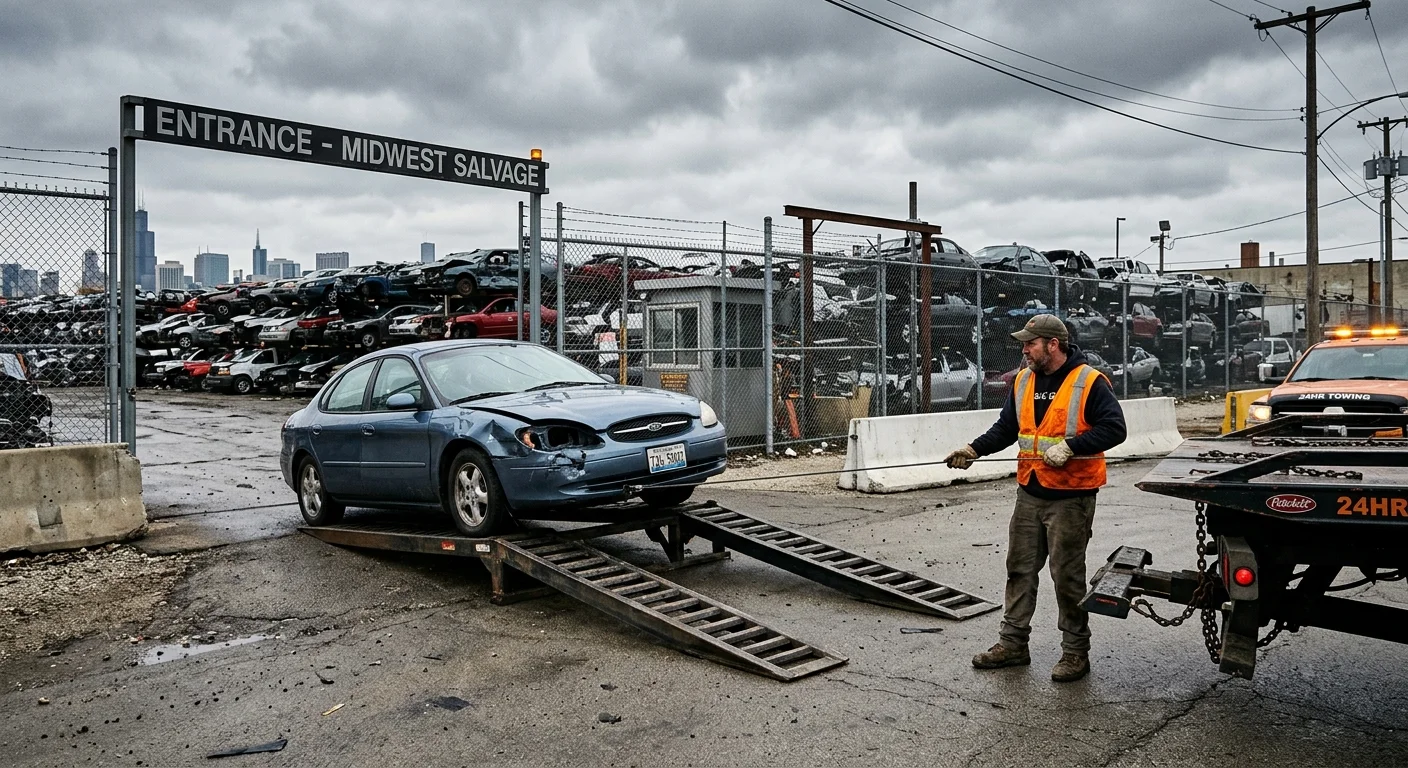
Once the buyer and state paperwork are settled, plan how the vehicle will leave the property. A nonrunning car in Little Village presents different access problems than one in a Joliet industrial lot or an Elk Grove Village loading area.
Give dispatch accurate details about the vehicle and pickup site. Mention whether the car rolls, steers and has accessible keys. Describe missing wheels, loose body panels, collision damage, low garage clearance or soft ground. Those details help the operator choose suitable equipment.
A damaged car may need flatbed towing, but the dispatched operator makes that equipment decision. Don’t promise a recycler that the car can be dragged from a garage, alley or fenced lot without first describing the site.
Also confirm where the buyer wants the vehicle delivered. The company accepting it should match the business shown on your transaction paperwork. If the destination changes unexpectedly, pause and verify the new instructions before releasing the vehicle.
Quick Tow Chicago is a referral service. We match drivers with independent local operators across Cook, DuPage, Kane and Will counties. We don’t buy junk vehicles, run a salvage yard, set recycler terms or submit title paperwork.
The operator sets the transport price. You receive that price before anyone is dispatched. Keep the towing arrangement separate from any payment or credit offered by the vehicle buyer.
When to call us
When the ownership path is settled but the car won’t move, transport stops being a do-it-yourself job. Quick Tow Chicago’s line takes calls 24/7, and we can match you with an independent local operator after the price is quoted. Call us at (773) 830-6930.