An empty parking space outside a Naperville apartment or store doesn’t explain where your car went. The first task is deciding whether a municipal authority impounded it or a private-property relocator removed it.
Start with where the vehicle was parked
The exact parking location is your strongest first clue. Write down the address, nearby businesses, parking level, and space number. Record when you parked and when you found the space empty.
A vehicle removed from a public street after an enforcement stop points toward municipal action. The same may be true when police directed the removal. A vehicle taken from an apartment lot, shopping center, office complex, or other private parcel may have been privately relocated.
Don’t rely only on how the property looks. A parking area beside a public building isn’t automatically municipal property. Likewise, a large commercial lot isn’t proof that a private relocator removed the car. The authorization and records matter more than appearances.
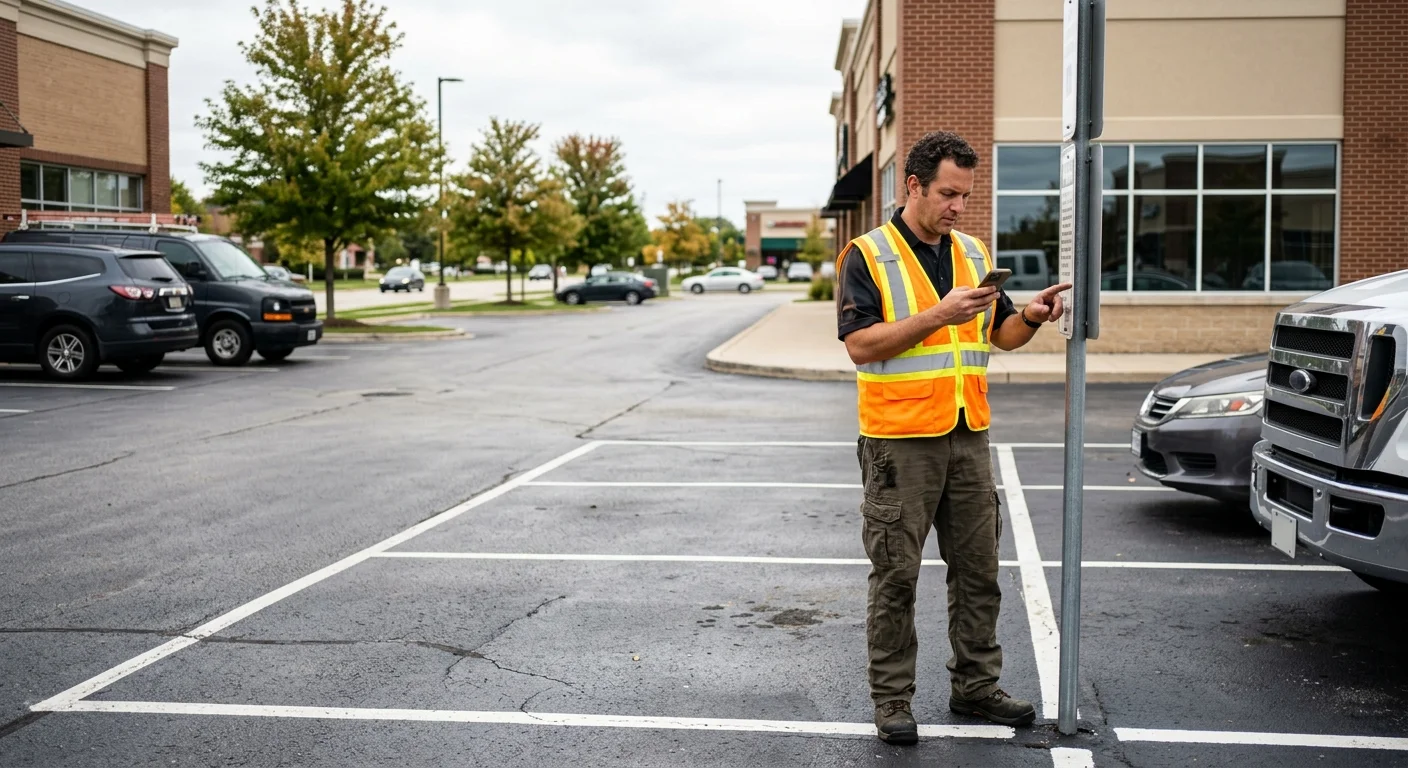
Photograph every sign near the entrance and parking space. Include the full sign, its placement, and the surrounding property. Save any parking permit, warning notice, receipt, or message from the property manager. These details can help identify which process applies.
Chicago’s vehicle lookup and city pound system don’t govern a Naperville removal. The Chicago fee schedule also doesn’t become a suburban fee schedule. Our guide to impounds versus relocations in Chicago explains that city’s separate system, but don’t use it as a Naperville release guide.
If you’re searching “who towed my car Naperville,” start with the property and the authority involved. Contact the City of Naperville through its official website when municipal action seems likely. For a private lot, check the posted relocator information and ask the property manager who authorized the removal. If neither source has a record, contact the local law enforcement agency through its official channel.
Separate a village impound from a private relocation
People often use “village impound” as a general suburban phrase. In Naperville, the useful category is municipal impound. That process is separate from a private-property relocation.
Illinois law provides a framework for municipal administrative impounds. Under 625 ILCS 5/11-208.7, a municipal administrative fee must be reasonable and related to processing costs. The statute doesn’t set a dollar cap. It also gives the vehicle owner a right to an administrative hearing.
The same statute requires notice within 10 days of impoundment. An initial hearing must be scheduled and convened no later than 45 days after the notice is mailed. If the hearing officer finds the vehicle was stolen or hijacked when impounded, the municipality must refund administrative fees already paid.
Those are state-level rules. They don’t confirm Naperville’s current fee, lot location, daily storage charge, payment methods, or local filing steps. Those Naperville-specific details couldn’t be confirmed from the approved research. Check the municipal notice and the city’s official source before paying or filing anything.
Private-property relocation follows another system. In DuPage County, that work must be performed by a commercial vehicle relocator licensed by the Illinois Commerce Commission. The relocation law doesn’t apply to public-street vehicles, disabled vehicles, repossessions, or police-directed towing.
A private relocation therefore isn’t a municipal impound with a different label. It has a different authorizing party, regulator, paperwork trail, and rate system. Our guide to Illinois towing laws provides more statewide context without treating Chicago and its suburbs as one jurisdiction.
Confirm who authorized the vehicle’s removal
For a possible municipal impound, ask which public authority directed the removal. Use the agency or department identified on the notice. Request the record or reference information connected with the vehicle. Confirm where it was taken before traveling to any lot.
This page’s research didn’t confirm a Naperville impound address, local fee, release window, hearing form, or department phone number. Don’t depend on a directory listing or an old social post. Follow the instructions on the current notice and verify them through the City of Naperville’s official website.
For a private-property relocation, identify both the relocator and the person who approved the removal. Illinois law makes removal without written authorization unlawful unless authorization came from the property owner, someone in lawful possession or control, an authorized agent, or an authorized law enforcement officer.
The relocator must notify law enforcement in the jurisdiction within one hour after removal. That record may help confirm whether the car was relocated instead of stolen.
The timing at the parking space can also matter. Under 625 ILCS 5/18a-300, a relocator may not remove a vehicle when its owner or operator appears before removal is complete and is willing and able to move it immediately. The statute contains a narrow exception involving certain commercial vehicles.
Look for the relocator’s information and posted charge on required signs. However, a missing sign doesn’t settle every dispute. Illinois law doesn’t require express notice on residential property clearly reserved or intended only for residents or their vehicles.
Property owners seeking help with future parking enforcement can read about our private-property towing referrals. Quick Tow Chicago doesn’t perform relocations or authorize removals. We connect property managers with independent relocators that hold the required license.
Check the official source for release requirements
Release rules depend on who has the car. Don’t arrive with documents based on a Chicago pound article when the vehicle is held under a Naperville or private-relocation process.
For a municipal impound, read the current notice first. Confirm the holding location, accepted identification, ownership documents, payment methods, total amount due, and whether another hold prevents release. Ask the identified municipal department how to request the administrative hearing provided by state law.
Naperville’s current administrative fee and storage rate couldn’t be confirmed in the approved research. The City of Chicago’s published tow and storage amounts don’t answer that question. A suburban municipality sets its own administrative fee, subject to the state requirement that it be reasonable and tied to processing costs.
For a private relocation, use the Illinois Commerce Commission’s relocation towing information. The Commission regulates private-property relocators in DuPage and several other Illinois counties. Its consumer materials and complaint process are the appropriate sources for a disputed private relocation.
A relocator must accept cash, money orders, cashier’s or certified checks, and major credit cards without additional fees. No storage fee may be assessed when the vehicle is claimed within 24 hours with proper identification and payment. Storage also can’t be charged for periods when the relocator is closed to the public.
The owner must receive a complete Relocation Towing Invoice as a receipt. It must include complaint instructions. Review the vehicle information, location, authorization, tow charge, storage entries, and payment before leaving.
No verified current maximum relocation rate was found in the approved sources. Confirm the applicable rate with the Illinois Commerce Commission instead of relying on an online figure. Keep the invoice, notices, photographs, call records, and payment receipt if you plan to question the removal or charges.
Get towing help if the released vehicle won’t move
Release doesn’t mean the vehicle is ready to drive. A dead battery, damaged tire, collision damage, steering problem, or missing key can leave it stuck at the holding location.
First, obtain clear release approval. A separate towing operator can’t override a municipal hold, private lot requirement, unpaid balance, or release decision. Quick Tow Chicago also can’t decide a hearing, reverse a relocation, or change another company’s invoice.
Once the vehicle is released, collect the details needed for another tow. Give the operator the exact lot address, destination, vehicle make and model, key status, and known damage. Mention parking-deck clearance, locked wheels, or restricted loading space. Those details help the independent operator decide what equipment the job needs.
This new trip is separate from the earlier impound or relocation. The operator handling it sets the price. You get that price before anyone is dispatched.
Our emergency towing referral service can connect you with an independent local operator serving Naperville. The operator may move the released vehicle to your home, repair shop, or another permitted destination.
Don’t attempt to drive a vehicle with visible collision damage, a failed steering system, or a wheel that won’t roll correctly. If the car only needs roadside help, explain the symptoms before dispatch. A clear description can prevent a mismatch between the vehicle’s condition and the equipment sent.
When to call us
Once the vehicle is released but won’t start or can’t be driven safely, the problem becomes a separate towing job. Our line takes calls 24/7, and we can line up an independent local operator after you receive release approval. Call us at (773) 830-6930.