Keys vanish on a Logan Square block, or they sit on the passenger seat while the doors lock on a Cicero side street. The car still has to move. A missing key doesn’t create one universal towing setup, so the operator needs the lock, the drivetrain, and the access before anyone quotes a price.
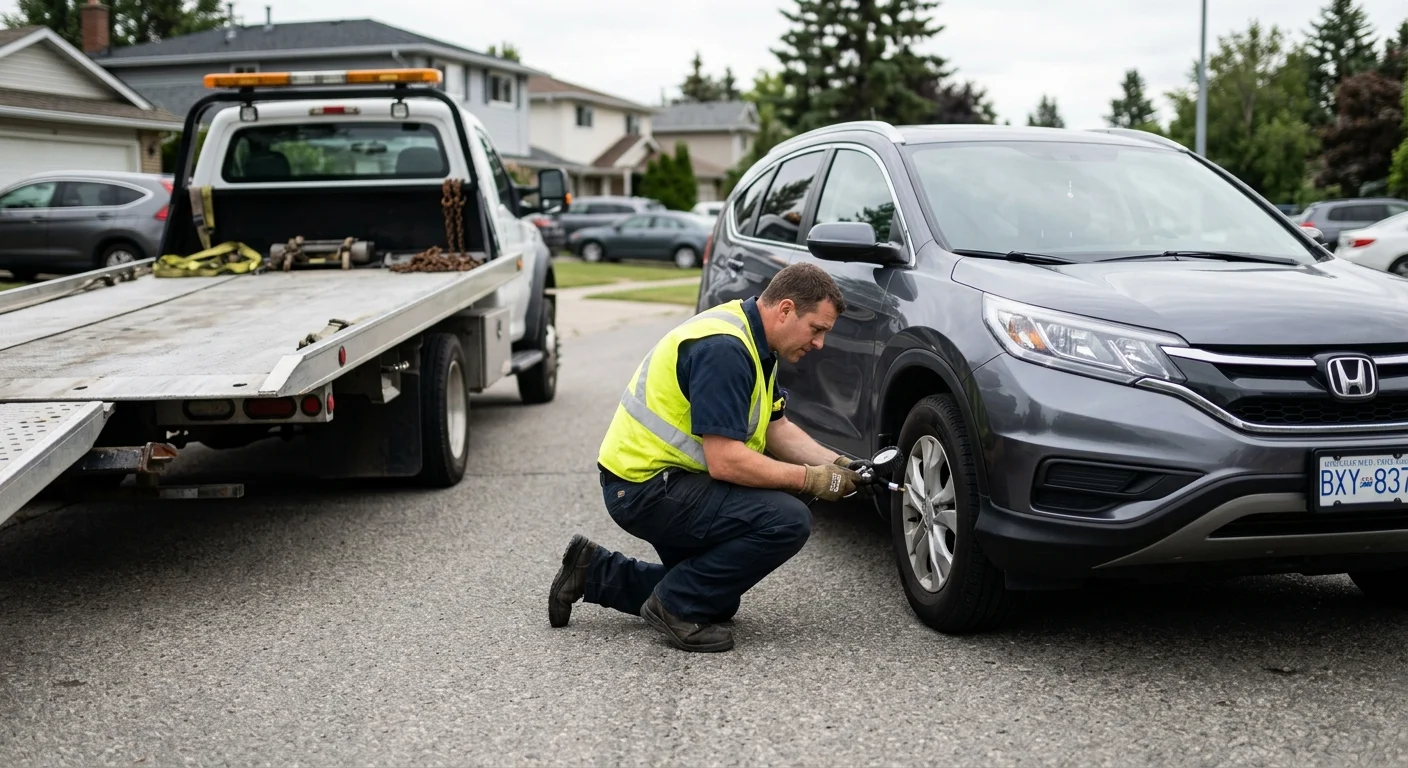
Confirm your authority to move the vehicle
The first call is about authority. If the car is yours, say that and bring photo ID to the meeting point. If you’re sending a spouse’s car, a lease, or a car from a private sale, say that too and ask the operator what proof they want to see. Quick Tow Chicago doesn’t publish a statewide document list for a voluntary roadside tow. The operator who accepts the job sets that check.
A car that isn’t yours, sitting on a private lot, is a different process. Private-property tows in Cook, Will, Kane, DuPage, and Winnebago counties are performed by commercial vehicle relocators licensed by the Illinois Commerce Commission under 625 ILCS 5/18a-300. This brand is a referral service. We connect you with independent operators. We don’t hold an ICC relocator licence. Property managers who need a stall cleared should start with private property towing and confirm signs, invoices, and storage rules with the licensed relocator.
Keys on the seat behind locked doors are a lockout. A lost, snapped, or never-issued key is a tow. If you can see the fob in the cup holder on 26th Street in Little Village, read what to do on a Chicago lockout first. Whether Chicago Police will open a locked car, and whether that visit is free, couldn’t be confirmed from the sources this site may cite. Ask the department, or a locksmith.
If the car is already gone from a Chicago curb, check Find Your Towed Vehicle before you report it stolen. City crews move cars without keys every day, and Chicago’s common towing questions say that once the vehicle is raised, it must go to the pound.
Describe whether the wheels and steering are locked
A key does more than start the engine. On most cars it also frees the steering column and lets you leave Park. When the key is gone, the steering is often locked, the front tires may sit turned into a curb, and the parking brake is usually on. That’s the real puzzle behind whether a tow truck can move a car without keys.
Tell the operator what you can see from outside. Are the tires pointed straight, or cranked toward a snowbank on the Kennedy shoulder? Can you tug the steering wheel through the glass at all? Is the car nose-in in a River North garage with the wheels at full lock? A locked column with cocked tires means the car won’t roll in a straight line onto a bed.
Locked wheels can still move when the operator brings skates or dollies, small rolling platforms that go under the tires. The car can then slide while it stays in Park and the steering stays locked. That gear is extra. Every truck on a shift may arrive without it. Say the steering is locked so the operator who takes the job brings what they have.
A wheel-lift lifts one end and lets the other two tires roll. If those tires can’t spin because the car is in Park or the parking brake is clamped, the rolling end needs dollies, or the job needs another truck. Wheel-lift towing can handle a keyless car when the operator plans for it.
You can tow a car with locked steering when the operator supports the tires that can’t roll. Skates under the wheels, or a bed that winches the car with all four tires carried, are the usual plans. Describe the wheel position in plain words: straight, turned left, turned right, or buried in ice. That one sentence changes the load.
Share the drivetrain and vehicle condition
The operator also needs the drivetrain. Front-wheel drive, rear-wheel drive, all-wheel drive, and many EVs load differently. On an all-wheel-drive car, two wheels rolling while two hang can wind up the driveline. That problem is covered in our guide to an all-wheel-drive car on a wheel-lift. Say AWD or 4x4 on the call.
A tow of a nonrunning car without a key is the everyday case: a dead battery in Austin, a seized engine in Harvey, a stall in a flooded underpass. The engine doesn’t have to run. The transmission still sits in Park. Many automatics need a key or a live fob to use the shift-lock release. If you can’t reach that release, plan on equipment that doesn’t need the car to roll on its own tires.
Condition rides along with drivetrain. Low ground clearance, air suspension, a bent control arm from a crash on the Dan Ryan, a parking brake frozen after one of Chicago’s 121.3 nights at or below 32F: each one changes the hookup. Cook County logged 164,559 crashes in 2024. Plenty of those cars leave the pavement without a key in the column. Say if it was in a collision, if a tire is off the rim, or if the car sits on its belly.
EVs add a transport-mode step you can’t reach without a fob or a living 12-volt system. Treat a keyless EV like a locked automatic. Give the make, the model, and the fact that there’s no working fob. The independent operator who accepts the job chooses the method from those facts. Your job is to give the facts. Read the window sticker or the insurance card if you can, and say the drivetrain out loud.
Explain parking, clearance, and loading access
Where the car sits shapes the load as much as the missing key. A compact in a 26th Street alley, a sedan on the I-90 shoulder, and a coupe in a low downtown garage are three different jobs. A flatbed needs room to line up, tilt, and winch. Many Loop and Streeterville garages don’t give that room. Read the ceiling height if it’s posted. Say if a pillar blocks the approach. Say if the stall sits on a ramp.
Snow tightens the same geometry. Chicago’s O’Hare normals show 38.4 inches of snow a year. The winter overnight parking ban covers 107 miles of arterial from 3 a.m. to 7 a.m., December 1 through April 1, snow or no snow. City crews pull cars from those routes without keys all winter. If your own car is plowed in on a Gage Park curb, say how deep the packed snow is and whether a second car boxes you in.
Expressway shoulders have their own limits. IDOT’s Emergency Traffic Patrol, the Minutemen, protect a scene and clear debris. They don’t repair cars and they don’t tow them away. On the Eisenhower or the Stevenson you still need an independent operator, and that operator still needs a safe place to set equipment. Describe the lane, the wall, and whether the wheels hang over a drop.
Tight driveways in Berwyn and two-car garages in Naperville often need a short pull with skates before any truck can load. Describe the path from the car to the street, not only the address. Include gate codes, alley direction, and whether the car faces a fence. The operator quotes after they know they can reach the vehicle. A garage under a River North tower and an open lot off Harlem take different trucks, so give the clearance and the approach in the first description.
Confirm the operator’s equipment plan before pickup
Missing keys don’t pick the truck. You and the operator do that on the call. Say you need to tow a car without keys, whether the steering is locked, the drivetrain, and the access. Then ask what they plan to bring. Flatbed or wheel-lift towing is the comparison if you want the mechanics. A flatbed keeps all four wheels off the road once the car is on the deck. A wheel-lift hooks faster in an open lot when two wheels can roll, or when dollies are already on the truck.
Ask them to confirm dollies or skates if the car can’t go to Neutral. Ask whether they can work in the garage you described, or whether the car has to be pulled to the apron first. Ask where the car will go. Ask that the price you hear is the price on the invoice. Quick Tow Chicago doesn’t set rates. The operator does. That number is quoted before dispatch. This site publishes no flat rate and no arrival window, because this brand owns no trucks.
Skip the rented car trailer in Park. Rental counters don’t hand you the skates a keyless load needs, and a locked steering rack on a borrowed bed is how you fold a tie-down point. The operators in our network bring their own equipment. Confirm that equipment while you’re still on the phone.
If the car is a classic, a lowered stance, or an exotic, say that so the operator can decline rather than improvise. The goal is a clean yes with a method attached: bed plus skates, wheel-lift plus dollies, or a short winch to a spot a truck can reach. If they can’t describe that method, wait for an operator who can.
When to call us
Once you can’t open the car, leave Park, or turn the wheels, stop trying to drag it onto a trailer. The line takes calls 24 hours a day, a recording notice plays, and we match you with an independent local operator whose price is quoted before dispatch. Call us at (773) 830-6930.