A disabled car in Arlington Heights needs the right operator and truck setup. Dispatch starts with your location, vehicle details, destination, and a clear description of what happened.
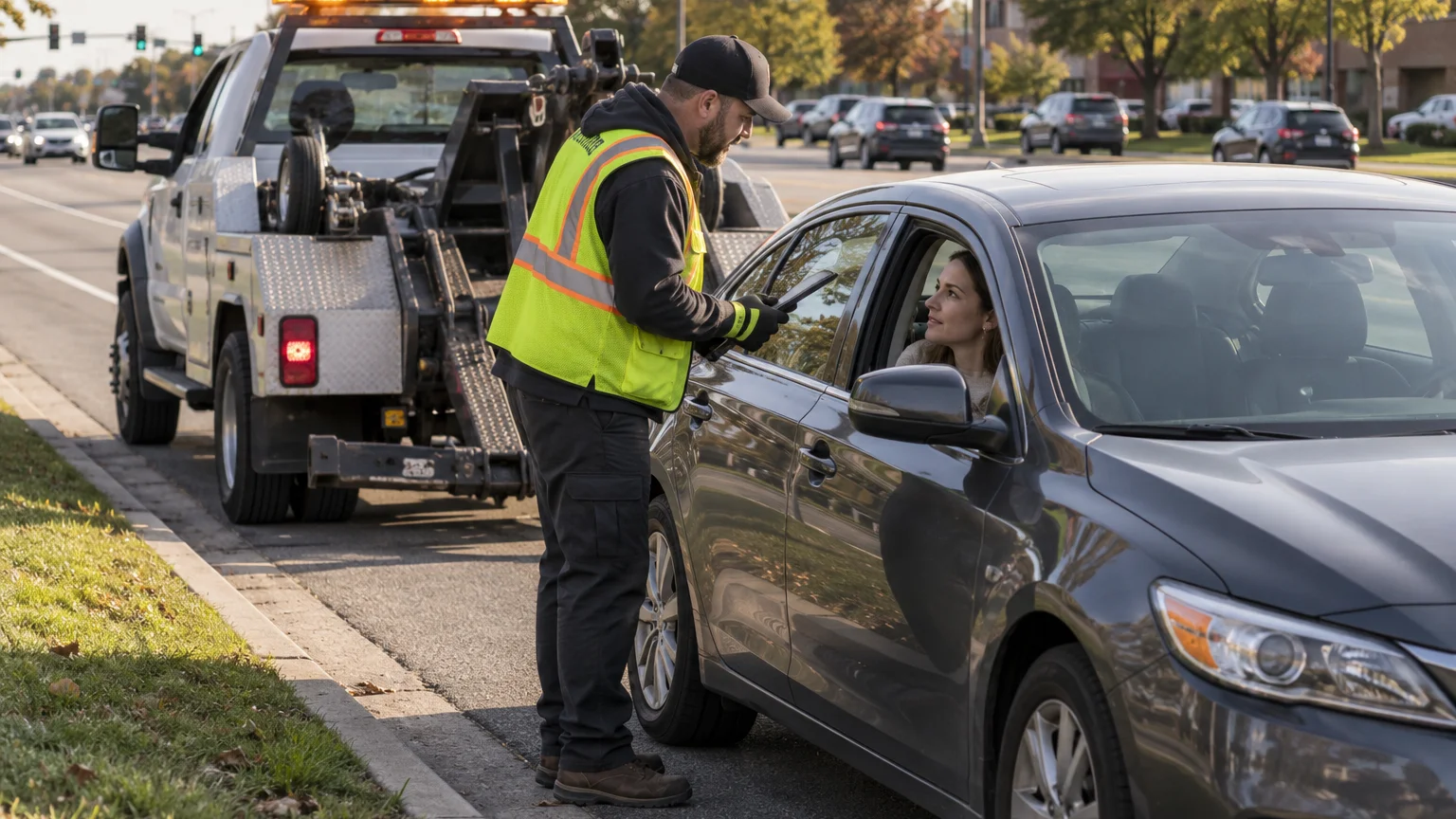
Quick Tow Chicago is a referral line. We take your information and match you with an independent local operator. The operator sets the price, and you receive that quote before dispatch.
Share your Arlington Heights street or lot location
Start with the exact place where the vehicle sits. A street address is best, but a nearby intersection can also help. Name both streets and confirm which side of the road you’re on.
Arlington Heights Road, Northwest Highway, Rand Road, Euclid Avenue, and Algonquin Road cover different parts of the village. Saying only “Arlington Heights” leaves too much room for confusion. A nearby business, parking entrance, or recognizable building can narrow the pickup point.
For a parking lot, share the business name and street address. Then describe your position within the property. A row marker, entrance, loading area, or parking-deck level can make the vehicle easier to locate. Don’t send private account details or anything unrelated to the pickup.
Tell dispatch about access before an operator is assigned. Mention a low garage ceiling, narrow aisle, locked gate, steep ramp, soft shoulder, or vehicle blocked by other cars. A car inside a garage may need a different loading approach than one sitting in an open lot.
If you’re near Route 53 or I-90, identify the direction of travel. Share the nearest exit or visible marker if you can do so without leaving a protected location. Don’t walk into moving traffic to inspect a sign.
Our emergency towing referral service can match your request with an operator serving Arlington Heights. Good location details help that operator assess access before accepting the job.
Separate a breakdown from an already-missing car
This page covers a vehicle that’s present and needs a new tow. That could mean a no-start condition, collision damage, a wheel problem, or a car that can’t be driven to a repair shop.
A missing vehicle is a different problem. Don’t request a new tow until you know whether someone already removed it. Check the signs at the property and contact the property manager when the car disappeared from a private lot. For a possible municipal action, contact the local authority that controls the location.
Our guide to an Arlington Heights village or private tow explains how to sort out those two possibilities. It focuses on finding a car that’s already gone. It doesn’t arrange a fresh tow for a disabled vehicle still beside you.
This distinction matters because a dispatch operator needs physical access to the car. If you can’t confirm where it is, there’s no pickup location to provide. A search for an existing impound or private-property relocation must happen first.
If the vehicle is present, describe what changed. Say whether the engine stopped, the car won’t shift, a tire is damaged, or steering feels abnormal. Don’t diagnose a mechanical failure from the driver’s seat. Describe what you can see, hear, or operate.
Also explain whether the car was involved in a collision. Note visible body damage and any leaking fluid without touching it. If the roadside scene presents an immediate danger, contact emergency services and follow official directions.
Report the drivetrain and whether the vehicle rolls
The operator needs more than a make and model. Share the model year, vehicle type, drivetrain, and any modifications that affect loading. A sedan, pickup, van, motorcycle, and low-clearance sports car can require different planning.
Confirm whether the vehicle is front-wheel drive, rear-wheel drive, all-wheel drive, or four-wheel drive. If you don’t know, check the owner’s manual or vehicle information. Don’t guess. The operator can discuss the setup after receiving accurate vehicle details.
Next, report what the car can still do:
- Does it roll freely?
- Can the transmission shift into neutral?
- Do the steering and brakes respond?
- Are the keys available?
- Is any wheel locked, bent, or missing?
- Is the parking brake stuck?
- Is the car lowered or carrying an unusual load?
These details help the operator decide what equipment may fit the job. A vehicle that rolls and steers presents a different loading problem from one with locked wheels. A car facing a wall in a tight parking space adds another constraint.
Ask whether a flatbed towing setup matches the vehicle and its manufacturer instructions. Quick Tow Chicago doesn’t choose the final loading method. The independent operator evaluates the information and confirms the proposed setup.
Remove loose personal items before pickup when you can do so safely. Keep your keys and necessary documents with you until the operator gives instructions. If the car can’t be entered, say that during the initial message rather than after dispatch.
Choose a northwest suburban destination
Dispatch also needs to know where the vehicle is going. Pick the destination before the operator is assigned whenever possible. That might be a repair shop, dealership, tire shop, body shop, home, or another lawful drop-off point.
Confirm that the destination expects the vehicle. Ask the shop whether it can accept an after-hours delivery and where the operator should leave the car. Quick Tow Chicago can’t confirm another business’s hours, gate access, or key-drop process for you.
Arlington Heights sits among several northwest suburban destinations. Your chosen shop could be elsewhere in Arlington Heights or in a nearby community such as Mount Prospect, Rolling Meadows, Palatine, or Schaumburg. Give the full street address rather than only the town name.
Distance isn’t the only destination detail. Tell dispatch about a gated entrance, underground garage, loading dock, narrow driveway, or restricted parking area. If the drop-off requires someone to meet the operator, identify that requirement before the truck rolls.
Don’t ask the operator to leave a vehicle where you haven’t received permission. A residence, apartment property, or commercial lot may have its own access instructions. Confirm those directly with the owner or manager.
Drivers searching for a tow truck near Chicago often focus only on pickup. The destination can affect the operator and equipment selected. Providing both addresses at the start creates a clearer request and quote.
Confirm the operator’s setup and quote
Before dispatch, review the request from beginning to end. Confirm the pickup address, drop-off address, vehicle, condition, access limits, and proposed towing setup. Correct any detail that changed while you waited for the quote.
Quick Tow Chicago doesn’t own trucks, employ drivers, or set towing prices. We line up an independent operator based on the details you provide. That operator sets the price, and the price is quoted before anyone is dispatched.
Ask what the quote covers. Make sure the operator knows about locked wheels, missing keys, collision damage, tight access, or a vehicle outside ordinary passenger-car size. A quote based on incomplete information may not describe the actual job presented at pickup.
You can also ask these practical questions:
- What truck setup does the operator plan to send?
- Does that setup account for the drivetrain?
- Has the operator received both complete addresses?
- Does the operator know the vehicle can’t roll or steer?
- Who receives the keys at the destination?
- What payment methods does the operator accept?
Credentials should be confirmed directly for the specific operator and job. Quick Tow Chicago doesn’t claim a trade licence or present itself as the company performing the tow.
Don’t approve dispatch until the request is accurate and the quote is clear. If the vehicle condition changes, report it. A car that initially rolled but later developed a locked wheel is no longer the same loading request.
When to call us
Call when the vehicle can’t be driven safely and you have its location, condition, drivetrain, and destination. The line takes calls 24/7, and calls are recorded after a notice so we can match the request with an independent local operator.
Call us at (773) 830-6930.