A disabled car in Cicero can block a driveway, lot aisle, or busy curb lane. Dispatch needs your exact location, the car’s condition, and its destination before assigning an operator. A clear description also helps the operator bring suitable towing equipment.
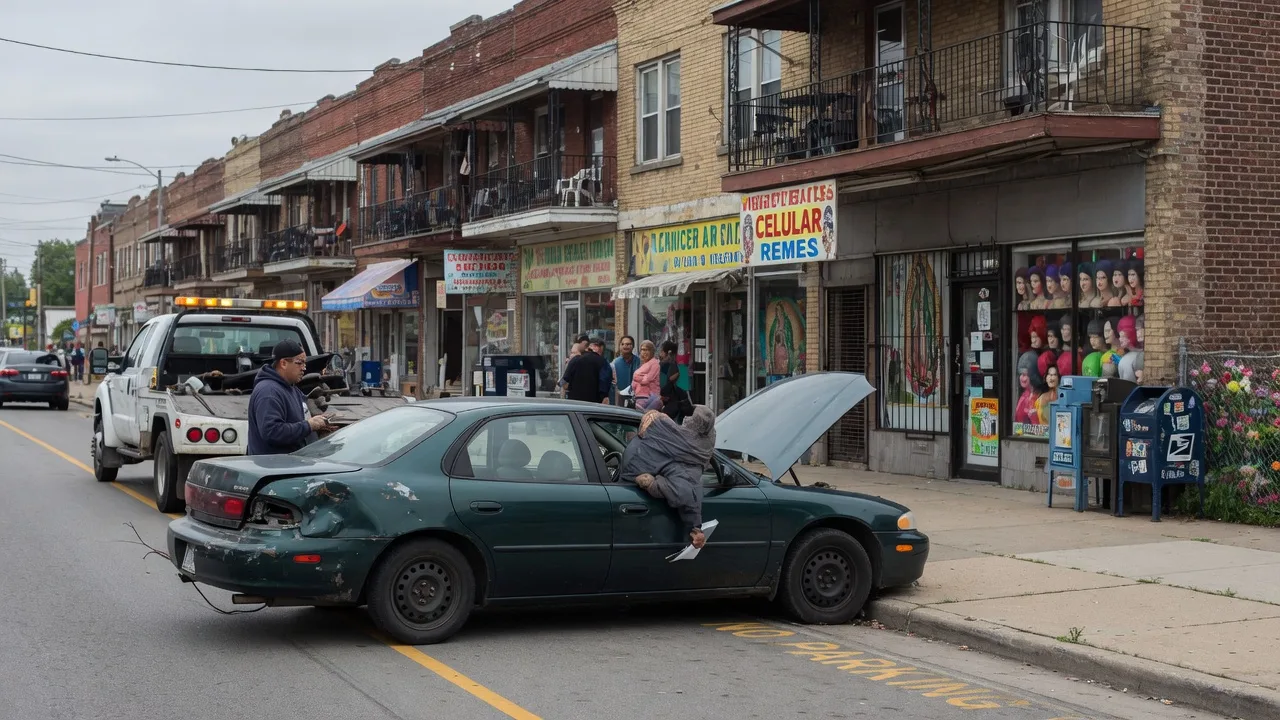
Pin down your Cicero street, lot, or Cermak location
Start with the place where the car sits now. “Somewhere on Cermak” isn’t enough for reliable dispatch. Give the street address, nearest intersection, business name, or a map pin.
Cermak Road and Cicero Avenue both extend beyond one block or shopping area. Say which direction you were traveling and which side of the street you’re on. Mention whether the car is along the curb, inside a lot, behind a building, or near an alley entrance.
Apartment lots also need more detail. Give the building address, lot entrance, parking-space number, and gate instructions. If the entrance is narrow or reached from an alley, say that during the call. Don’t wait for the operator to discover it after reaching the address.
Useful landmarks can support an address, but they shouldn’t replace one. A store name may appear at several locations. A shared map pin shows the exact vehicle position and reduces confusion between nearby streets.
Tell dispatch about any access limits you can see. Examples include:
- A low garage ceiling
- A locked or coded gate
- A narrow alley
- A loading area with limited clearance
- A vehicle parked tightly between two cars
- A wheel against a curb
- A car facing into a dead-end space
If you’re stopped in moving traffic, focus on your immediate safety first. Tell dispatch that the car is in a travel lane instead of describing it as merely “on Cicero Avenue.”
Drivers searching for emergency towing in Cicero should have the location ready before calling. That first detail shapes every decision that follows.
Say what happened to the car in one sentence
Give the problem in one direct sentence. “The engine shut off, and it won’t restart” is more useful than a long account of the drive. Dispatch can ask follow-up questions after understanding the main issue.
Common descriptions include:
- The engine cranks but won’t start
- The car has no electrical power
- A tire is flat or damaged
- The wheel came off
- The car was hit and can’t be driven
- The transmission won’t shift
- The keys are locked inside
- The car is stuck against a curb
- The vehicle starts but overheats
Don’t diagnose a problem you haven’t confirmed. Describe what you saw, heard, or felt. Say that fluid is visible under the front of the car, for example. Don’t identify the fluid unless you know what it is.
Small details can change the service needed. A dead battery may call for roadside assistance instead of a tow. A simple jump may get the car moving. A damaged wheel, collision, or transmission problem may require transport.
Tell dispatch whether the vehicle was involved in a crash. Mention deployed airbags, broken suspension parts, loose body panels, or leaking fluid. These conditions can affect equipment selection and loading.
Also explain whether the car is in a safe parking position. A disabled sedan in an open lot presents a different setup from one blocking an alley. The mechanical problem may be identical, but access isn’t.
If you’re unsure whether roadside help will solve the problem, say so. Dispatch can use the symptoms to seek an operator prepared for the likely job. That keeps the request accurate without turning your call into guesswork.
Report size, drivetrain, and whether it rolls
Dispatch needs more than the vehicle’s color. Give the year, make, model, and body style when you know them. A compact sedan, pickup, cargo van, motorcycle, and loaded work vehicle don’t have the same towing needs.
Say whether the vehicle is front-wheel drive, rear-wheel drive, all-wheel drive, or four-wheel drive. If you don’t know, don’t guess. Tell dispatch you’re unsure and provide the exact model. The operator can confirm the towing setup before assignment.
Next, describe what the car can still do:
- Does it roll freely?
- Can it steer?
- Do the brakes release?
- Can it shift into neutral?
- Are the keys present?
- Is the parking brake stuck?
- Is any wheel missing, locked, or turned sharply?
- Is the suspension touching the ground?
These answers matter when a car must leave a tight Cicero lot or curb space. A car that rolls and steers can be loaded differently from one with locked wheels. A vehicle with collision damage may need added recovery equipment.
Tell dispatch if the car has been lowered or modified. Mention very low ground clearance, oversized tires, body damage, or a loose bumper. If it’s an electric vehicle, identify the model and report whether it can enter its required transport or neutral mode. Don’t attempt unfamiliar procedures just to make loading easier.
Ask dispatch to confirm the equipment requested for the job. The operators we dispatch may use different truck types based on the vehicle, damage, and access. The operator should know about every locked wheel or clearance limit before heading out.
Before anyone is assigned, confirm three things: the vehicle description, the condition of its wheels, and the requested equipment. Then confirm the operator’s quoted price. Quick Tow Chicago matches drivers with independent local operators. We don’t own trucks, employ drivers, or set towing prices.
For a broader explanation of what to prepare, read our guide to finding a tow truck near Chicago.
Choose a shop or home destination in the near west suburbs
A towing request needs two locations: pickup and drop-off. Decide where the vehicle should go before the operator is assigned. That destination may be your home, a repair shop, a dealership, or another place that has agreed to receive it.
Don’t assume a shop can accept the car. Call the destination first when possible. Confirm that it handles your vehicle and the suspected problem. Ask where a disabled vehicle should be left if the service desk is closed.
Give dispatch the full destination address. A shop name alone can create confusion, especially when businesses have similar names or several locations. If the destination has a rear entrance, service lane, or overnight key box, explain that too.
Think through access at both ends. A pickup beside Cermak Road may be straightforward, while the destination could have a narrow residential driveway. A home drop-off can also become difficult when parked cars leave little room for unloading.
Keep the keys available unless the operator gives different instructions. Remove loose valuables and take any items you’ll need before the vehicle leaves. Don’t leave personal documents or medication in a car headed to a closed shop.
If someone else will meet the operator, share that person’s name with dispatch. Make sure they know the vehicle, destination, and payment plan. The vehicle owner should also be available if questions arise.
Changing the destination after assignment may change the job. Tell dispatch before the truck rolls if you’re still choosing between two places. The operator sets the price, and you should hear that price before dispatch. Confirm the pickup point, destination, equipment, and quoted price together.
If the car is already gone from a lot, that is a different problem
A missing car isn’t a normal dispatch request. If your vehicle has already disappeared from an apartment or store lot, don’t call for another tow. First determine whether it was relocated, impounded, repossessed, or stolen.
Start with the property manager or person controlling the lot. Look for posted towing signs near entrances and parking areas. Record the information as it appears. Don’t rely on a neighbor’s memory of which company handles the property.
Private-property towing in Cook County is a regulated relocation activity. It’s performed by commercial vehicle relocators licensed by the Illinois Commerce Commission. Quick Tow Chicago doesn’t perform private-property relocations or hold that licence.
Illinois law addresses written authorization, required signs, law-enforcement notice, and other relocation practices. The Illinois Commerce Commission’s relocation towing page provides its consumer guide and complaint process. Contact the Commission when you need current regulatory information.
Cicero isn’t the City of Chicago. Don’t use Chicago’s auto-pound fee schedule or city-pound process for a suburban lot tow. A municipal impound and a private-property relocation also follow different rules. No verified Cicero impound fee or storage rate was provided for this page. Confirm any amount directly with the authority or relocator that holds the vehicle.
Before paying, ask for the vehicle location, the basis for removal, accepted payment methods, and a complete invoice. Confirm the current amount with the relocator. Quick Tow Chicago doesn’t set or collect those charges.
Our detailed guide explains what to do when a car was towed from a Cicero apartment lot. Use that process when the car is already gone. Use dispatch when the car remains with you and needs transportation.
When to call us
Call when the car can’t be driven safely and needs an independent local operator. Our line takes calls 24 hours a day, and calls are recorded after a notice. Call us at (773) 830-6930.