A ticket for an expired city sticker in Chicago can become expensive. The city describes the ticket as $250 with late fees, but a 15-day grace period applies after the sticker expires. An unpaid compliance balance can eventually lead to a boot and tow.
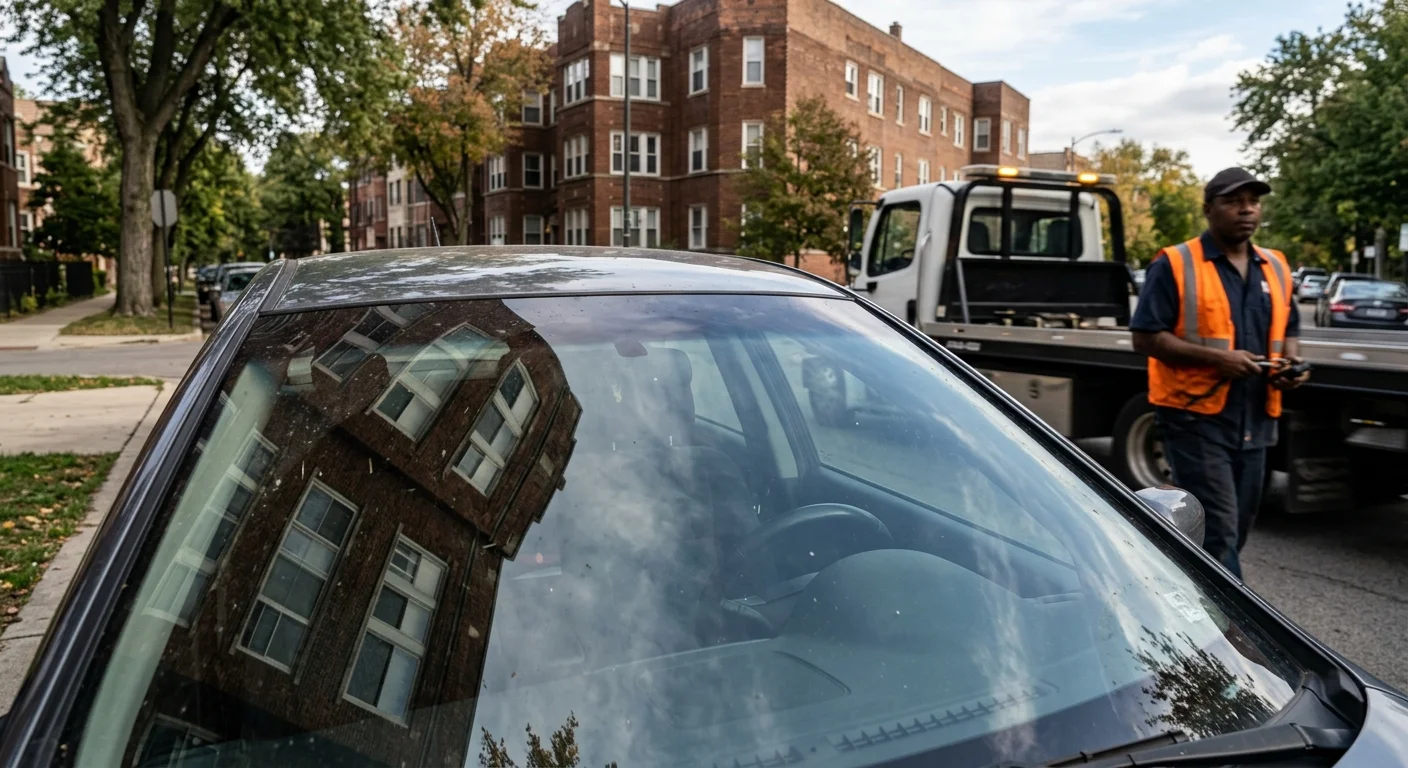
What the expired sticker ticket costs
The City of Chicago calls its vehicle sticker charge the Wheel Tax. It applies to Chicago residents responsible for vehicles they drive, park, lease, or own in the city.
The city’s ticketing and towing reforms page describes a city sticker ticket as $250 with late fees. That figure is the city’s penalty. It isn’t Quick Tow Chicago’s price, and it isn’t a private towing charge.
The ticket also isn’t the same as the sticker’s purchase price. The Office of the City Clerk publishes separate annual sticker prices. Its available price table states that it became effective February 1, 2024. Those figures shouldn’t be presented as newly issued 2026 prices. Our guide to the Chicago city sticker cost explains that distinction.
The sticker purchase late fee is another separate charge. The City Clerk publishes a $60 late fee, or $30 for a senior-discounted sticker. Don’t add that purchase fee to the ticket figure and describe the result as one city penalty. They come from different city rules and address different parts of the process.
This page concerns Chicago’s Wheel Tax. It doesn’t establish what another municipality charges for its own vehicle sticker or citation. Suburban administrative fees also don’t follow the City of Chicago pound schedule. The agency named on the notice is the right place to confirm which system applies.
The 15-day and 30-day grace periods are different
Chicago has two grace periods connected with city stickers. They answer different questions.
First, the city restored a 15-day grace period after a sticker expires. Ticketing for the expired sticker shouldn’t occur during that period. The city says a ticket issued in error within those 15 days can be dismissed through its designated contact process.
Second, the City Clerk allows a 30-day period to purchase the sticker without a late fee or back charge. That rule concerns buying the sticker. It isn’t the same as the 15-day protection from ticketing.
A sticker expires on the last day of its expiration month. Check that printed expiration before assuming the ticket date falls within the grace period. Our guide to when a Chicago city sticker expires covers the expiration rule in more detail.
Keep these dates together:
- The final day of the sticker’s expiration month
- The date and time printed on the ticket
- The date you purchased or tried to purchase the replacement sticker
- Any receipt or confirmation supplied by the City Clerk
The City Clerk says sticker pricing is prorated at the point of sale. Its published FAQ doesn’t provide a six-month or other prorated figure. Confirm the actual amount at the point of sale instead of relying on an online estimate.
The 15-day ticketing grace and 30-day purchase grace can overlap. They still shouldn’t be treated as one deadline. One governs enforcement, while the other governs late purchase charges.
Chicago limits repeat compliance tickets
Chicago also stopped same-day and consecutive-day ticketing for compliance violations. The city’s reform states that residents receive a full day to come into compliance. A same-day or next-day repeat compliance ticket is dismissible.
That doesn’t erase the first valid ticket. It also doesn’t mean every later citation must be dismissed. Check the violation description and each issue date before deciding the repeat-ticket rule applies.
Photograph the ticket and the sticker as they appear on the vehicle. Include the expiration marking and any nearby permit information. Save the envelope if a notice arrived by mail. These records can help you explain whether the citation fell inside the 15-day grace period or repeated another compliance ticket too soon.
Use the response instructions printed on the notice. For a ticket issued during the restored grace period, consult the city’s reform page for its designated dismissal contact. Do the same for a same-day or consecutive-day repeat citation. That avoids relying on an old phone number or an unofficial payment website.
It also helps to confirm whether the vehicle needed a Chicago sticker. The rule covers Chicago residents responsible for a vehicle they drive, park, lease, or own in the city. Read who needs a Chicago city sticker before assuming the requirement applies solely because the car was seen within city limits.
How the ticket can lead to a boot and tow
An expired city sticker begins as a compliance issue. It isn’t itself a private-property towing order. The towing risk develops when unpaid compliance tickets add to the balance that can trigger booting.
After a vehicle is booted, the city gives the owner 24 hours to pay in full or enter a payment plan before towing it. The city also says the owner can request one additional 24-hour period. Use the city’s reform page to confirm its current contact method for that request.
Once the city tows the vehicle, a separate fee schedule applies. The City of Chicago’s towing page publishes a $250 tow fee for vehicles under 8,000 pounds and $350 for vehicles at or above that weight. It lists storage at $50 or $100 per day based on the same weight line.
Those are City of Chicago pound charges under Municipal Code 9-92-080. They aren’t our prices. They also aren’t the rates for private-property relocation or a suburban village impound.
The city won’t release a vehicle without current state plates and a Chicago Vehicle Sticker where required. A claimant also needs valid photo identification and proof of ownership. A current driver’s license is required if the vehicle will be driven from the pound. Charges and fines must be paid in full before release.
A city impound and a street relocation aren’t identical. City agencies sometimes relocate vehicles to clear streets for work. If your car has disappeared, use the city’s Find Your Towed Vehicle tool before treating it as stolen. Our guide to impound versus relocation in Chicago explains the difference.
What to do after finding the ticket
Start with the sticker and citation dates. If the ticket falls within 15 days after expiration, follow the city’s stated dismissal process. If it duplicates a same-day or next-day compliance ticket, preserve both notices and check the repeat-ticket rule.
Next, address the sticker itself through the Office of the City Clerk. Don’t treat a ticket payment as proof that the vehicle now has a valid sticker. Keep the purchase receipt and any confirmation attached to your records.
Then check the vehicle for a boot before trying to move it. A booted car is a city administrative matter. Quick Tow Chicago can’t remove a city boot, cancel a ticket, release a police hold, or retrieve a vehicle from a pound without the city’s required documents.
If the vehicle has already disappeared, search the city’s lookup tool. Chicago may have impounded it or relocated it nearby. The city advises checking its records and contacting its nonemergency service before reporting a missing vehicle as stolen. Our guide to finding a towed car in Chicago walks through that search.
After release, the car may still need transportation. It could have a dead battery, damaged tire, mechanical problem, or another condition that keeps it from being driven. That is when 24/7 emergency towing becomes relevant.
Quick Tow Chicago is a referral service. We match drivers with independent local tow operators. We don’t operate the city pounds, decide ticket disputes, own tow trucks, or set towing prices. The operator’s price is quoted before anyone is dispatched.
When to call us
Call when the vehicle has been released but can’t be driven from the pound or its current location. The line takes calls 24/7, and we can match you with an independent local operator whose price is quoted before dispatch. Call us at (773) 830-6930.