A Chicago city sticker expires on the last day of its expiration month, and there are two separate grace periods after that, not one. You get 30 days to buy the sticker before a late fee applies, and 15 days after expiration before ticketing can begin. They run on different clocks and protect against different things.
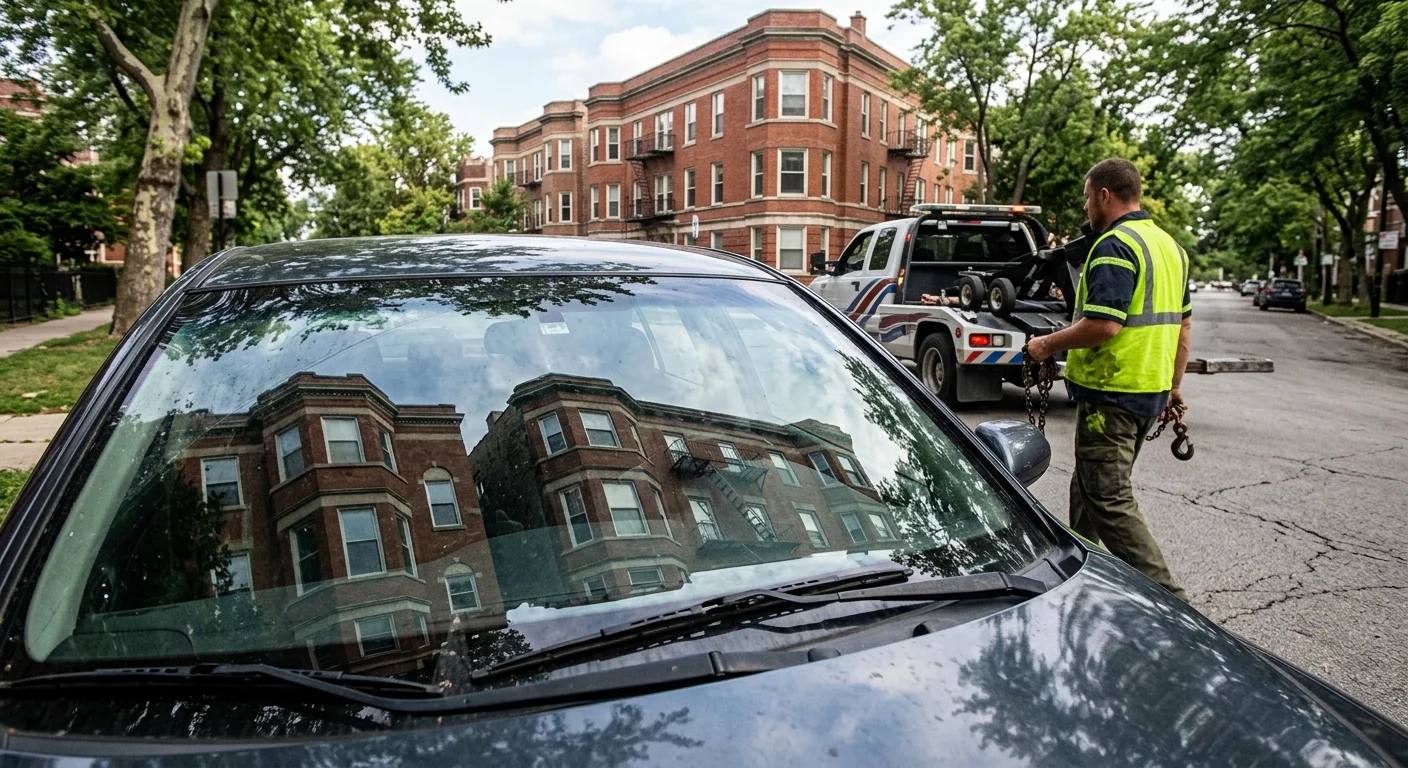
Your sticker expires on the last day of the month
A Chicago city sticker expires on the last day of its expiration month. It remains valid through that date. The new period begins the following day.
That’s the direct answer to “when does Chicago city sticker expire.” The harder part is understanding what happens after that date. Chicago has one grace period related to buying the sticker and another related to ticketing. They aren’t interchangeable.
The sticker is Chicago’s Wheel Tax emblem. According to the Office of the City Clerk, the requirement covers Chicago residents who drive, park, lease, or own a vehicle for which they’re responsible in the city. Our guide to who needs a Chicago city sticker explains that requirement in more detail.
Don’t apply Chicago’s expiration rules automatically to a suburban address. A driver living in Cicero, Berwyn, or another municipality should confirm local requirements with that municipality. The Chicago Wheel Tax information cited here applies to Chicago residents.
If you can’t confirm your sticker’s expiration month, contact the Office of the City Clerk. Don’t estimate from the purchase date or assume every vehicle nearby follows your schedule. Confirming the recorded expiration date is safer than relying on memory.
The 15-day and 30-day grace periods are different
Chicago has a 30-day purchase grace period. During that period, you can buy the sticker without a late fee or back charge. The City Clerk lists a $60 late fee after that grace period. The late fee is $30 for a senior-discounted sticker.
That 30-day window doesn’t mean you have 30 days of protection from a ticket.
The city separately provides a 15-day grace period after expiration before ticketing. A city sticker ticket issued in error during those 15 days can be dismissed through the city’s ticket contact process. Use the instructions on the City of Chicago’s ticket and towing reform page if that happens.
People search for “the Chicago city sticker grace period” as though there is one. There is not, and the difference decides whether the cost is $60 or a ticket. If the question is “can I still buy it without paying extra”, the answer is the 30-day purchase grace period. If the question is “can I still get ticketed for it”, the answer is the 15-day ticketing grace period, which is the shorter of the two and the one that runs out first.
The safest approach is simple: renew no later than the final day of the expiration month. If that date passes, renew as soon as possible. Don’t wait until the end of the purchase grace period because you think it also blocks ticketing.
These two clocks address different consequences:
- The 30-day period concerns the late fee and back charge when buying.
- The 15-day period concerns when sticker ticketing can begin.
If you’re unsure when either clock ends for your vehicle, ask the City Clerk or the city’s ticket department to confirm. The published rules establish the periods, but your exact record and transaction date control what you’ll need to do.
How an expired sticker can become a towing problem
An expired sticker doesn’t mean a tow truck immediately takes the car. The connection develops through Chicago’s compliance enforcement process.
A city sticker violation is a compliance ticket. The city states that a city sticker ticket is $250 with late fees. That amount isn’t the sticker’s purchase price or Quick Tow Chicago’s price. It is the city’s published ticket figure.
Unpaid compliance tickets can build the balance that triggers a boot. Under Chicago Municipal Code 9-100-120(b), the threshold is three or more unpaid final determinations of liability, or two unpaid final determinations more than one year past their issue dates. Our guide to how many tickets before you get a boot in Chicago explains what counts as a final determination. Once a car is booted, the owner has 24 hours to pay in full or enter a payment plan before the car is towed. The city allows the owner to request one additional 24 hours through its payment and ticket system.
That sequence matters:
- The sticker expires.
- The 15-day ticketing grace period passes.
- A compliance ticket may be issued.
- An unpaid ticket balance can lead to a boot.
- An unresolved boot can lead to a city tow.
Not every expired sticker follows that entire path. Renewing quickly and addressing tickets prevents later steps from becoming the immediate problem.
The city also says a vehicle won’t be released from an auto pound without current state plates and a Chicago Vehicle Sticker where required. Its Common Towing Questions page lists the release requirements, accepted documents, and city pound procedures.
A sticker issue can therefore matter twice. It can contribute to the enforcement chain, then delay release after a city tow.
What to do when the expiration date has passed
Start by confirming the expiration month and renewing through an authorized City Clerk sales channel. Save the receipt or transaction record. That proof can help if city records haven’t updated yet.
If you’re within the 30-day purchase grace period, the Clerk’s published rule says you can buy without a late fee or back charge. If you’re outside that period, confirm the amount at the point of sale.
The Clerk says sticker pricing can be prorated at the point of sale, but its FAQ doesn’t publish a prorated figure. Don’t estimate it from the annual price. Ask the Clerk or sales location for the amount attached to your transaction. The published price table is effective February 1, 2024, so it shouldn’t be described as a new 2026 schedule. See our breakdown of Chicago city sticker costs and the separate guide to the Chicago city sticker late fee.
Address any compliance ticket separately. Buying a new sticker doesn’t erase an existing ticket. If the ticket was issued within the restored 15-day ticketing grace period, follow the city’s dismissal instructions.
Chicago also says residents shouldn’t receive same-day or consecutive-day tickets for the same compliance violation. The resident gets a full day to correct it. A qualifying same-day or next-day repeat ticket is dismissible through the city’s process.
Keep each issue separate: sticker purchase, late fee, compliance ticket, boot balance, and vehicle release. Treating them as one bill makes it easier to miss a deadline.
If the car is already missing
A car missing from a Chicago street may have been impounded or relocated. City agencies sometimes relocate vehicles to clear streets for work. In an emergency, that can happen without time to post signs.
Check the city’s Find Your Towed Vehicle tool before assuming the car was stolen. You can also follow our steps for finding a towed car in Chicago.
Chicago operates four auto pounds, and the city says all four remain open around the clock. Before going to a pound, confirm which location holds the vehicle. Also verify the required ownership documents, identification, state registration, sticker status, and any police or administrative hold.
Quick Tow Chicago can’t remove a city boot, cancel a ticket, or authorize a pound release. Those decisions belong to the city. A private operator also can’t take the vehicle until the pound confirms it’s eligible for release.
Once the city releases it, the vehicle may still need transportation. A dead battery, collision damage, flat tire, or mechanical failure can make driving it out impossible. That is when we can match you with an independent local operator. Start at emergency towing if that is the job, and they can move it to a repair shop or another approved destination.
When to call us
Once the city releases the vehicle, a car that won’t start or can’t be driven safely is no longer a do-it-yourself pickup. Quick Tow Chicago matches you with an independent local operator, and the operator’s price is quoted before dispatch. The line takes calls 24/7, so call us at (773) 830-6930.