Illinois doesn’t have one regulator for every kind of tow. The Illinois Commerce Commission oversees certain private-property relocations, municipalities control administrative impounds, and Chicago operates its own city pound system. A driver-requested tow for a disabled car falls outside the ICC relocation law described here.
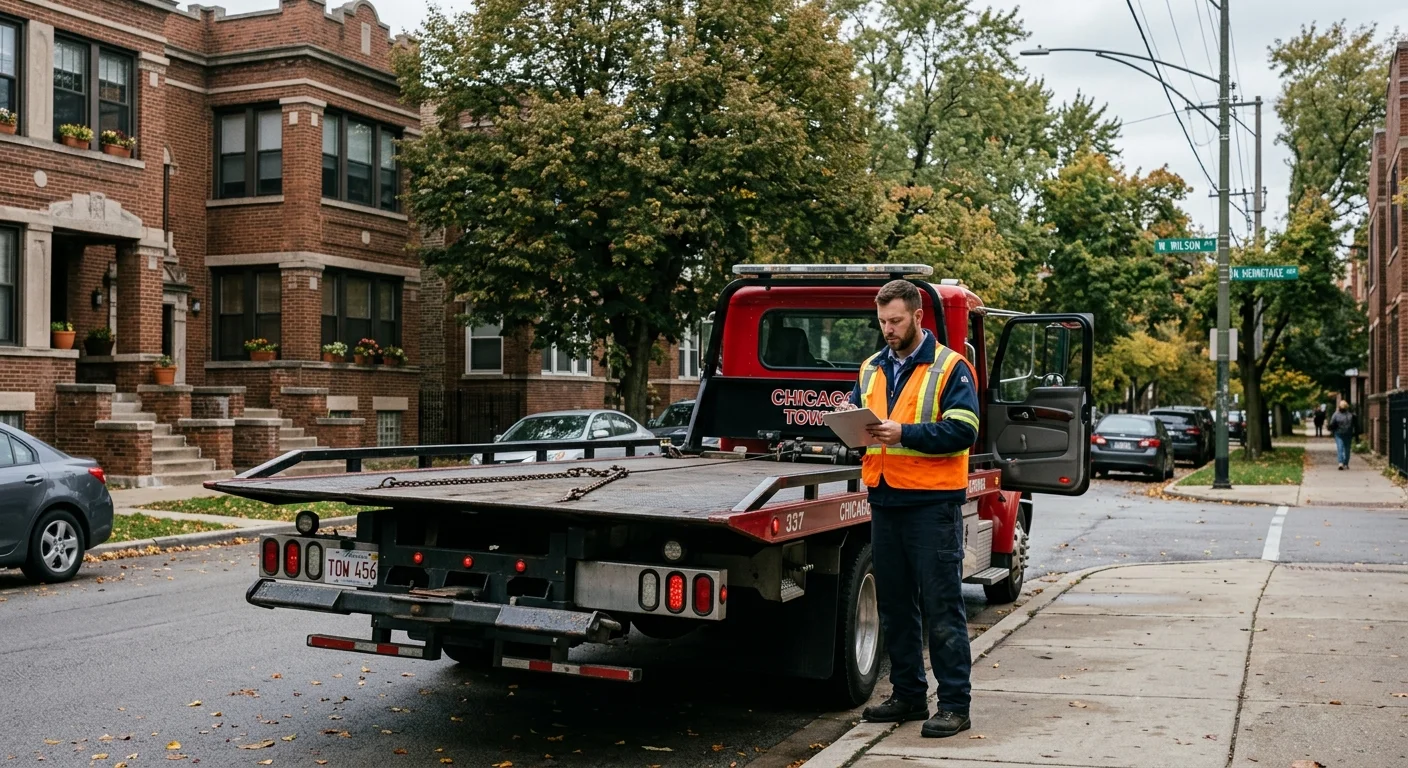
Start by identifying the kind of tow
The correct regulator depends on who ordered the tow and why. Location matters too. A car removed from private property in Cicero follows different rules than one impounded by Chicago. A disabled car on the Kennedy is different again.
Chicago-area towing generally falls into three separate systems:
- The Illinois Commerce Commission regulates commercial vehicle relocators handling covered private-property tows in Cook, DuPage, Kane, Will, and Winnebago counties.
- A county, municipality, or the Illinois State Police may run an administrative impound process under Illinois law.
- The City of Chicago operates its own pounds and publishes city-specific redemption rules and charges.
These systems can overlap geographically without becoming the same system. A private parking-lot removal inside Cook County may involve an ICC-licensed relocator. A Cicero village impound is controlled through the municipality’s process. A City of Chicago tow goes through the city pound system.
The person who called the truck isn’t always the regulator. A property owner may authorize a removal, but the ICC regulates the commercial relocator. Police may direct a tow, while the municipality administers the resulting impound.
Don’t assume the ICC handles every towing dispute. Its private-property relocation authority doesn’t cover vehicles on public streets, disabled vehicles, repossessions, or police-directed towing. Our broader Illinois towing law overview explains how those categories differ.
The ICC regulates covered private-property relocations
The Illinois Commerce Commission’s relocation towing program covers private-property relocators in Cook, DuPage, Kane, Will, and Winnebago counties. These companies need an ICC commercial vehicle relocator license. The Commission reviews criminal and driving records before issuing or renewing licenses.
This system often applies when a vehicle is removed from an apartment lot, business lot, or another private parking area. It isn’t the same as calling for help after your car breaks down.
Illinois law sets specific conduct rules for these relocators. When signs are required, they must be conspicuous, reflective or illuminated, and between four and eight feet above the ground. Each sign must measure at least 24 by 36 inches. It must identify the relocator and state the towing charge a person could face.
The relocator also needs written authorization from the property owner, lawful possessor, authorized agent, or law enforcement. Law enforcement in that jurisdiction must receive notice within one hour after removal.
If the vehicle’s owner appears before removal is complete and can move it immediately, the relocator generally can’t complete the removal. The statute contains a narrow service-fee exception involving certain commercial vehicles.
Relocators must follow Commission-set rates and provide a complete Relocation Towing Invoice. That invoice includes complaint instructions. The current ICC maximum rate could not be confirmed from the approved public sources, so drivers should ask the Commission to verify it rather than trust an unsourced figure online.
Quick Tow Chicago isn’t an ICC licensee and doesn’t perform relocations. Through our private-property towing referral service, we connect property managers with relocators that hold the required license.
Municipalities control administrative impounds
A suburban municipal impound isn’t governed by Chicago’s pound schedule. Each municipality runs its own administrative process and sets its own fee. Illinois law provides procedural rules, but it doesn’t set one statewide dollar cap.
Under 625 ILCS 5/11-208.7, a municipal administrative fee must be reasonable and related to administrative and processing costs. The owner has a right to an administrative hearing.
Notice must be sent within 10 days after impoundment. The initial hearing must be scheduled and convened no later than 45 days after that notice is mailed. If the hearing officer finds the vehicle was stolen or hijacked when impounded, the county, municipality, or Illinois State Police must refund any administrative fees already paid.
That doesn’t establish the fee charged by Berwyn, Cicero, Oak Lawn, Naperville, Aurora, or Joliet. Those amounts come from each local government’s own schedule. No individual suburban fee has been confirmed for this page.
Check the notice and the municipality’s official page before paying or filing a challenge. Look for the agency that ordered the impound, the hearing instructions, and the deadline printed on the notice. Don’t use City of Chicago charges as an estimate for a suburban case.
This distinction also affects complaints. An ICC relocation complaint form isn’t a substitute for a municipal hearing request. If a village ordered the impound, follow that village’s written process unless the notice identifies another authority.
Chicago runs its own pound system
Inside Chicago, city-directed towing uses a separate pound system. The city has four auto pounds, all open 24 hours a day throughout the year. They’re located at Lower Wacker, Bessie Coleman Drive near O’Hare, 103rd and Doty, and 701 North Sacramento.
The City of Chicago’s towing guidance publishes charges under Municipal Code 9-92-080. The tow fee is $250 for a vehicle under 8,000 pounds and $350 at or above that weight. Storage is $50 per day under 8,000 pounds and $100 per day at or above it.
Those are city charges, not Quick Tow Chicago prices. They also aren’t suburban impound fees or ICC relocation rates.
Chicago accepts cash and major credit cards at its pounds. Checks and money orders aren’t accepted. Claimants need valid photo identification and proof of ownership. Anyone driving the vehicle out also needs a current valid driver’s license. Police holds for listed violations can’t be cleared at the pound.
The city normally stores a vehicle for no less than 21 days from the date it mails notice to the registered owner. Under Municipal Code 9-92-100(a), the owner may request one 15-day extension before disposal. That extension isn’t a post-tow hearing deadline.
Chicago’s winter parking restrictions publish a different fee set for vehicles towed under those bans. It must not be merged with the regular pound schedule. Confirm which city action caused the tow before relying on either set of figures.
A missing Chicago vehicle may also have been relocated for street work rather than impounded. The city advises checking its vehicle lookup system before reporting the car stolen.
Driver-requested towing follows a different path
A driver who requests help for a disabled car isn’t dealing with an ICC private-property relocation. The approved Illinois sources for this page don’t identify one statewide regulator covering every driver-requested roadside tow.
That gap matters on the Kennedy, Dan Ryan, Eisenhower, Stevenson, Edens, Bishop Ford, Tri-State, I-57, I-80, and I-88. IDOT’s Emergency Traffic Patrol may appear at crashes, disabled vehicles, or roadway hazards around Chicago. Its workers, often called Minutemen, create emergency lane closures and protect responders. They don’t repair vehicles or tow them away.
Before accepting a driver-requested tow, record the operator’s business name. Ask which authority or license applies to the transaction. Confirm the destination and have the price quoted before dispatch. Keep the invoice, payment record, and any messages about the job.
If someone else ordered the tow, start with four facts:
- Identify the exact place where the vehicle was parked.
- Determine whether it was private property or a public street.
- Find out whether a property owner, police agency, municipality, or Chicago department authorized removal.
- Read the invoice or impound notice for the complaint process.
Those details point toward the correct authority. The ICC handles covered private-property relocators. A municipality handles its administrative impound hearing. Chicago answers for its city pound process.
Quick Tow Chicago is a referral service. We answer the line and match drivers with independent local operators. We don’t own trucks, operate a storage yard, set prices, or act as the regulator.
When to call us
Call when your car is disabled and arranging the right operator has stopped being a do-it-yourself task. Our emergency towing line takes calls 24 hours a day, and the price is quoted before an independent local operator is dispatched. Call us at (773) 830-6930.