Illinois impound laws don’t create a general punitive 30-day hold. For a City of Chicago tow, the confirmed clock is normally no less than 21 days from the date the city mails notice before sale or disposal, with one 15-day extension available under 9-92-100(a). That clock isn’t the same as a suburban impound or an ICC-regulated private-property relocation.
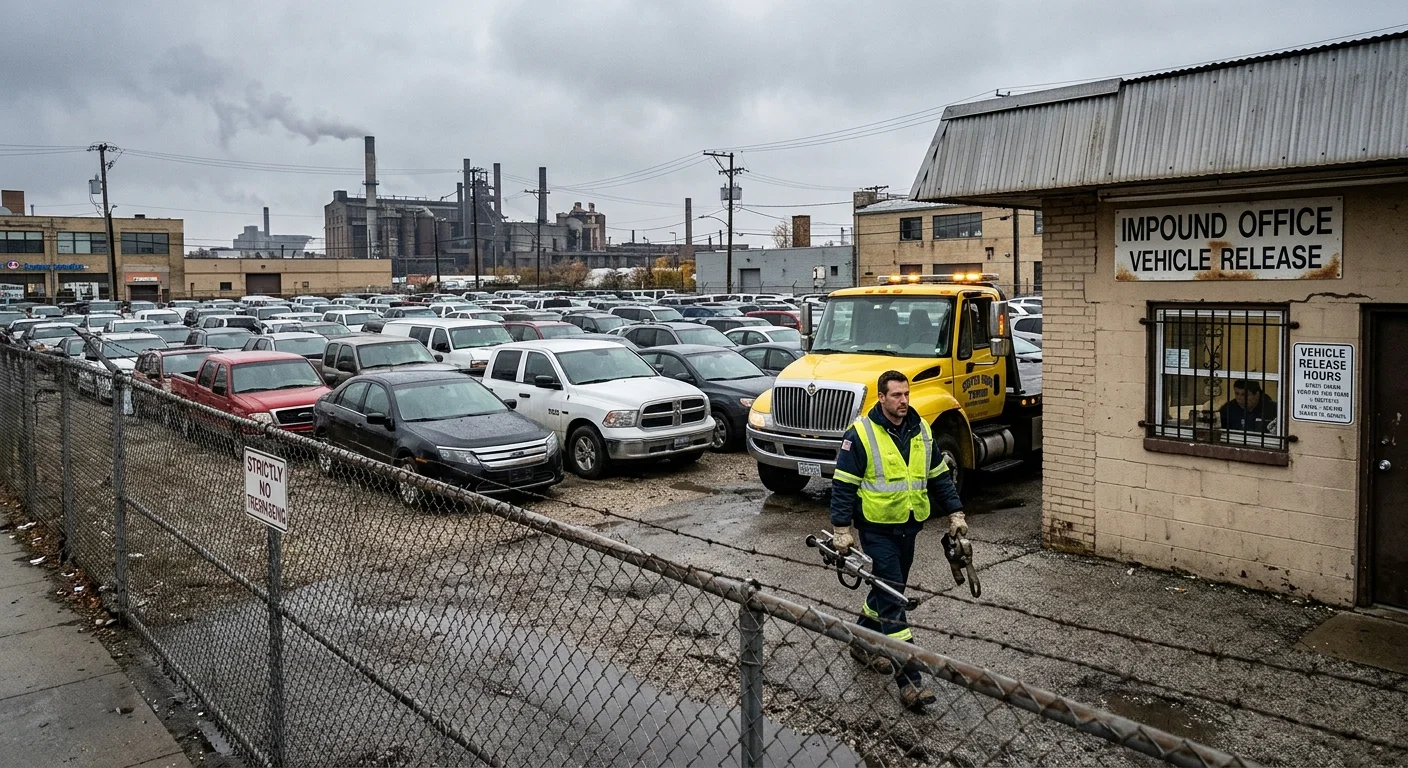
First identify which towing system has the vehicle
The phrase “impound hold” can describe several different situations. Around Chicago, the vehicle’s location and the towing authority determine which rules apply. Start there before counting days or challenging a charge.
There are three separate systems:
- A City of Chicago tow goes through the city pound system. This includes vehicles removed from Chicago streets and vehicles held through specific city impoundment programs.
- A suburban municipal impound follows the municipality’s process. Cicero, Berwyn, Naperville, Joliet, and other municipalities don’t use Chicago’s pound schedule.
- A private-property relocation involves a vehicle removed from private land by an Illinois Commerce Commission licensed commercial vehicle relocator.
A missing car may also have been relocated instead of impounded. Chicago relocates vehicles for street work and emergencies. The city says an emergency relocation can occur without an opportunity to post signs. Check the city’s vehicle search tool before treating the vehicle as stolen.
Location alone won’t always explain the tow. A car found near Lower Wacker, for example, may have entered the city pound system. A car removed from an apartment lot in Pilsen may fall under private-property relocation law. A village impound in Cicero follows a third process.
Our broader Illinois impound laws guide explains these categories in more detail. Don’t transfer a deadline, fee, or remedy from one category to another.
Chicago’s 21-day disposal clock
Chicago normally stores an impounded vehicle for no less than 21 days from the date it mails notice to the registered owner. This is a disposal clock. It isn’t a rule requiring every vehicle to remain locked away for 21 days.
The registered owner also has the right to one 15-day extension before the vehicle is sold or otherwise disposed of. The extension must be requested from the Auto Pound Office. If the car remains unclaimed, the city may dispose of it or sell it at auction. The owner can still owe the related fines and fees.
A vehicle may be released sooner when the release requirements are met and no police hold applies. The city requires valid photo identification and proof of ownership. Accepted ownership records include a valid title, current registration, or a bill of sale no more than 30 days old. A lessee needs the lease agreement. Someone acting for the owner needs an original notarized authorization letter.
The claimant also needs a current driver’s license when driving the vehicle out. Current state plates and a Chicago Vehicle Sticker are required where applicable. Charges and fines must be paid in full. A vehicle held for a police investigation won’t be released at the pound.
Chicago has four auto pounds, and each is open around the clock throughout the year. Our guide to the four Chicago auto pounds covers their locations. The city’s Common Towing Questions page provides its current redemption instructions.
Suburban impounds run on a different schedule
A municipal impound outside Chicago isn’t governed by Chicago’s 21-day disposal floor or its pound fees. Each municipality manages its own process and sets its own administrative fee.
Under 625 ILCS 5/11-208.7, a municipal administrative fee must be reasonable and related to administrative and processing costs. The statute doesn’t set a dollar cap. No individual suburb’s current fee could be confirmed from the approved sources for this page. Check the municipality’s current ordinance and the impound notice before paying.
The statute gives the vehicle owner a right to an administrative hearing. Notice must be sent within 10 days of impoundment. The initial hearing must be scheduled and convened no later than 45 days after the notice was mailed.
That timing differs from Chicago’s disposal clock. One controls notice and a municipal hearing. The other concerns how long Chicago normally stores a vehicle before disposal. Neither creates a blanket 30-day hold.
State law also addresses stolen or hijacked vehicles in this municipal process. If the hearing officer finds the vehicle was stolen or hijacked when impounded, the municipality, county, or Illinois State Police must refund administrative fees already paid. That verified refund rule applies to administrative fees under this statute. A matching rule for ordinary City of Chicago pound charges couldn’t be confirmed.
Private-property relocation isn’t a municipal impound
A car removed from a private lot follows another set of rules. In Cook, DuPage, Kane, Will, and Winnebago counties, private-property removals must be performed by commercial vehicle relocators licensed by the Illinois Commerce Commission.
These rules don’t cover vehicles on public streets, disabled vehicles, repossessions, or police-directed towing. Quick Tow Chicago isn’t a commercial vehicle relocator. For private-property matters, we connect property managers with operators who hold the required license.
Illinois law requires written authorization from the property owner, lawful possessor, authorized agent, or law enforcement officer. Where signs are required, they must be conspicuous. Each sign must be at least 24 inches high and 36 inches wide. It must sit at least four feet, but less than eight feet, above the ground. It must also be illuminated, reflective, or both.
The sign must identify the relocator and state the towing charge. An express sign isn’t required on residential property clearly reserved or intended only for residents or their vehicles. Our private-property sign guide explains that distinction.
A relocator can’t remove the vehicle when the owner appears before removal is complete and can move it immediately. The relocator must also notify law enforcement in the jurisdiction within one hour after removal.
Storage has separate protections. No storage fee applies when the vehicle is claimed within 24 hours with proper identification and payment. Storage can’t be charged for periods when the relocator is closed to the public. The current ICC maximum relocation rate couldn’t be confirmed. Ask the Illinois Commerce Commission for the current Commission-set rate instead of relying on an online estimate.
The one-hour contact rule is different again. If the owner makes a reasonable effort but can’t reach the relocator for one hour during required response hours, towing, storage, and other fees must be waived.
Count from the correct document and event
Start with the paperwork, not a number heard from someone else. Find the tow notice, impound notice, relocation invoice, and any mailed city notice. Record who ordered the removal and where the vehicle is being held.
For a Chicago pound vehicle, the 21-day disposal floor runs from the date the city mails notice. It doesn’t run from a guessed tow date. Ask the Auto Pound Office how to request the single 15-day extension if disposal is approaching.
A separate 15-day deadline applies to Chicago’s 19-offense vehicle impoundment program. That program covers specific offenses, including DUI, firearms, narcotics, drag racing, and fleeing or eluding. The owner must submit a written hearing request within 15 days after notice is mailed or otherwise given.
That isn’t a general hearing deadline for every Chicago tow. A general post-tow hearing deadline for an ordinary city tow couldn’t be confirmed. Contact the Bureau of Traffic Services through the city’s towing page for the current process.
If a default order is entered in the 19-offense program, the owner has 21 days to file a motion asking that the default be set aside. That 21-day period is also different from the city pound’s 21-day disposal floor.
Keep copies of notices, invoices, ownership records, and payment receipts. Photograph private-lot signs, their placement, and the parking area when a relocation is disputed. Our Chicago towing bill of rights guide can help organize the next questions without mixing the three legal systems.
When to call us
If the pound releases your vehicle but it can’t be driven, the problem has moved beyond paperwork. Our emergency towing service line takes calls 24/7, calls are recorded after a notice, and we can line up an independent local operator with the price quoted before dispatch. Call us at (773) 830-6930.