Finding your keys inside a locked car can stop your day cold. Move somewhere safe, check every door and hatch, then try a spare key or an already-connected vehicle app. If those options fail, call a roadside operator instead of forcing the door.
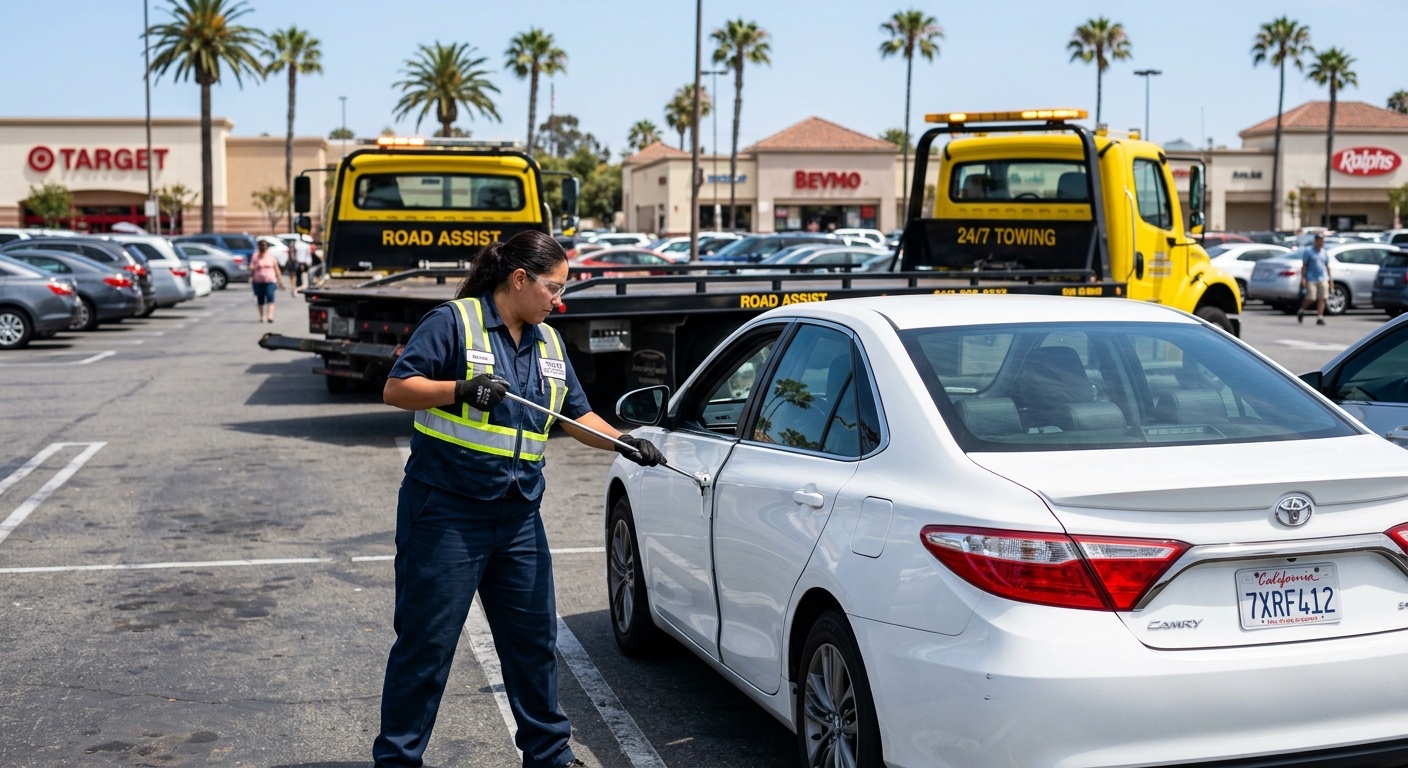
Make the scene safe first
Your next move depends on where the car is parked. A lockout in a grocery store lot is different from one beside the Kennedy.
In a parking lot, step away from moving traffic. Choose a visible waiting spot near the vehicle. If you’re in a garage, note the floor, section, and nearest entrance. Those details will help an operator find the right access point.
An expressway shoulder needs more caution. Don’t stand between your car and passing traffic. Move away from the travel lanes when you can do so safely. If there’s an immediate threat to life, call 911.
A child, vulnerable adult, or pet locked inside changes the situation. Don’t spend time testing improvised entry tricks. Contact emergency services when anyone inside appears distressed or faces immediate danger.
Keep your phone, wallet, and identification with you if possible. Take a photo of the nearest sign, intersection, garage marker, or storefront. Chicago addresses can become confusing around Lower Wacker Drive, multilevel garages, alleys, and divided roads.
Cold, rain, and lakefront wind also affect where you wait. Move into a nearby public place if conditions make waiting outside unsafe. Tell the operator where you’ll meet them, and keep your phone available for contact.
Check every normal way into the car
Walk around the car once before calling for help. Try every passenger door, the rear doors, and the hatch. Some vehicles unlock only the driver’s door when the key fob is pressed once.
Look through the windows without leaning against the glass. Confirm whether the keys are on a seat, in the ignition, or inside the cargo area. This helps distinguish a simple lockout from a lost-key problem.
If your vehicle has a connected app, use it only if you previously activated remote access. A newly downloaded app may still require account verification or access from inside the vehicle. Don’t share your password with anyone offering help.
Check the owner’s manual for a mechanical key inside the fob. The manual should show whether your model includes one and where it fits. Don’t force a key into an unfamiliar cover or opening.
A spare key is often the cleanest solution. Ask a trusted person to bring it if that can be done safely. Rental and fleet vehicles may have their own support process, so check the provider’s official app or paperwork.
If none of these options works, roadside assistance is the next step. Describe exactly where the keys are and whether the car is running. That information helps determine what kind of operator and equipment the situation calls for.
Skip the improvised lockout tricks
Online lockout videos often show coat hangers, string loops, wedges, and metal rods. Those demonstrations don’t account for your exact door, lock, wiring, glass, or weather seal. A trick that appears simple can turn one problem into a repair.
Don’t pry the top of the door open with a screwdriver. Don’t push an unknown tool deep inside the door. Avoid drilling the lock or striking the window. If an entry plan depends on force, stop and call someone equipped for the vehicle.
Breaking a window should never be treated as a routine shortcut. Loose glass creates another problem, and the car still needs to be secured afterward. An immediate threat to someone inside belongs with emergency services.
Tell the roadside provider your vehicle’s year, make, model, and body style. Mention frameless windows, aftermarket locks, or visible damage around the door. Ask whether the dispatched operator handles lockouts for that vehicle before anyone is sent.
A lost key requires a different plan. Opening the door won’t help if the vehicle can’t be started afterward. You may need an automotive locksmith, dealership support, or transportation to another location. If towing becomes necessary, the operator can determine whether flatbed towing fits the vehicle and pickup location.
Leave a broken key fragment where it is. Don’t push it deeper into the ignition or door lock. Explain the condition when arranging help so the wrong service isn’t dispatched.
Give dispatch a precise Chicago location
Start with the street address, then add the details an address misses. Name the side of the street, direction of travel, nearby intersection, and closest business. In a garage, include the level, color zone, clearance signs, and entrance used.
Around Lower Wacker Drive, identify the level and nearest ramp. In the Loop, mention whether the car sits in an alley, loading area, garage, or curb lane. Near O’Hare, follow the parking facility’s directions and tell dispatch which terminal or lot serves as your meeting point.
On the Kennedy, Dan Ryan, Eisenhower, Stevenson, Edens, or Bishop Ford, share the roadway, direction, and nearest exit. Our guide to breakdowns on the Kennedy and Dan Ryan explains why precise shoulder details matter.
IDOT’s Emergency Traffic Patrol, also called the Minutemen, responds to Chicago-area traffic disruptions. Its crews create emergency lane closures, warn approaching traffic, and protect responders. IDOT states that they don’t repair vehicles or tow them away, so a separate roadside operator may still be needed.
Also tell dispatch whether the keys are visible, the engine is running, or anyone is inside. Mention garage restrictions or a parking attendant who controls entry. These facts help the operator assess access before dispatch.
The independent operator sets the price. Ask for that price before anyone is dispatched and confirm what service the quote covers.
Know when the problem isn’t a lockout
A car that’s missing from its parking place may not be locked. It may have been relocated or impounded. Chicago says vehicles can be relocated to clear streets for agency work, including emergencies where signs couldn’t be posted.
Use the city’s Find Your Towed Vehicle tool before assuming the car was stolen. Search carefully using the requested vehicle information. The city’s Common Towing Questions also explains the difference between relocation and impoundment.
The location matters because Chicago has three distinct towing systems. A City of Chicago tow goes through the city pound system. A suburban municipal impound follows that municipality’s process and fee schedule. The Chicago pound schedule shouldn’t be treated as a suburban schedule.
A private-property relocation is different from both. In Cook, DuPage, Kane, and Will counties, commercial vehicle relocators are regulated by the Illinois Commerce Commission. Quick Tow Chicago doesn’t perform private-property relocations or operate an impound lot.
Check the signs around a private parking area and contact the named relocator through its published information. If the vehicle is still present and only the keys are inaccessible, then you’re dealing with a lockout. Give the roadside provider the property name, exact parking space, and any access instructions.
When to call us
Once the spare key, connected app, and normal door checks fail, the lockout has stopped being a sensible do-it-yourself job. Quick Tow Chicago can line up an independent local operator, and the line takes calls 24/7. Calls are recorded after a notice, and the operator’s price is quoted before dispatch. Call us at (773) 830-6930.