A vehicle parked without permission on your Chicago property requires a licensed commercial vehicle relocator. Confirm that you control the property, check the required signs, and provide written authorization before the vehicle is removed.
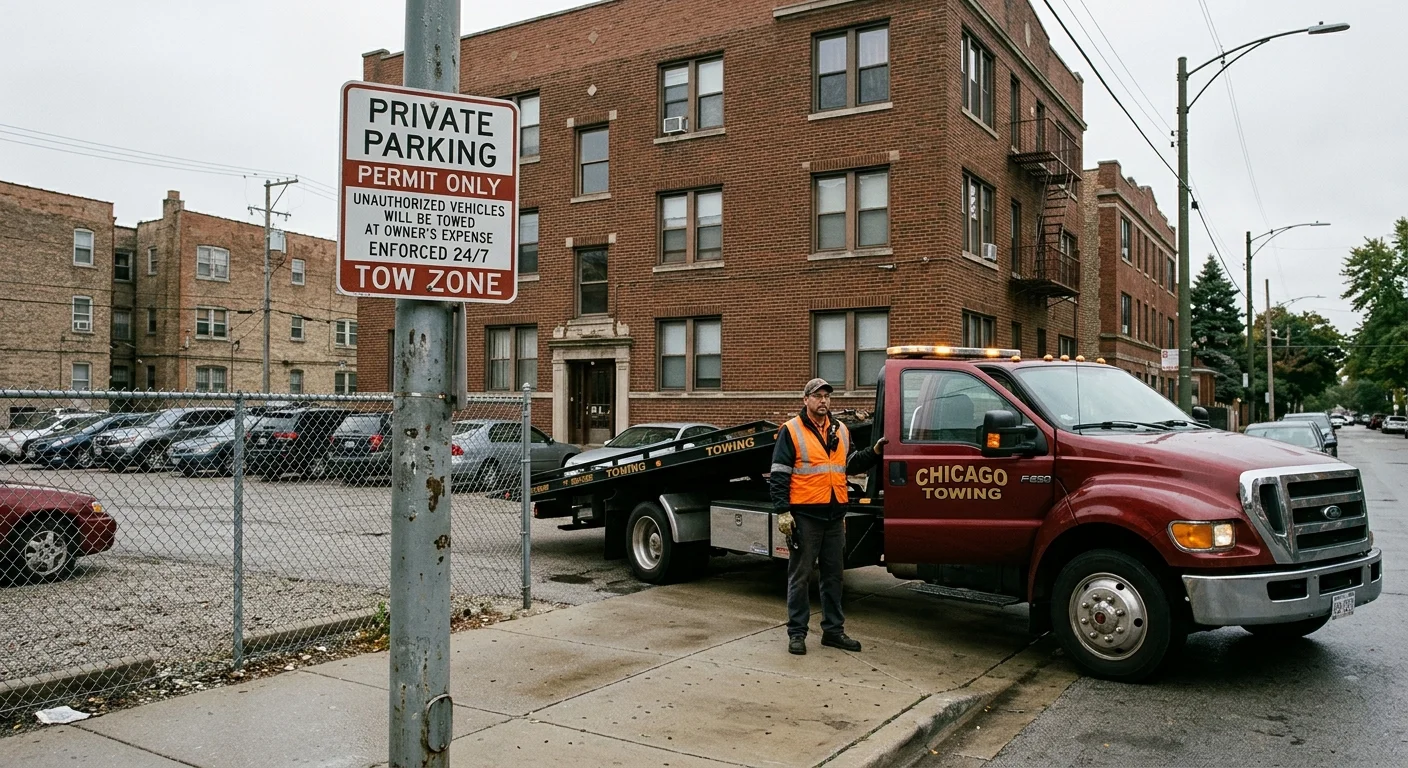
First, identify where the vehicle is parked
The first step is separating private property from the public way. That distinction controls who can act and which rules apply.
A private apartment lot, store lot, loading area, or gated parking space falls under private-property relocation rules. This applies whether the property is in Pilsen, Little Village, the Loop, or an industrial area near O’Hare. In Chicago and the surrounding Cook County area, these removals are performed by commercial vehicle relocators licensed by the Illinois Commerce Commission.
A vehicle on a public street follows a different process. A property owner can’t authorize a private-property relocation from the curb, even when the vehicle blocks convenient access. City departments handle vehicles on the public way under Chicago’s municipal system.
Check the exact position of all four wheels. A car inside the lot is different from one parked along the curb. A vehicle crossing a driveway may involve both private access and the public way. When the location is unclear, contact the City of Chicago before arranging a removal.
Chicago also distinguishes an impound from a relocation. The city may impound a vehicle for an enforcement reason. It may also relocate one to clear a street for public work or an emergency. The city’s Common Towing Questions explain that difference.
Suburban properties require the same initial location check. A private lot in Cicero remains a private-property matter. A vehicle seized by a village follows that municipality’s impound process instead. Chicago’s pound rules and fees don’t become Cicero’s rules simply because both places are in Cook County.
Check the signs before requesting a tow
Illinois law gives detailed requirements for private-property towing signs. For most affected areas, signs must be posted conspicuously before a vehicle can be removed.
Under 625 ILCS 5/18a-302, each sign must be at least 24 inches high and 36 inches wide. It must stand at least four feet from the ground but lower than eight feet. It must also be illuminated, painted with reflective paint, or both.
The sign must identify the appropriate commercial vehicle relocator. It also needs that relocator’s address, telephone number, and the towing charge a person may face. A generic “private parking” sign doesn’t contain all the information listed in the statute.
Walk every entrance a driver could reasonably use. Check whether the sign is visible from that approach. Look for damage, faded lettering, blocked sightlines, or a sign hidden by parked vehicles. Take current photos before requesting the relocation. Those photos don’t replace a required sign, but they preserve what was posted that day.
Illinois provides a narrow residential exception. Express notice isn’t required on residential property clearly reserved or intended exclusively for residents or their vehicles. Don’t stretch that exception to cover a mixed-use lot, customer parking, or an area with unclear access. Have the property and sign arrangement reviewed when the classification isn’t obvious.
Our guide to Illinois private-property towing sign requirements explains each required element. A compliant setup should be established before a problem vehicle appears, not improvised while someone waits for removal.
Confirm your authority and document the request
A relocator can’t remove a vehicle based on a stranger’s request. Illinois law requires written authorization from the property owner, the person lawfully controlling the property, an authorized agent, or an authorized law enforcement officer.
A building manager should confirm that their management agreement grants the needed authority. A tenant shouldn’t assume that renting one unit gives them control over an entire shared lot. An employee should also confirm who may act for the business. When authority is uncertain, pause and ask the owner or management company.
Create a clear record before contacting a relocator. Note the property address, vehicle description, plate, exact parking location, and the reason removal is requested. Photograph the vehicle and nearby signs without entering or opening it. Keep the written authorization and any messages exchanged with the operator.
The request must go to a commercial vehicle relocator licensed by the Illinois Commerce Commission. Quick Tow Chicago is a referral service, not the licensee. We connect property managers and authorized callers with independent local relocators. We don’t own tow trucks, employ drivers, operate a storage lot, or set relocation charges.
The current maximum ICC relocation rate could not be confirmed from the primary materials reviewed for this page. Don’t rely on a figure copied from an old website or forum. The Illinois Commerce Commission sets the applicable rates, and its current order should be confirmed before accepting a quoted figure. The posted sign must also state the towing charge a person may face.
Our private-property towing service page explains how the referral process works. The operator should identify the company performing the removal and state the applicable charge before dispatch.
Know what changes when the driver returns
Timing matters once the relocator reaches the property. Illinois law says a relocator may not remove the vehicle when its owner or operator appears before removal is complete and is willing and able to move it immediately.
Don’t create a confrontation. Tell the relocator that the driver has returned and let the licensed operator handle the situation under the applicable rule. Property staff should avoid making separate payment demands or trying to hold the vehicle themselves.
After a completed removal, the relocator must notify law enforcement in that jurisdiction within one hour. That notice helps a driver determine that the vehicle was relocated instead of stolen. The property owner shouldn’t substitute their own call for the relocator’s statutory responsibility.
Illinois also limits how far a relocated vehicle may be taken. For a private lot inside incorporated Chicago, the limit is no more than 10 air miles. Different distance treatment applies to removals from unincorporated areas. These requirements and other unlawful practices appear in 625 ILCS 5/18a-300.
Choose a relocator that can answer vehicle owners during required contact periods. If an owner makes a reasonable effort but can’t reach the relocator for one hour during a required response period, Illinois law says towing, storage, and other fees are waived. Our explanation of Illinois’ one-hour contact rule covers that narrow protection.
The vehicle owner must receive a complete relocation towing invoice as a receipt. It includes complaint instructions. Relocators must accept cash, money orders, cashier’s or certified checks, and major credit cards without added payment fees.
Keep city and suburban impounds separate
Private-property relocation isn’t the same as a City of Chicago tow. It also isn’t the same as a suburban municipal impound. Mixing those systems can send the property owner and vehicle owner to the wrong agency.
The Chicago pound system applies to vehicles impounded or relocated through city action. It has four city auto pounds and its own redemption requirements. A private commercial relocator doesn’t take a property owner’s vehicle into that city pound system merely because the lot has a Chicago address.
Municipal impounds outside Chicago follow another process. Under Illinois law, a county or municipality may impose a reasonable administrative fee related to its processing costs. The statute sets no dollar cap. It also provides notice and hearing rights for that municipal process. Each suburb can have its own administrative fee, so a Chicago figure shouldn’t be presented as the amount charged in Berwyn, Oak Lawn, Schaumburg, Naperville, or Joliet.
A private lot in those communities can still fall under ICC relocation rules. Cook, DuPage, Kane, and Will counties are all within the regulated relocation area. What matters is who ordered the removal and where the vehicle was parked.
If a vehicle simply appears abandoned on private land, establish ownership and authorization before acting. Don’t assume its condition transfers ownership to the property owner. Our junk and abandoned vehicle removal service can help identify the appropriate type of operator, but the referral doesn’t replace any required property authorization.
When a driver says a car disappeared from a Chicago street, direct them toward the city system. When a vehicle was removed from your private lot under written authorization, direct them to the commercial relocator listed on the posted sign and relocation invoice.
When to call us
Call when you’ve confirmed the vehicle is on private property, your authority is documented, and the situation needs a licensed relocator. The line takes calls 24/7, and calls are recorded after a notice before we line up an independent local operator. Call us at (773) 830-6930.