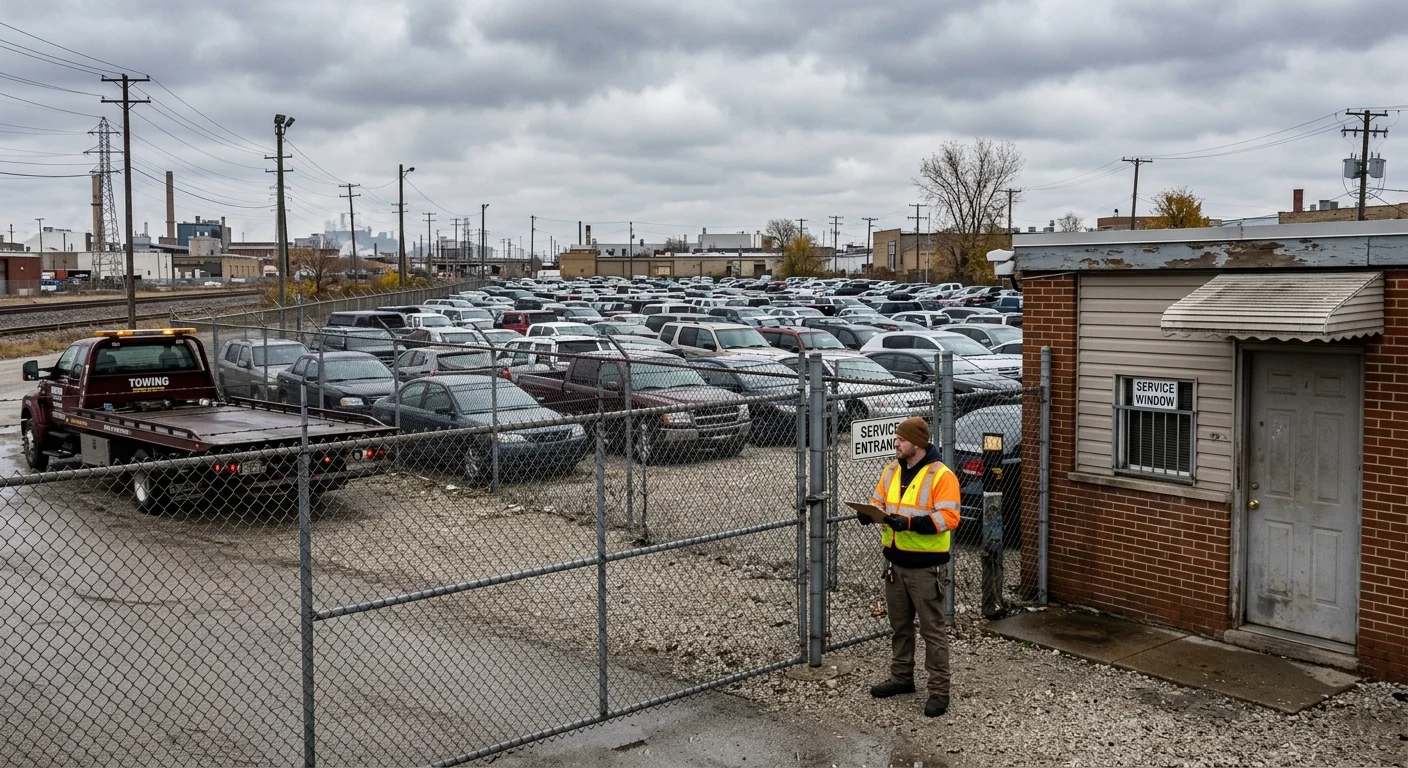
If you’re deciding what to do if your car is towed in Chicago, locate it first and contact the pound immediately. Leaving it there adds storage charges and starts a disposal process. The city normally keeps it at least 21 days after mailing notice, but you can request one 15-day extension.
First confirm that Chicago has the car
A missing car isn’t always sitting in an auto pound. Chicago sometimes relocates vehicles to clear streets for public work or emergencies. The city says an emergency relocation can happen without time to post signs.
Start with the city’s Find Your Towed Vehicle tool. Chicago advises checking for a relocation and calling 311 before reporting the car stolen. A relocation may mean the car was moved to another street instead of impounded.
If the city impounded it, confirm the exact pound before traveling. Chicago operates four auto pounds, all open 24 hours a day:
- Central Auto Pound, 500 E Wacker Drive, Lower Level
- O’Hare International Airport Auto Pound, Bessie Coleman Drive
- Auto Pound 2, 103rd and Doty Avenue
- Auto Pound 6, 701 N Sacramento Avenue
Abandoned vehicles go to the Doty or Sacramento locations, according to the city’s towing guidance. Another Chicago page uses different pound labels for abandoned vehicles. Call 311 to confirm the location rather than choosing a lot from an old notice or search result.
This first step matters because Chicago’s rules don’t cover every missing vehicle in the metro. A village impound in Cicero, Berwyn, or Oak Park follows that municipality’s process. A private parking-lot tow follows Illinois relocation rules. Neither uses the City of Chicago pound schedule.
The disposal clock doesn’t start on the tow date
Chicago normally stores an impounded vehicle for no less than 21 days from the date the city mails notice to its registered owner. That isn’t a promise that the car will remain available indefinitely. It is the minimum storage period identified in the city’s process.
The registered owner has the right to one 15-day extension before the vehicle is sold or otherwise disposed of. The extension comes from Municipal Code 9-92-100(a). Request it through the Auto Pound Office before the disposal process reaches its deadline.
Don’t treat those extra 15 days as an automatic addition. The owner must request the extension. Keep a record of when you contacted the city, which vehicle you discussed, and any instructions you received.
The mailing date matters more than the day you happen to find the notice. An outdated registration address can leave you with less practical time to respond. Check the notice and confirm the recorded mailing date with the Auto Pound Office.
If nobody claims the vehicle, Chicago may sell it at auction or otherwise dispose of it. Disposal doesn’t erase the account. The registered owner can still owe the related fines and fees after losing the vehicle.
A general hearing deadline for an ordinary Chicago tow couldn’t be confirmed from the approved city sources. Don’t assume the 15-day extension is a hearing request. It only extends the disposal clock. Special impounds involving listed offenses use a separate process, which our guide to the Vehicle Impoundment Office explains.
Storage charges continue while you wait
The City of Chicago’s towing page publishes separate tow and daily storage charges under Municipal Code 9-92-080.
For a vehicle under 8,000 pounds, the published tow fee is $250 and storage is $50 per day. At 8,000 pounds or more, the tow fee is $350 and storage is $100 per day. These are city pound charges. They aren’t Quick Tow Chicago prices, suburban impound rates, or private-property relocation rates.
Chicago’s winter parking-ban page publishes a different fee set for vehicles towed under those restrictions. It lists a minimum $150 towing fee, a $60 ticket, and $25 per day for storage. That schedule belongs to the city’s winter parking-ban program. It shouldn’t be combined with the Municipal Code 9-92-080 schedule.
The city hasn’t confirmed a current maximum storage total in the sources approved for this site. A specific cap sometimes appears online, but it couldn’t be verified. Ask the Bureau of Traffic Services to explain the current balance before relying on any claimed ceiling.
Chicago accepts cash, Visa, Mastercard, Discover, American Express, or Diners Club at its pounds. Checks and money orders aren’t accepted. Confirm the balance and accepted payment method before heading across the city, especially if your car is at Doty or the O’Hare pound.
Our Chicago impound cost guide explains which published charges belong to the city and why suburban figures must be checked separately.
Bring everything required for release
Reaching the service window without the right documents can cost another trip and another day of storage. Chicago requires valid photo identification from every person claiming the vehicle.
You must also show proof of ownership. The city accepts a valid title, a current registration card, or a bill of sale no more than 30 days old. A lessee needs the lease agreement. A representative acting for the owner needs an original notarized letter from that owner.
Bring a current valid driver’s license if you plan to drive the car from the pound. Chicago also requires current state plates and a Chicago Vehicle Sticker where required. The vehicle won’t be released while police are holding it for an investigation.
Certain offense-related holds can’t be cleared at the pound window. These include holds connected with DUI, firearms, narcotics, drag racing, reckless driving, fleeing and eluding, suspended or revoked licenses, and several other listed offenses. Those cases go through the Vehicle Impoundment Office at 400 W Superior.
Boot-related cases follow another path through the Department of Finance. Don’t assume paying the tow and storage balance clears every hold attached to the vehicle.
Before leaving home, use the city page to confirm the pound, balance, hold status, and required documents. Bring the originals the city requests. If the car can’t be driven after release, call the line that takes calls 24/7 and we will match you with an independent operator. Start at emergency towing if that is the job, rather than trying to move a damaged or disabled vehicle yourself.
Waiting can cost more than the car seems worth
Owners sometimes delay because the car is damaged, has a loan balance, or isn’t worth repairing. That doesn’t stop storage charges or the city’s disposal process. It also doesn’t transfer ownership back to Chicago without consequences.
Start by comparing three facts you can verify: the current pound balance, the car’s condition, and the deadline tied to the mailed notice. If you need more time to collect documents or decide what to do, request the single 15-day extension before the original period runs out.
Don’t remove parts, abandon the title paperwork, or assume an auction closes the matter. Chicago states that an owner can remain responsible for fines and fees after an unclaimed vehicle is sold or disposed of.
If the vehicle is beyond repair, Illinois salvage and junking rules may become relevant. Those rules involve ownership documents and the Secretary of State. They aren’t shortcuts around a city impound balance. Title, salvage, and junking fee amounts couldn’t be confirmed from the approved sources, so check current requirements directly with the Secretary of State.
A private buyer or recycler also can’t collect a car without satisfying the pound’s release requirements. If you plan to transfer the vehicle, ask the Auto Pound Office what documents it will accept before signing anything.
Once the city releases a disabled vehicle, an independent operator can transport it to a repair shop, legal parking location, or another agreed destination. Our junk and abandoned vehicle removal guide covers referral help after the owner has authority to release the vehicle.
City, suburban, and private tows follow different rules
Chicago’s auto-pound process applies inside city limits. It doesn’t set the administrative fee for a suburban municipal impound. Illinois law allows a municipality to charge a reasonable fee related to its administrative and processing costs, but it sets no dollar cap. Each village or city establishes its own figure.
For suburban municipal impounds, 625 ILCS 5/11-208.7 requires notice within 10 days. It also gives the owner a right to an administrative hearing, with the initial hearing scheduled and convened no later than 45 days after notice was mailed. Those rights shouldn’t be rewritten as Chicago’s ordinary pound procedure.
A private-property relocation is different again. In Cook, DuPage, Kane, and Will counties, that work must be performed by a commercial vehicle relocator licensed by the Illinois Commerce Commission. The Illinois private-property rules don’t apply to public-street vehicles, police-directed towing, disabled vehicles, or repossessions.
Private relocators also follow different storage and payment rules. No storage fee may be charged when a vehicle is properly claimed within 24 hours. Storage can’t be charged for days or hours when the relocator is closed to the public. The current maximum relocation rate couldn’t be confirmed, so contact the Illinois Commerce Commission rather than trusting a figure copied from another site.
Our guide to Chicago private towing laws explains signs, authorization, police notice, and complaint options. First identify who ordered the tow. That determines which deadline, agency, and fee rules apply.
When to call us
Call when the pound will release your car, but it can’t be driven safely to its next destination. Our line takes calls 24 hours a day and connects callers with independent local operators. The operator’s price is quoted before dispatch. Call us at (773) 830-6930.