Illinois tow truck laws depend on why and where a vehicle was removed. Around Chicago, private-property relocations, suburban municipal impounds and City of Chicago tows follow separate rules. Sign, notice and distance requirements change with that classification.
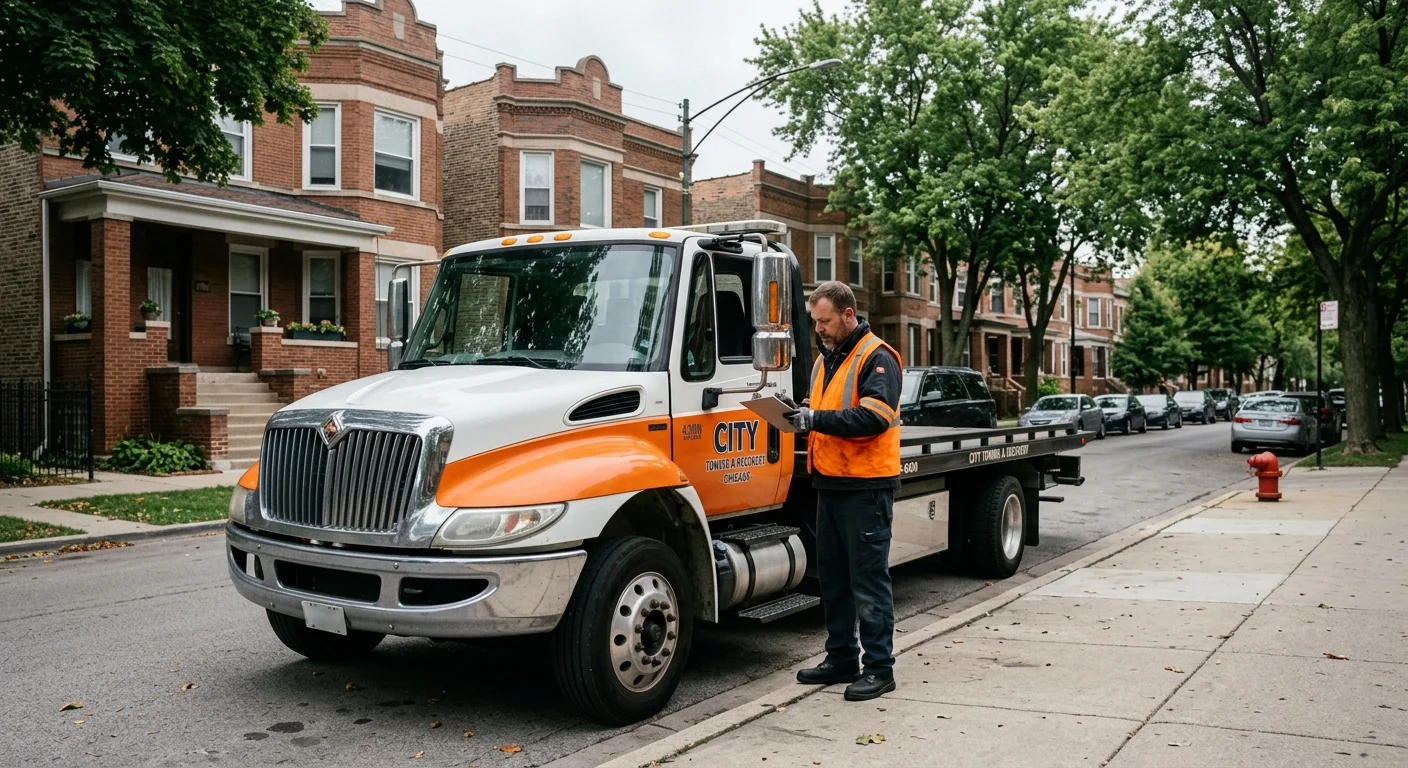
Start by identifying the towing system
The first step is identifying who ordered the tow. That answer determines which Illinois rules apply.
A private-property relocation covers a vehicle removed from private property without its owner’s consent. In Cook, Will, Kane, DuPage and Winnebago counties, that work must be performed by a commercial vehicle relocator licensed by the Illinois Commerce Commission.
This regime doesn’t cover vehicles on public streets. It also excludes disabled vehicles, repossessions and police-directed towing. Those distinctions matter when reading advice about towing laws in Illinois.
A City of Chicago tow belongs to the city pound system. It may follow a parking violation, an impoundment order or another city action. The city also relocates some vehicles during street work or emergencies. A relocation isn’t always an impoundment.
A suburban municipal impound is different again. Berwyn, Cicero, Naperville, Aurora and Joliet don’t use Chicago’s pound schedule. Each municipality sets its own administrative fee and manages its own process under state law.
Don’t assume a sign rule from a Cicero parking lot governs a car removed from the Dan Ryan. Likewise, a Chicago pound rule doesn’t set the terms for a private lot in Schaumburg.
Private-property signs have exact requirements
Illinois law sets specific sign standards for covered private-property relocations. Under 625 ILCS 5/18a-302, signs must be posted conspicuously in the affected area.
Each sign must be at least 24 inches high and 36 inches wide. Its bottom must sit at least 4 feet above the ground. The sign must remain below 8 feet.
The sign must also be illuminated, painted with reflective paint or both. It must identify the appropriate commercial vehicle relocator. That information includes the relocator’s name, address and telephone number. The sign must state the towing charge that a person parking there may face.
A small warning taped inside a window doesn’t match those dimensions. Neither does a sign hidden behind landscaping or placed outside the affected area. Photograph the entrance, parking space and nearby signs before leaving the property.
Illinois law has a narrow residential exception. Express notice isn’t required on residential property clearly reserved or intended exclusively for residents or their vehicles. That doesn’t erase the other rules governing the relocation.
Property managers can read our guide to Chicago private towing laws before requesting removal. Quick Tow Chicago connects property managers with relocators holding the required Illinois Commerce Commission license. Quick Tow Chicago itself isn’t a relocator or license holder.
Removal requires authorization
A compliant sign doesn’t authorize every removal by itself. The relocator also needs written authorization from the property owner, someone in lawful possession or control, an authorized agent or an authorized law enforcement officer.
Removing a vehicle without that written authorization is unlawful under 625 ILCS 5/18a-300. The same statute covers several other practices that matter at the scene.
A relocator may not remove the vehicle when its owner or operator arrives before removal is complete and can move it immediately. The person must be willing and able to move the vehicle. Illinois provides a narrow service-fee exception involving certain commercial driver’s license vehicles.
Take photos if you return during the hookup. Record when you arrived and what you told the operator. Keep the exchange calm, and don’t stand between the truck and vehicle.
Commercial vehicle relocators must mark both sides of their trucks. The marking includes the relocator’s name, address and telephone number in a vividly contrasting color. Advertising without the relocator’s license number is also unlawful.
These details help identify the company that actually moved the vehicle. They also separate that company from a referral service, property manager or parking facility.
Notice continues after the vehicle leaves
The paperwork doesn’t stop once the vehicle leaves the lot. The relocator must notify law enforcement in the removal jurisdiction within one hour.
That notice gives local authorities a record of the relocation. When a car disappears from a parking lot in Pilsen, Cicero or Aurora, the owner shouldn’t assume it was stolen before checking for a recorded tow.
The relocator must also provide the owner with the relevant statutes, regulations and ordinances in the written form required by Commission rules. When payment is made, the owner must receive a complete Relocation Towing Invoice. That receipt includes complaint instructions.
Illinois also has a separate one-hour telephone rule. If an owner makes a reasonable effort but can’t reach the relocator for one hour during a period when the relocator must respond, all towing, storage and other fees must be waived. The details matter, so keep a call log and screenshots. Our guide to Illinois’ one-hour relocation rule explains how that protection fits into the process.
The Illinois Commerce Commission regulates this private-property relocation system. It isn’t the regulator for every roadside tow or municipal impound. Our overview of who regulates Illinois towing companies explains where those lines fall.
Storage locations have distance limits
Illinois limits how far a covered private-property relocation may take the vehicle. The measurement uses air miles, which means straight-line distance rather than the driven route.
For a vehicle removed from an unincorporated area, the storage location can’t be more than 15 air miles from the pickup point. For a vehicle removed anywhere else, the limit is 10 air miles.
The 15-mile limit isn’t a general suburban allowance. It applies when the pickup itself occurred in an unincorporated area. A removal from Chicago or another incorporated municipality falls within the 10-air-mile category.
Road mileage may look longer because trucks must follow available streets and expressways. A route might bend around O’Hare, cross the Tri-State or avoid a closed ramp. The legal measurement remains based on air miles.
Save the pickup address and storage address exactly as printed. A map’s straight-line measurement can help identify a possible issue, but the Illinois Commerce Commission decides complaints under the relocation rules.
The current maximum relocation rate could not be confirmed from the Commission materials reviewed for this page. Don’t rely on unsourced figures circulating online. The Commission sets the applicable rates, and the posted sign must state the charge at that property.
For lawful private-property removals, our private property towing referral service connects property managers with licensed relocators. The operator sets the price before dispatch.
City and suburban impounds follow different rules
Chicago’s city pound rules don’t become private-property relocation rules just because a tow truck moved the vehicle. The city operates four auto pounds, including locations near O’Hare, Lower Wacker, Doty Avenue and Sacramento Avenue.
For a City of Chicago tow, the city says a vehicle must go to a pound once it has been raised from where it was parked. A missing vehicle may instead have been relocated for street work. In an emergency, that relocation can occur without an opportunity to post signs.
Chicago’s ordinary post-tow hearing deadline could not be confirmed in the source record for this page. Ask the Bureau of Traffic Services about the procedure for your specific tow. A verified 15-day hearing-request period exists for Chicago’s 19-offence vehicle impoundment program, but it isn’t a general deadline for every city tow.
Suburban municipal impounds follow another process. Under 625 ILCS 5/11-208.7, a municipal administrative fee must be reasonable and connected to administrative and processing costs. The statute doesn’t set a dollar cap.
The owner has a right to an administrative hearing. Notice must be sent within 10 days of impoundment. The initial hearing must occur no later than 45 days after notice was mailed.
If the hearing officer finds the vehicle was stolen or hijacked when impounded, administrative fees already paid must be refunded. Individual village fees weren’t confirmed for this page. Check the municipality’s ordinance and impound notice instead of applying Chicago’s figures.
Keep a clear record
Start with the location and reason for removal. Photograph every sign, including its placement and stated charge. Save the property address, storage address, invoice and payment record.
For a private relocation, note the relocator’s name and license number. Preserve call logs if the company didn’t answer. Ask for the complete Relocation Towing Invoice and keep its complaint instructions.
For a city or suburban impound, read the notice before relying on private-property rules. Deadlines differ between Chicago’s offence-based impoundment program and the state process governing municipal administrative impounds.
Don’t combine separate deadlines. Chicago’s 15-day hearing request for its 19-offence program isn’t the city’s 15-day disposal extension. Neither is the suburban hearing schedule.
Our Chicago towing bill of rights guide can help organize the next steps. It won’t replace instructions printed on an official notice. Follow the notice that applies to your vehicle and contact the named agency when a rule remains unclear.
When to call us
Call when your vehicle is disabled and needs an independent local operator, rather than a legal challenge to an impound. Our emergency towing line takes calls 24 hours a day, and the price is quoted before an operator is dispatched. Call us at (773) 830-6930.